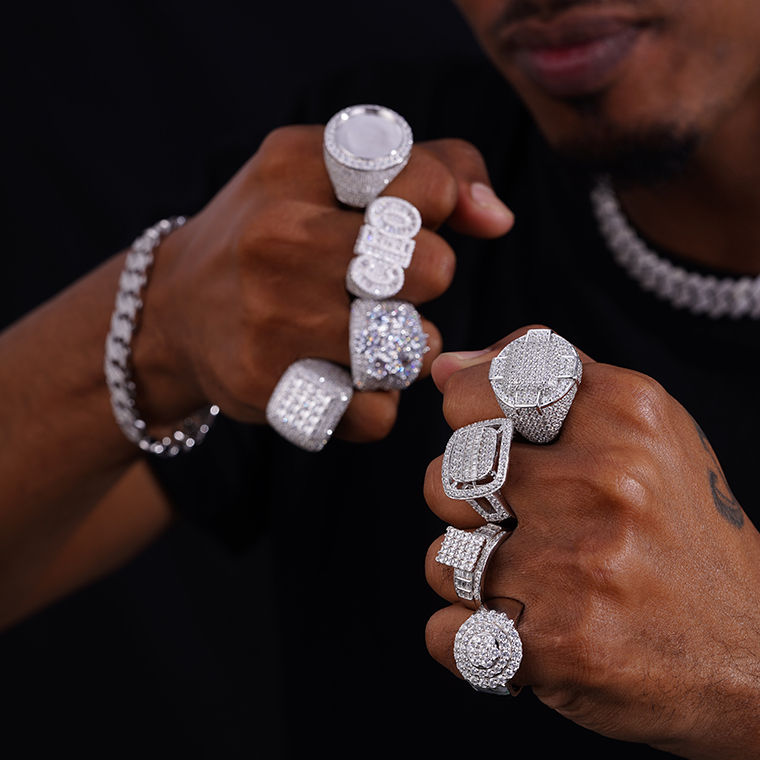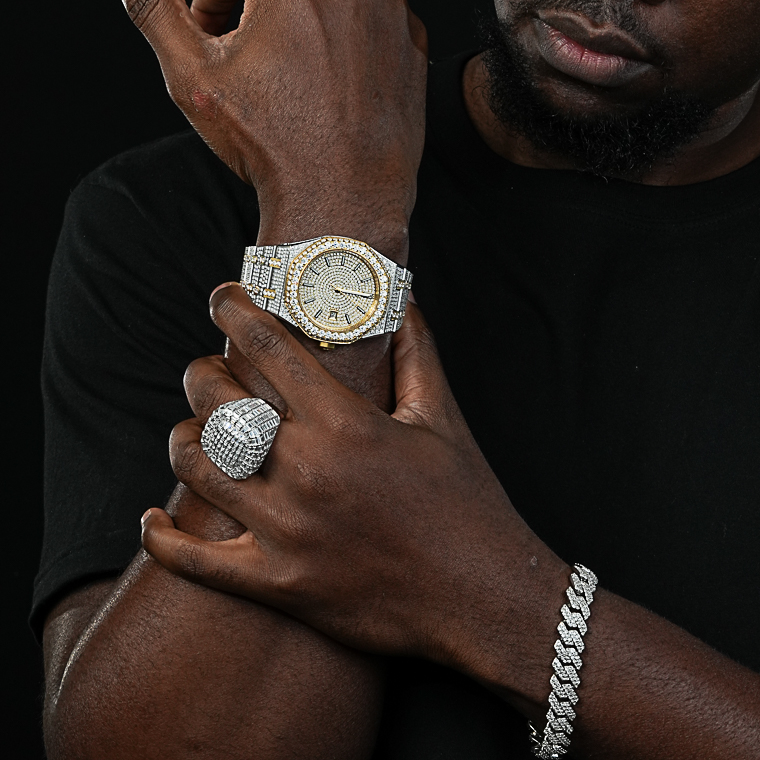






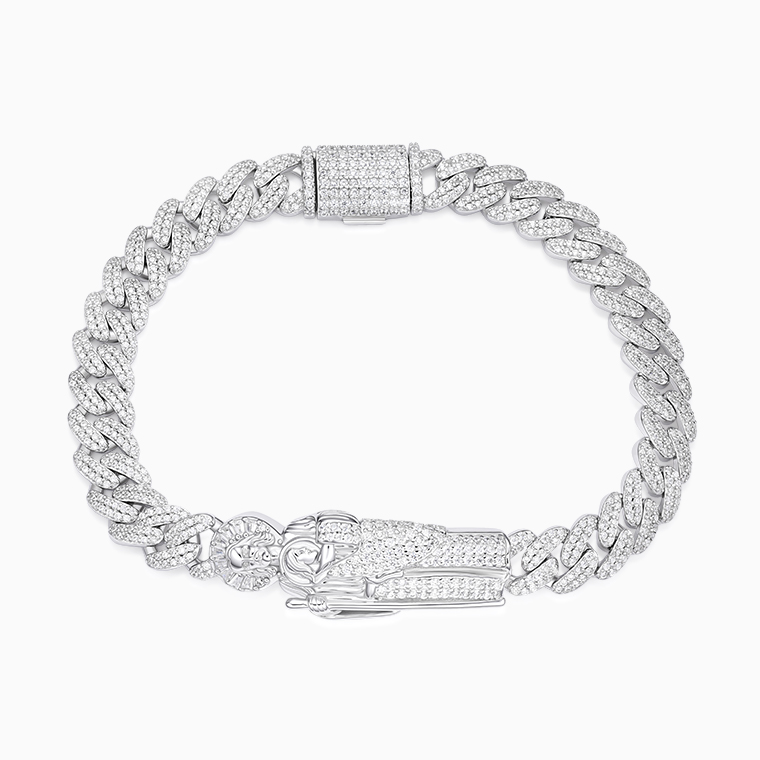
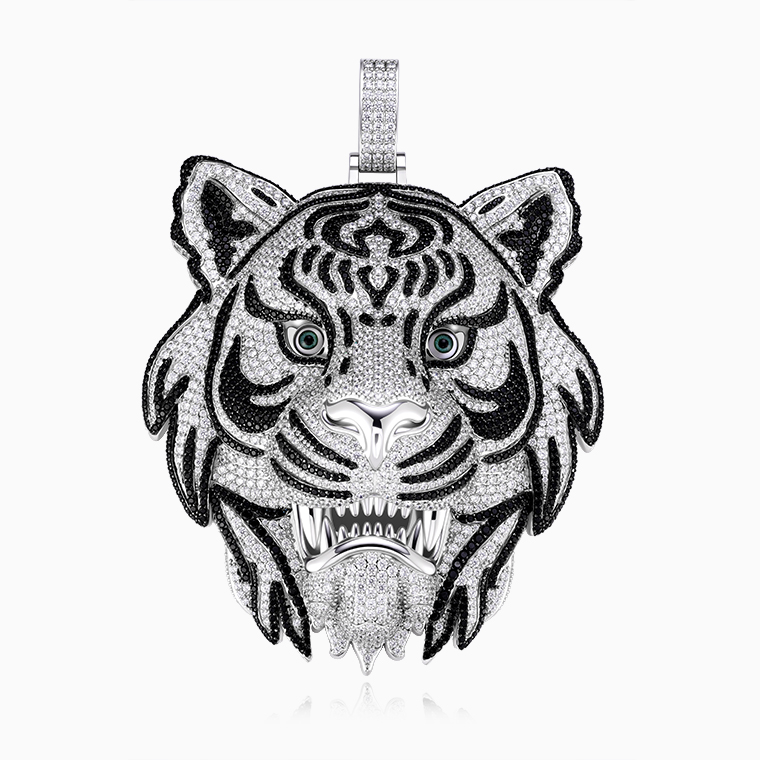

But who is actually making these chains?
That's something I'd want to know before placing a large order.
Some suppliers have their own production facilities. Others buy finished jewelry from factories and resell it. You may not notice much difference when ordering a standard chain from a catalog. Things can get more complicated once you start asking for changes.
Let's say you've found a Cuban chain you like, but the clasp feels a little bulky. Or perhaps you want the links slightly thicker without making the necklace too heavy.
A trading company might need to check with the factory before answering. With a Cuban Link Chain Manufacturer, you may be able to discuss the changes directly with the people working on the design and production.
That doesn't mean every factory is better than every trading company. I've come across trading companies that understand jewelry production extremely well. Still, it's worth knowing who will actually handle your order before you start discussing prices.
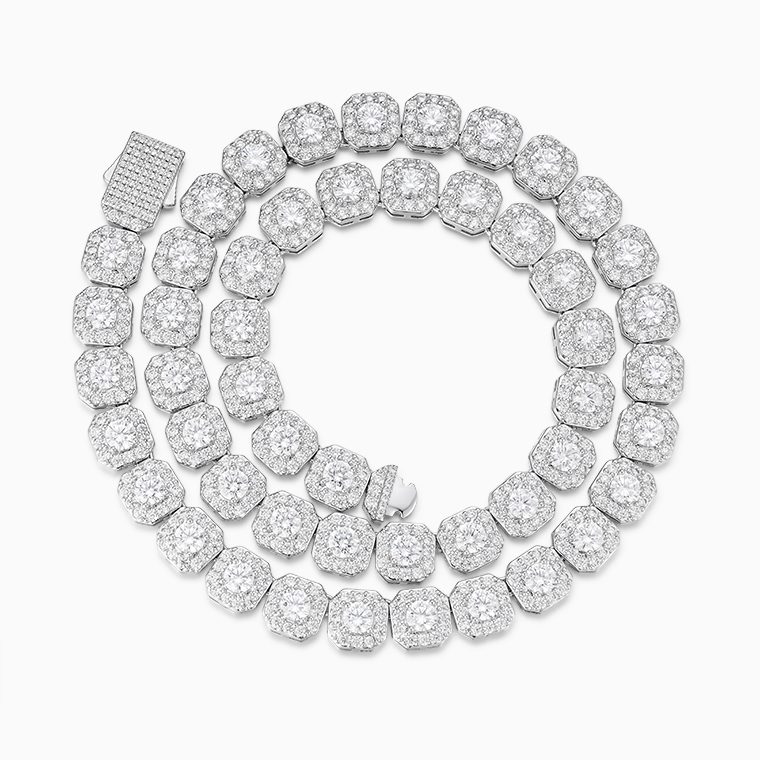
What Happens Inside a Cuban Link Chain Factory?
Take a Cuban link chain off the display and hold it in your hands. The first thing you might notice is its weight. Move it around a little, and you'll get a better sense of how the links sit against each other.A well-made chain should move naturally rather than feel stiff or awkward. The links need to sit properly, especially where the chain curves around the neck or wrist.
Then look at the clasp.
On some chains, the clasp is almost as noticeable as the links themselves. If it's too large, it can make the necklace look unbalanced. If it doesn't close securely, the customer may have trouble wearing it.
These are the kinds of details a jewelry factory needs to think about during production.
Making a Cuban chain involves decisions about link dimensions, assembly, polishing, and finishing. For iced-out designs, there's also the stone setting to consider. A small change to the link shape can affect how the stones are arranged, so the design needs to be checked before production moves ahead.
A factory that works regularly with Cuban chains should be able to explain these details rather than simply showing buyers another product photo.
How Is a Trading Company Different?
A trading company generally purchases jewelry from one or more manufacturers and sells it to wholesalers, retailers, or other businesses.It may have a large catalog covering Cuban chains, tennis bracelets, pendants, rings, and various fashion jewelry products.
For buyers who want to purchase several product categories without dealing with multiple factories, this arrangement can be convenient.
Trading companies may also provide useful services such as supplier coordination, consolidated shipping, and order communication.
The important distinction is that a trading company does not necessarily control the actual manufacturing process.
For example, imagine that a retailer orders a batch of 12mm Cuban link chains. After receiving the samples, the retailer decides the links should be slightly thicker and the clasp needs a different shape.
A trading company may need to send these requests to its manufacturing partner, wait for technical feedback, and then communicate the proposed changes to the buyer.
When working with a manufacturer that has the necessary development capabilities, the buyer can discuss those modifications more directly with the people responsible for production.
Neither arrangement automatically guarantees better results. The difference lies in how production decisions are made and how much visibility the buyer has throughout the process.
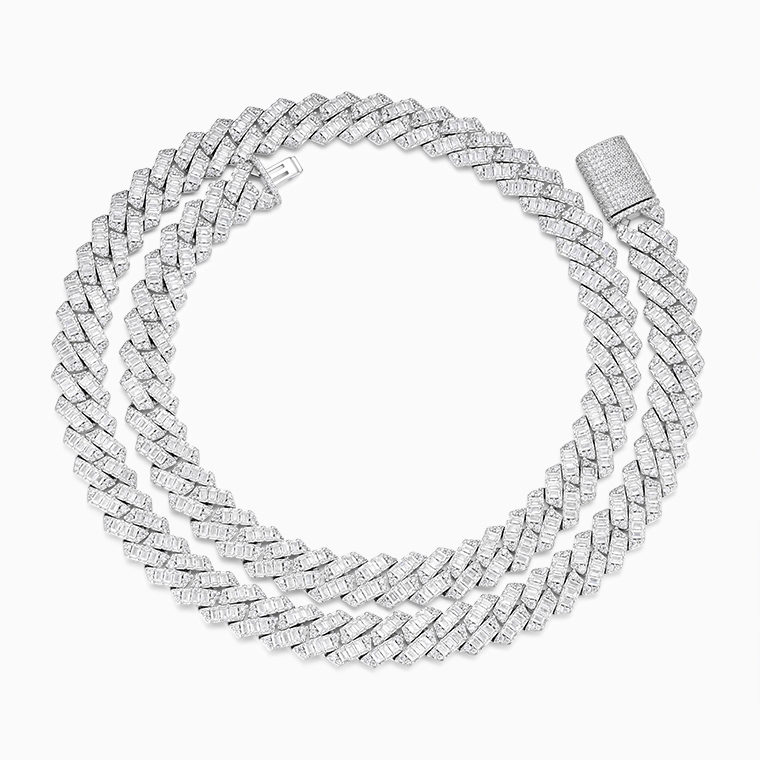
Customization Is Where the Difference Often Becomes Noticeable
Many suppliers advertise custom Cuban link chains.However, customization can mean very different things.
Some suppliers offer a standard chain in several lengths and widths. Others allow customers to select plating colors or add a logo to an existing clasp.
More complicated requests involve changing the product's construction.
Suppose a jewelry brand wants to develop a Cuban chain with a particular link profile, a customized clasp, and a specific weight.
The original reference photo may not provide enough information to manufacture the piece accurately.
Someone needs to confirm the dimensions, assess the design, choose suitable materials, and determine whether the proposed construction can be manufactured consistently.
If the chain will be set with moissanite or cubic zirconia, stone size, spacing, and setting structure also need attention.
This is where direct communication with an experienced Cuban Link Chain Manufacturer can be valuable.
At Shining Star Jewelry, we approach custom hip hop jewelry development by reviewing the actual design requirements before moving into production.
For a Cuban chain project, that may involve discussing the link dimensions, overall length, metal selection, clasp design, stone layout, and desired finish.
Some buyers arrive with detailed drawings. Others only have a photograph and a rough idea of what they want.
Those two situations require different levels of development work, and it makes sense to settle the important details before approving a production sample.
Quality Control Goes Beyond Checking the Finished Chain
One common mistake in wholesale jewelry purchasing is to judge quality entirely from product photographs.A Cuban chain can look excellent in a picture and still have problems that are difficult to notice until it is handled.
A link may not sit correctly beside the next one. A clasp may feel too loose or too stiff. A polished section may look uneven under normal lighting.
On iced-out Cuban chains, stone security introduces another set of considerations.
The factory must pay attention to the setting structure, individual stone placement, and whether the finished piece meets the agreed inspection requirements.
When a problem appears, the buyer needs more than a replacement promise. It helps to understand why the problem occurred.
Was it related to the design? Did something change during assembly? Was the approved sample different from the production specification?
A manufacturer with direct production involvement is often better positioned to investigate these questions.
A capable trading company can also manage quality control, especially when it has reliable factory partners and clear inspection procedures.
For the buyer, the practical question is whether the supplier can explain its inspection standards and provide a workable solution when something goes wrong.
Is Buying Directly From a Manufacturer Always Cheaper?
Not necessarily.It is easy to assume that buying directly from a factory will always result in the lowest price.
In reality, Cuban chain pricing depends on several factors.
The base metal, chain width, length, weight, clasp construction, stone selection, plating specification, and order quantity all affect production costs.
A trading company may receive competitive prices from factories because it purchases large quantities across multiple customers.
Meanwhile, a manufacturer may need to charge for custom development, tooling, or small production runs.
For a brand ordering an established design repeatedly, direct manufacturing can offer opportunities to improve cost efficiency.
Once the specifications have been finalized, future orders may require less development work.
However, a cheaper quotation is not necessarily a better quotation.
Consider two suppliers offering what appears to be the same gold-plated Cuban link chain.
One quotation may be based on a lighter construction, a different base metal, or another plating specification.
Without checking those details, comparing prices tells you very little about the actual value of the products.
Experienced wholesale buyers usually compare specifications first and prices second.
Why Repeat Orders Matter More Than the First Sample
The first sample is important. But for many jewelry businesses, the real test comes several months later.Imagine a retailer introduces a new Cuban link bracelet.
The initial order sells well. Customers like its weight, appearance, and fit. The retailer decides to reorder the same product.
The problem starts when the second batch arrives looking slightly different.
Perhaps the clasp has changed. The link dimensions are not quite the same. Or the finish has a noticeably different color.
These differences may seem minor at the production stage, but customers who have already purchased the original bracelet may notice them.
This is one reason we believe buyers should pay close attention to how suppliers manage repeat production.
An approved sample is useful, but it should be supported by clear product specifications.
Measurements, materials, finish requirements, clasp details, and relevant inspection criteria all help reduce misunderstandings.
For a Cuban Link Chain Manufacturer, repeatability should be part of the manufacturing discussion, not something considered only after the second order has been placed.
The goal is not to pretend that every handmade or mechanically finished piece will be absolutely identical.
It is to establish acceptable production standards that both the buyer and the factory understand.
Where Shining Star Jewelry Fits Into This Process
Shining Star Jewelry is a jewelry manufacturer based in Guangzhou, China, specializing in hip hop jewelry development, production, and wholesale services.Our product range includes Cuban link chains, bracelets, custom pendants, rings, and other jewelry styles.
We work with buyers who need both existing designs and customized products.
Our manufacturing approach combines product development with production coordination and quality inspection.
For custom Cuban chains, we consider details such as link size, chain proportions, material selection, clasp construction, stone setting, and surface finishing.
These decisions matter because a chain needs to do more than look attractive in a product photograph.
It must match the approved design, feel appropriate when worn, and meet the specifications agreed upon for the order.
We also understand that different customers have different business needs.
An established wholesaler may be concerned about maintaining consistent quality across repeated bulk orders.
A new jewelry brand may need more help reviewing a design and developing its first sample.
An online jewelry store might start with three or four Cuban chain designs rather than ordering hundreds of pieces of one style. The owner wants to see what sells first. Maybe customers prefer the heavier chains. Maybe an 8mm bracelet gets more attention than the 12mm version. Until the store has some sales data, ordering too much of one design can be risky.
We get different kinds of requests at Shining Star Jewelry. Some buyers already know the exact chain width, length, and finish they need. Others send us a few photos and ask what we can make.
In those cases, we usually need to talk through the details. A buyer might ask for a thicker chain but still want to keep the original price. We would need to look at the material, weight, and construction before discussing what's possible. It's much better to work that out during sampling than discover the problem after production has started.

Are Trading Companies a Better Choice for Some Buyers?
Yes, sometimes they are.Take a small accessories business that sells jewelry alongside watches, sunglasses, and handbags. The owner may not want to deal with five or six different factories. Finding suppliers, comparing quotations, arranging payments, and organizing shipments can take up a surprising amount of time.
A trading company can handle much of that work.
Some trading companies also know which factories are good at particular products. That experience can be useful, especially for buyers who are unfamiliar with the Chinese jewelry market.
But things get more complicated when the buyer wants to develop a Cuban chain that isn't already available in a catalog.
Let's say a jewelry brand has a particular clasp design in mind. The owner wants the clasp to sit flatter against the neck, and the chain links need to be slightly wider than those on the reference sample.
Someone has to figure out whether those changes will work together.
The clasp may need a new mold. Changing the links could affect the chain's weight and flexibility. If the design includes stones, the setting arrangement may need another look.
A trading company can pass these requests along, of course. Some handle custom projects very well. But when you're working directly with a Cuban Link Chain Manufacturer that can develop the design, there are fewer people between the buyer and the production team.
For complicated custom orders, that can make communication easier.
What Should You Ask a Cuban Link Chain Supplier?
I wouldn't choose a supplier based only on the number of products shown on its website.A large catalog doesn't necessarily tell you much about the factory making the chains.
I'd start by asking who actually manufactures the jewelry.
If the supplier says it owns a factory, ask what happens there. Are the chains assembled and polished on-site? Who handles stone setting? Is the plating completed in the same facility or sent to another workshop?
There's nothing unusual about a jewelry manufacturer using outside specialists for certain processes. What matters is whether the supplier knows who is doing the work and can manage the quality.
For custom Cuban chains, I'd also ask how the factory handles changes to an existing design.
Can it work from a customer's drawing? What happens if the first sample is too heavy? Can the clasp be modified without changing the rest of the chain?
Then there's the question of repeat orders.
Suppose you order 100 bracelets, sell them, and come back three months later for another 300. Will the factory still have the original measurements and approved specifications? Can it reproduce the same clasp and finish?
These are ordinary questions, but they can save a lot of trouble.
Before placing a large order, I'd also want to hold a physical sample.
A chain can look beautiful in a photograph. You can't tell from a picture whether the links move smoothly, whether the clasp is comfortable to operate, or whether the bracelet feels too heavy on the wrist.
Those details are easier to judge when the jewelry is right in front of you.
Working With the Right Supplier
I've seen buyers spend a lot of time comparing prices without first checking whether they're being quoted for the same product.Two suppliers might both offer a 10mm gold-plated Cuban chain. On paper, the descriptions look almost identical.
But one chain could be lighter. The clasps might be different. The plating requirements may not match. Even the way the links are finished can change how the chain looks when someone wears it.
That is why the factory's ability to discuss production details matters.
A trading company may be perfectly suitable for a retailer purchasing a mix of ready-made accessories. For a brand developing its own Cuban chain designs, direct contact with a manufacturer may be more useful.
At Shining Star Jewelry, we work with wholesale buyers on Cuban link chains and other hip hop jewelry products. Some customers come to us with an existing design they want to reproduce. Others need to adjust a chain's dimensions, choose a different clasp, or develop a new style from reference images.
We prefer to discuss those details before the order goes into production. If a buyer wants a heavier chain, we need to understand how much heavier. If the chain will have stones, we need to look at the setting arrangement. If the customer plans to reorder the same design regularly, the approved specifications become especially important.
There isn't much value in making a sample that looks good if the factory cannot produce the same design consistently for later orders.
So, when comparing a trading company with a Cuban Link Chain Manufacturer, I'd pay attention to what happens after the first quotation. Can the supplier explain the construction? Can it help you work through changes? Will it still understand your requirements when you place the next order?
Those are the things worth finding out before committing to a long-term supplier.
If you're sourcing Cuban link chains for a jewelry store or developing a collection under your own brand, you can contact Shining Star Jewelry to discuss the designs, materials, and quantities you have in mind.
You can also see our jewelry collections at www.ssfjewelry.com.