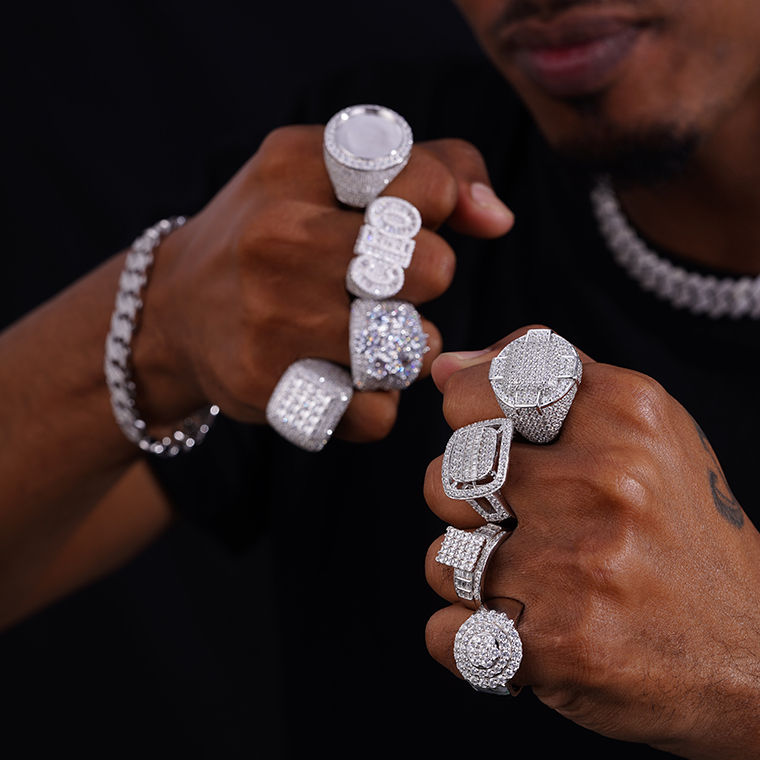






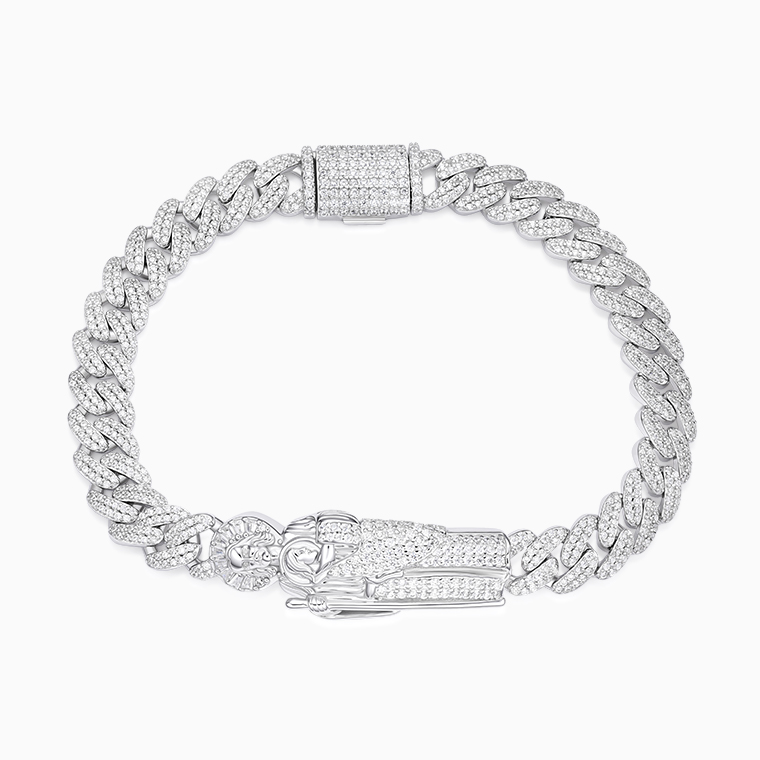
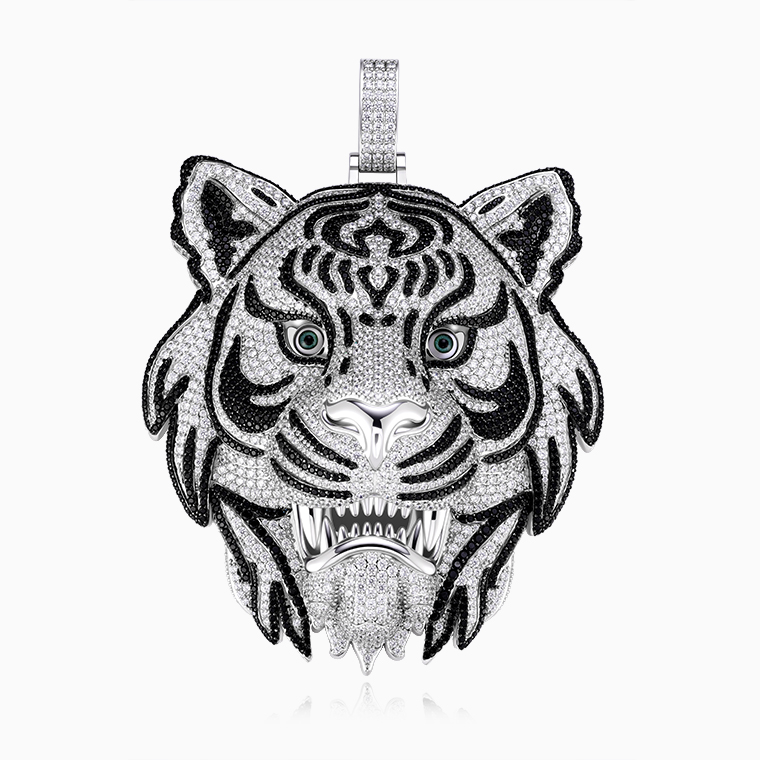

A product photo can show the width and overall style a buyer has in mind. It rarely shows enough to make the chain. The factory still needs to know the depth of each link, how the stones continue around its sides, and how the last links connect to the clasp. Those choices affect the finished piece, even if they make little difference to a front-facing image.
For an iced out Cuban chain manufacturer, the first design review begins with the links. A 12 mm measurement describes their width, but it says little about how the chain will feel. Link depth, opening, and spacing determine how closely the links sit together and how the chain bends. The factory has to check the pattern through a curved section, including the links next to the clasp. That is where a design that looks orderly when laid flat may begin to bunch up or turn awkwardly.
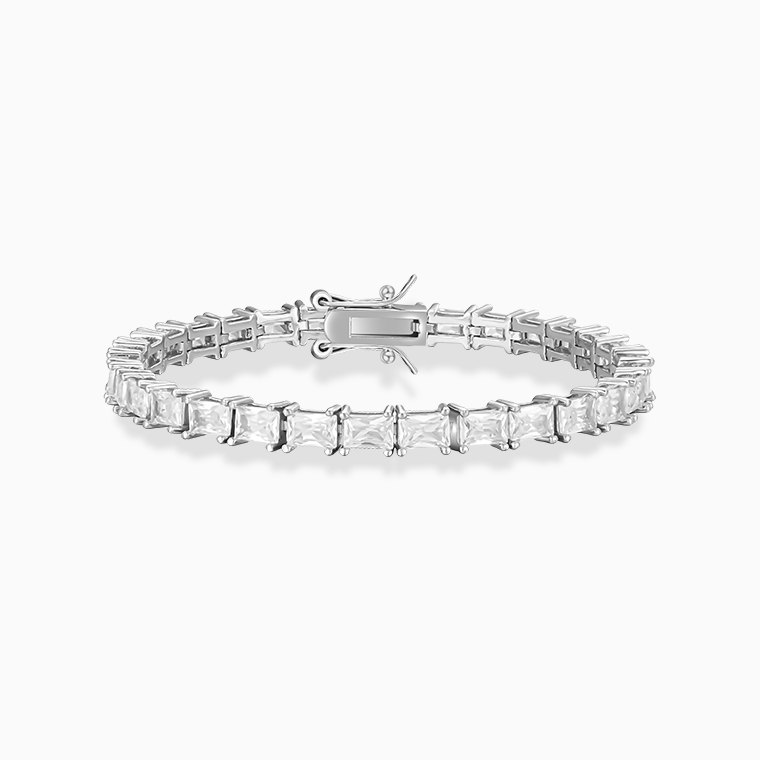
Decide exactly where the stones stop
“Iced out” describes a visual effect, not a stone-setting specification. One buyer may expect stones across the face of every link. Another may want coverage along the sides and over the clasp as well. Both could point to the same front-facing reference photo.
The factory needs an agreed layout before setting work begins. Stone size and spacing affect the pattern, while the shape of each link limits the area available for settings. The design must also leave room for neighboring links to move without catching.
This is one reason to review the chain from several angles. The front view shows the overall rhythm of the stones. Side and underside views reveal where the coverage ends and how the settings relate to the moving parts. If those boundaries matter to the buyer, they belong in the approved drawing and sample.
Treat the clasp as part of the design
The clasp is where many visual decisions meet a practical one: can the wearer fasten the chain easily and securely?
Its size should make sense beside the links. Its finish and stone coverage should match what the buyer approved. It also needs to sit comfortably where it joins the chain. A close-up image of a decorated clasp may look convincing while revealing little about how it opens or closes.
The sample review should include repeated opening and closing, along with a look at both connection points. If the buyer intends to sell the chain with a pendant, this is also the time to check whether the pendant’s bail can pass over the relevant end fitting. Discovering that mismatch after production leaves few good options.
Put a number behind the requested size
A request for a “12 mm Cuban chain” still leaves a surprising amount undecided. The manufacturer needs the length, link depth, construction, metal, stones, finish, and clasp details. The buyer may also have an expected weight or a target purchasing price.
These choices are connected. A change made to reach a price target can change the chain’s weight or feel. A different stone layout can change the amount of setting work and the appearance of the links. It is more useful to compare two fully described versions than to compare two quotations carrying the same product name.
The buyer does not have to know every measurement at the first inquiry. The important step is to identify what remains open and resolve it during design and sample review.
Make the sample useful for the next order
A sample approval often sounds like a simple yes or no. For a product a brand plans to reorder, it needs to be more specific.
The buyer can record the approved dimensions and weight, then check the link movement, stone rows, edges, plating color, and clasp operation. Photographs of the front, sides, underside, and clasp provide a reference alongside the physical sample. If something needs changing, the feedback should name the location and the problem: for example, a stiff section near the clasp or a visible change in stone spacing.
Once approved, the sample and written specification give the factory a shared reference for bulk production. They also give the buyer a way to judge a later batch. “Same as last time” is much clearer when both sides can point to the same measurements, images, and approved piece.
Before the factory starts
Shining Star Jewelry’s custom iced out jewelry service accepts a logo, sketch, reference image, CAD file, or physical sample as a starting point. Its published process includes reviewing dimensions, construction, materials, stone layout, and finish before production.
For a Cuban chain project, a strong first inquiry would include the reference image, desired width and length, preferred metal and stones, intended coverage, finish, estimated quantity, and any price target. From there, the buyer and manufacturer can work through the details a photograph cannot answer.
That conversation may change the initial design. It can also prevent a more expensive surprise: receiving a chain that matches the picture but does not match the product the buyer meant to order.