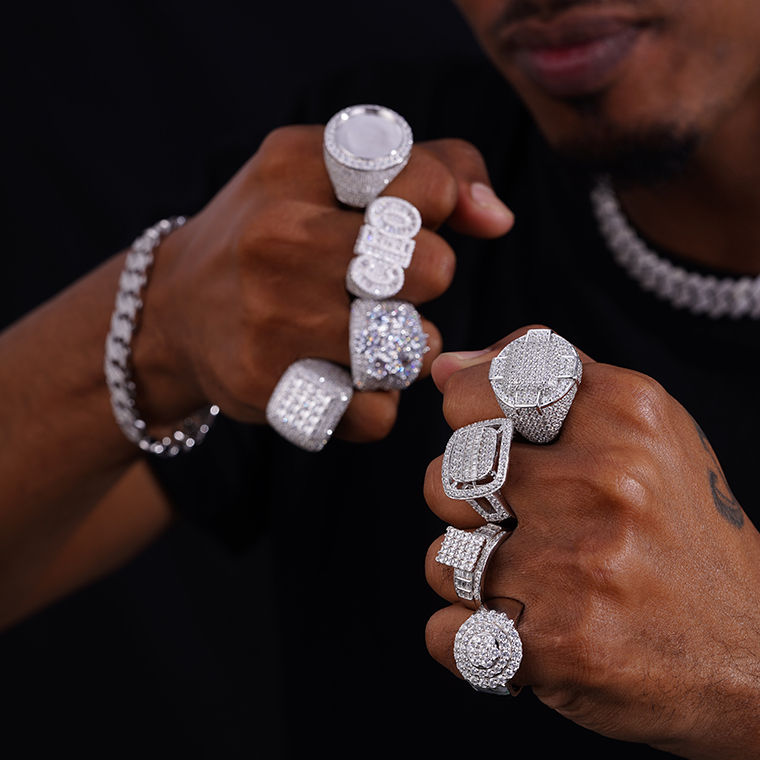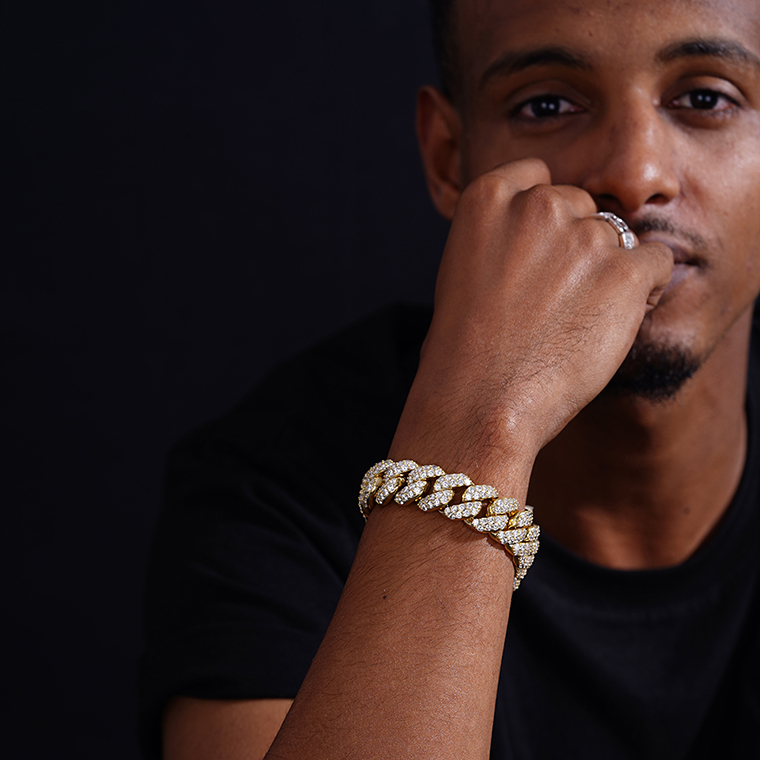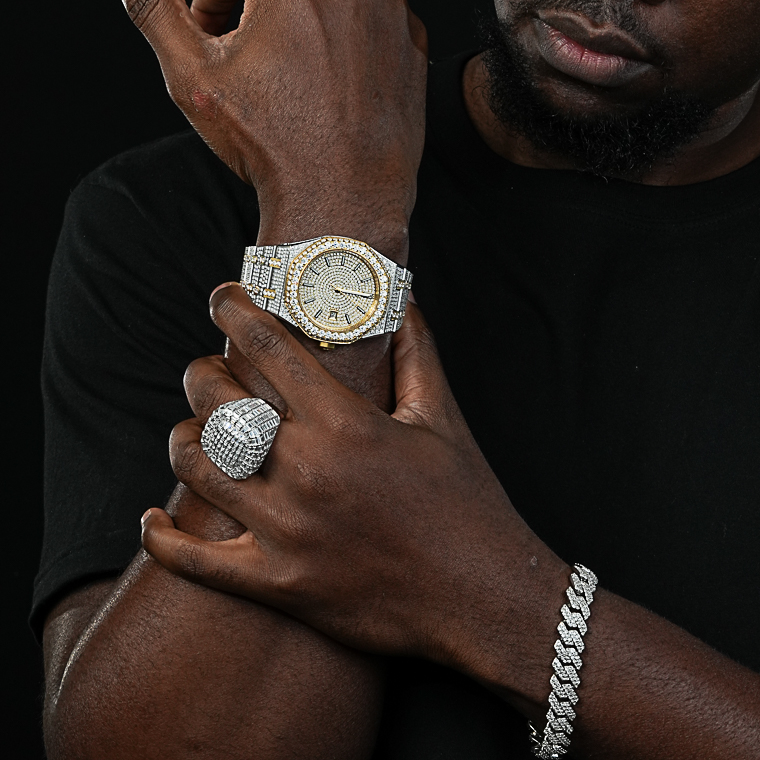






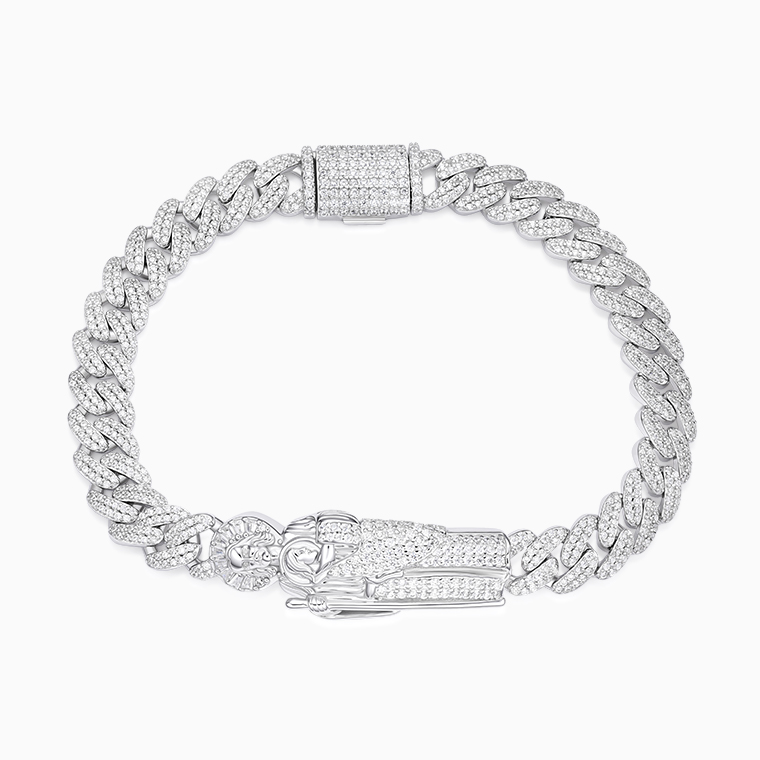


The answer is rarely as simple as one factory using better stones. In many cases, the difference is hidden in the metalwork. How the seats were cut, how much metal was left around each stone, whether the casting was sound, and how the piece was polished can all affect the finished jewelry.
A pendant covered in hundreds of small stones may look impressive in a photograph. That photograph tells you very little about how securely those stones are held.
At Shining Star Jewelry, this is one of the practical issues we consider when discussing custom iced-out jewelry with wholesale buyers. A design needs to look right, but it also needs a structure that makes sense for production and everyday handling.
A Beautiful Stone Layout Can Still Be a Bad Design
Imagine a customer sending a drawing of a large letter pendant. They want every visible surface covered with stones, including the thin strokes connecting the letters.The broad sections are usually easier to work with. There is enough space to arrange the stones and leave metal around them.
The narrow sections are another matter.
If the stones are packed too closely, the setter may have very little metal available to secure them. If the design calls for stones that are too large for a particular area, the problem becomes even more obvious.
This is where the design sometimes needs to change.
A smaller stone may fit the narrow section better. The spacing may need adjustment. In some cases, a thin part of the pendant needs to be made slightly wider.
None of these changes sounds particularly exciting. They can, however, make the difference between a design that looks good on a computer screen and one that can be manufactured with a suitable setting structure.
For wholesale buyers, this is worth discussing before approving the first sample.
The Small Metal Details That Keep Stones in Place
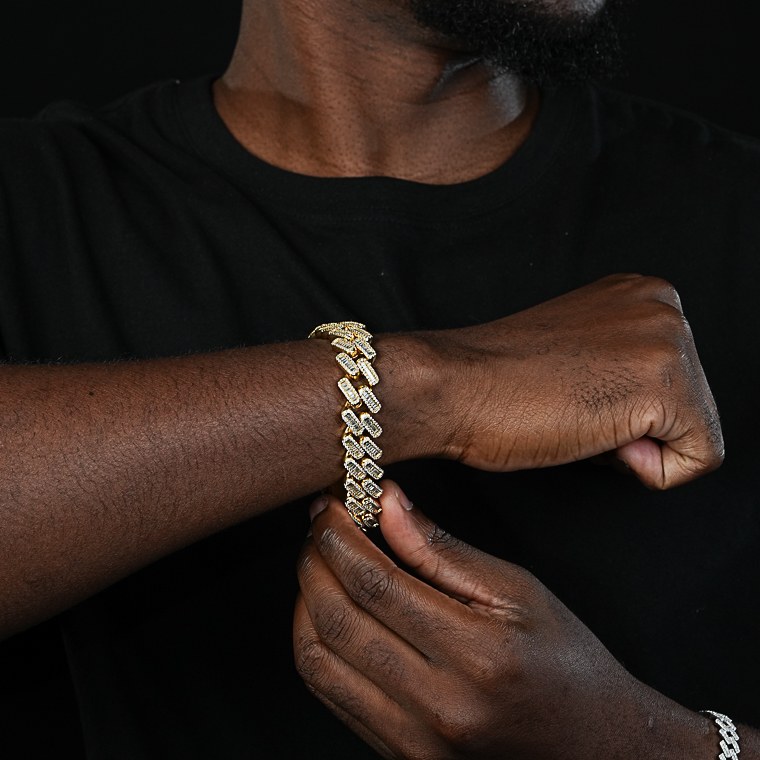
Most customers pay attention to the stones themselves. They notice the size, the cut, the color, and how much light the finished piece reflects.A stone setter pays attention to the metal around them.
In a prong setting, the stone needs a properly prepared seat, and the prongs must contact it in the intended positions. In bead or pavé setting, small portions of metal are formed to hold the stones.
These features can be extremely small on iced-out jewelry.
A seat cut too deeply may remove metal that the setting needs. A stone sitting too high may be more exposed to contact. An uneven seat can prevent proper support.
Then there is the question of how the metal behaves during setting.
Metal does not always remain exactly where a tool pushes it. Depending on the alloy and setting geometry, some elastic recovery can occur. A setter needs to account for that behavior rather than assuming that visible contact automatically means the stone is secure.
The Gemological Institute of America has discussed these problems in its bench-jewelry guidance, particularly the importance of properly fitted seats and secure prong contact.
For a pendant containing hundreds of stones, small differences in workmanship can become a much larger quality concern.
Sometimes the Problem Begins Before Stone Setting
It is tempting to blame the setting process whenever a stone comes loose.But the problem may have started during casting.
Consider a small prong or bead formed in a casting. If the surrounding metal contains significant porosity or another structural defect, the setting may not have the strength expected from its appearance.
A setter can work carefully and still be dealing with a poor foundation.
Casting defects do not all have the same consequences. Their location, size, and severity matter. A minor imperfection on a noncritical surface is different from a defect in the metal that holds a stone.
That is why inspection before setting is important.
For a Hip Hop Jewelry Manufacturer producing stone-heavy pendants, rings, and bracelets, the quality of the metal structure should be considered before the piece moves to the next stage.
At Shining Star Jewelry, custom jewelry development involves more than making a model and filling it with stones. We consider the relationship between the design, the selected materials, the manufacturing method, and the finished structure.
There is little value in completing an expensive stone-setting operation on a component that should have been corrected earlier.
Why Wax Setting Needs Careful Process Control
Wax setting is often used in discussions about the manufacture of stone-heavy jewelry.In this process, suitable stones are positioned in a wax model before the metal casting stage. Under appropriate conditions, the metal is cast around the arranged stones.
The method can be useful for certain complex designs containing many small stones. It also introduces technical requirements that should not be overlooked.
Not every gemstone is suitable for exposure to casting conditions. The stones must be compatible with the process, and the manufacturer must consider their position, the wax model, the casting conditions, and the metal that will eventually secure them.
A stone can be correctly positioned in the wax model and still require careful evaluation after casting.
That is why the process should not be described as an automatic solution to stone loss.
Shining Star Jewelry offers wax-setting capabilities for suitable jewelry projects, alongside other manufacturing and setting operations.
The choice of process should follow the needs of the design, not simply the desire to use a particular production method.
Polishing Is Not Just About Making Jewelry Shine
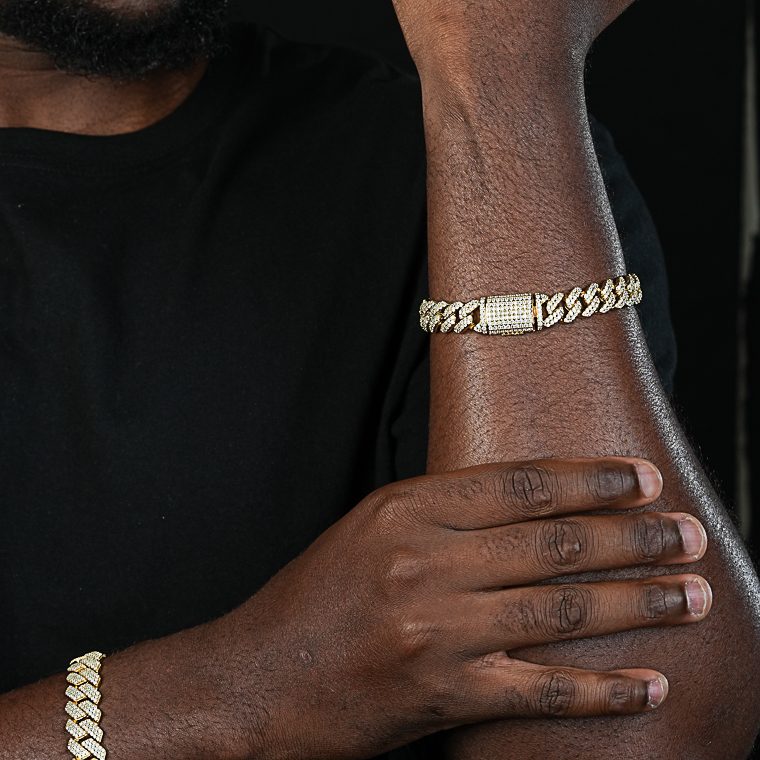
Polishing is one of the stages where a piece begins to look like the product the customer imagined.Before polishing, the metal may show marks left by earlier operations. After finishing, the surfaces become smoother and more reflective.
But polishing also removes material.
On a large plain surface, a small amount of controlled material removal may not create a structural problem. Around tiny prongs and beads, the situation is different.
Too much polishing in the wrong area can change the shape of the metal surrounding a stone.
This is particularly relevant to iced-out pendants with stones placed near edges, corners, and narrow lettering.
A manufacturer needs to know where a polished finish is desirable and where the setting details need protection.
Shining Star Jewelry uses different polishing operations as part of its jewelry manufacturing process. For detailed custom pieces, the finishing approach needs to account for the geometry of the jewelry and the areas where stones are secured.
The goal is not simply to make every surface as bright as possible.
It is to achieve the required finish without unnecessarily weakening important details.
A Gold Finish Cannot Hide a Weak Setting Forever
Gold plating and rhodium finishing are common in hip hop jewelry.They can give a piece the color and surface appearance requested by the customer, but they do not repair a poorly prepared stone seat or replace missing supporting metal.
This sounds obvious, yet it is easy to overlook when evaluating a new sample.
A freshly finished pendant may look excellent under showroom lighting. The stones are clean, the metal is bright, and the product photographs beautifully.
A buyer should still look closely at the setting.
Are the stones seated evenly? Are the retaining features properly formed? Are there areas where the metal looks unusually thin or damaged?
These questions matter more than the brightness of the finish.
For brands ordering custom jewelry, it is useful to review both the overall appearance and the manufacturing details before moving into larger production quantities.
The Areas We Would Examine More Closely
Not every part of a piece of jewelry faces the same risk.A broad section of a pendant with well-supported settings may behave differently from a narrow projecting corner. A ring is exposed to different contact conditions than a pendant. A flexible bracelet introduces movement that a rigid design does not.
For iced-out jewelry, several areas deserve particular attention during inspection.
The first is the edge of the design. Stones placed close to an exposed edge may have less surrounding metal or may be more vulnerable to accidental contact.
The second is narrow lettering and decorative details. These areas can be difficult to cast, finish, and set consistently.
The third is any part of the jewelry that moves. Bracelet links, hinged components, and other moving structures need to be evaluated in the context of their intended use.
Finally, there are the individual settings themselves.
A stone should not be visibly loose. Its seat and retaining features should be appropriate for the stone and setting style. Cracks, damaged prongs, or obvious deformation should be investigated.
Shining Star Jewelry includes stone-setting security checks among its quality-control capabilities.
For wholesale projects, the inspection approach should be discussed according to the design and the buyer's requirements. A heavy pendant, a delicate ring, and a flexible bracelet may not call for identical checks.
There is no single test that can predict every type of wear or accidental damage a piece of jewelry may experience.
What Wholesale Buyers Should Ask Before Approving a Sample
A sample is more useful when it is treated as a manufacturing reference rather than only a finished display piece.Suppose a brand is developing an iced-out pendant for an online collection.
The first sample looks good. The stones are bright, the proportions are right, and the customer likes the weight.
Before approving bulk production, the buyer should also understand whether the design has any particularly delicate areas.
Was the stone layout adjusted during development? Were there narrow sections that required additional support? Does the selected metal affect the recommended setting approach? Are there limitations the retailer should understand when describing the product?
These are reasonable questions to ask a manufacturer.
It is also worth checking whether the approved sample and its specifications will be used as references for later orders.
For a wholesale business, product consistency matters. A customer buying the same pendant several months later should not unexpectedly receive a different stone layout or noticeably altered construction.
That consistency begins with documenting what was actually approved.
Why Stone Loss Matters Beyond the Workshop
A missing stone is not only a manufacturing issue.For a jewelry brand, it may mean a customer complaint, a return, a replacement, or a negative review.
If several pieces from the same collection develop similar problems, the retailer may need to investigate an entire batch.
The cost can extend beyond the jewelry itself.
There may be shipping expenses, customer-service time, and inventory that cannot be sold until the issue is resolved.
This is why experienced wholesale buyers often care about details that are almost invisible in product photographs.
They want to know whether a manufacturer understands the relationship between appearance, structure, and repeatable production.
No responsible manufacturer should promise that a stone can never become loose. Jewelry can be damaged through impact, wear, and improper handling.
What a manufacturer can do is identify foreseeable weaknesses, select suitable production methods, and inspect the finished product against appropriate requirements.
Good Manufacturing Sometimes Means Changing the Design
One of the more difficult conversations in custom jewelry development happens when a customer's design needs adjustment.A client may want a very thin pendant covered completely with stones. The image may look excellent, but the proposed construction may leave too little metal to support the settings.
The easiest answer would be to approve it immediately.
A more useful response is to explain the problem and discuss alternatives.
Perhaps the pendant can be slightly thicker. Perhaps the narrow section can use smaller stones. Perhaps the setting arrangement can be changed without affecting the overall appearance.
Not every design requires such changes, and the right solution depends on the specific piece.
At Shining Star Jewelry, we see these discussions as part of custom manufacturing. CAD development, sampling, material selection, stone setting, and finishing are connected stages of the same project.
The purpose is not to make a customer's design unnecessarily complicated. It is to make sure the design can be evaluated as something that will actually be manufactured and worn.
The Real Work Is Beneath the Sparkle
A customer may choose an iced-out pendant because of the way it catches the light. That is part of the appeal of hip hop jewelry.But the work that determines whether the stones stay in place is much less visible.
It is found in the dimensions of the metal, the preparation of the seats, the quality of the casting, the setting method, the finishing process, and the care taken during inspection.
For a Hip Hop Jewelry Manufacturer, these details are not separate from the design. They are what make the design possible.
Shining Star Jewelry works with jewelry brands, retailers, and wholesale buyers on custom hip hop jewelry development and production. We bring design, manufacturing, stone setting, finishing, and quality considerations into the same discussion, particularly when a project involves complex iced-out designs.
A beautiful pendant is the starting point. Understanding how it is made, and where its weaknesses might be, is what helps turn that design into a product suitable for wholesale production.