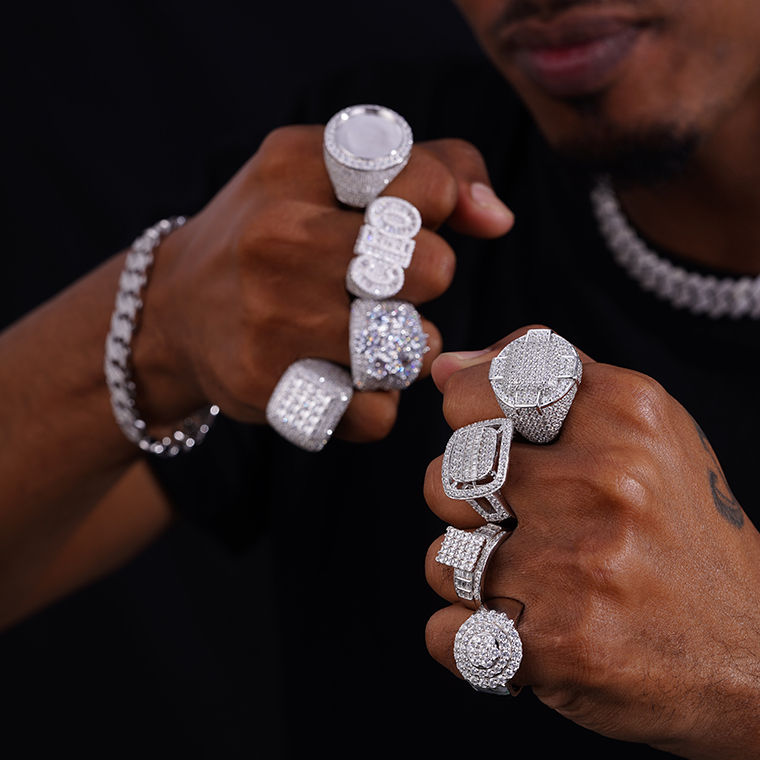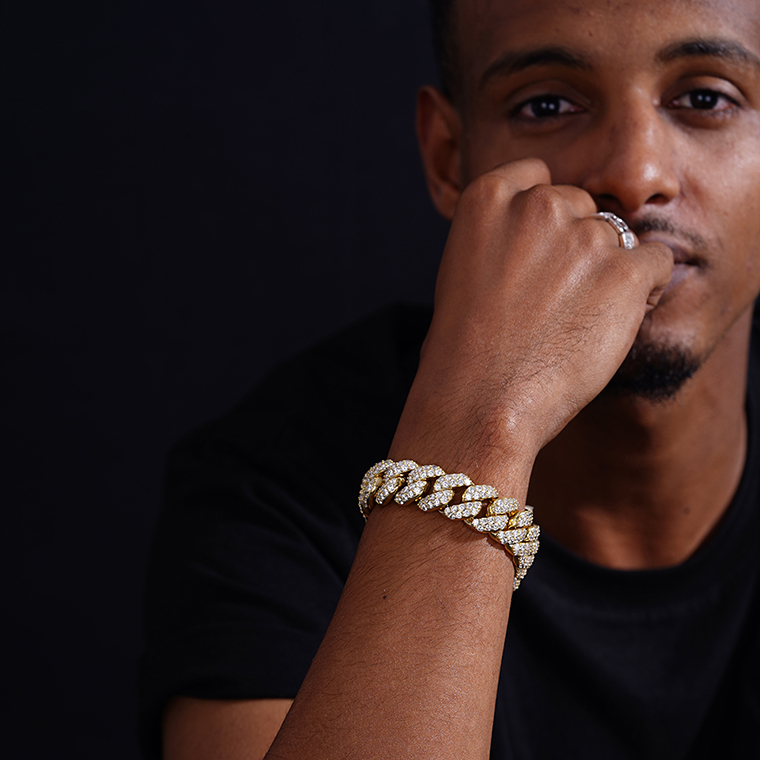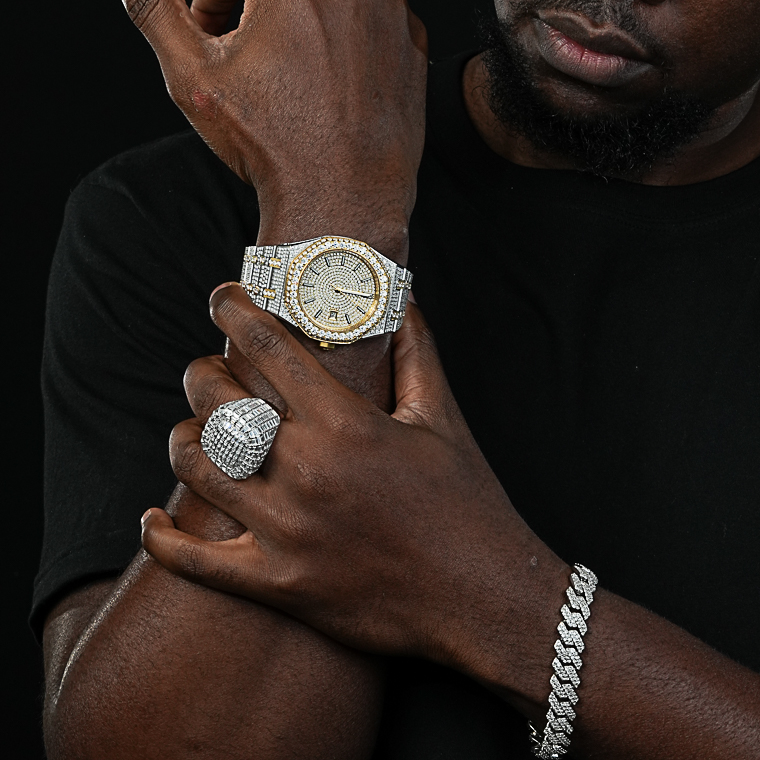







When people search for a Wholesale Hip Hop Jewelry Manufacturer, they usually start with the obvious things: chains, pendants, rings, prices, and minimum order quantities. We understand why. Those are the things a jewelry buyer needs to know. But after working with different wholesale customers, we've found that the problems worth discussing are not always visible in a product catalog.
One of our customer relationships began at a jewelry exhibition in Hong Kong.
The customer was Georges, an Amazon jewelry seller. He wasn't new to the business, and he wasn't looking for his first supplier. He already had one. What brought him to us was a different problem: his existing supplier wasn't helping him move forward as quickly as his business needed.
New designs were taking too long. His product choices were limited. The photographs he received weren't particularly useful for online selling.
None of those issues sounds dramatic on its own.
Together, though, they can make running a jewelry store unnecessarily difficult.
A Product Can Be Ready for Sale and Still Be Wrong for the Store
Imagine an online jewelry retailer preparing a new men's collection.
The seller has found several Cuban link chains, a few stone-set pendants, and some rings that might appeal to customers. The prices seem reasonable. Samples look good.
But there is another question: what happens after the products arrive?
Someone has to photograph them. Someone has to decide which pieces belong in the same collection. Product descriptions need accurate information about dimensions and materials. If a particular design becomes popular, the retailer needs to know whether it can be ordered again.
These are ordinary parts of running a jewelry business, yet they are easily overlooked when buyers concentrate entirely on the factory price.
Georges' situation reminded us that a jewelry supplier can influence more than purchasing costs.
For an Amazon seller, the time between choosing a product and making it available to customers matters. A delay in design development may mean missing an opportunity to introduce a new style. Poor product photographs may make a distinctive piece look ordinary.
That was the business problem we needed to understand before talking about individual jewelry designs.
Men's Hip Hop Jewelry Is Not One Kind of Product
We often talk about men's hip hop jewelry as a category, but the products within it can be surprisingly different.
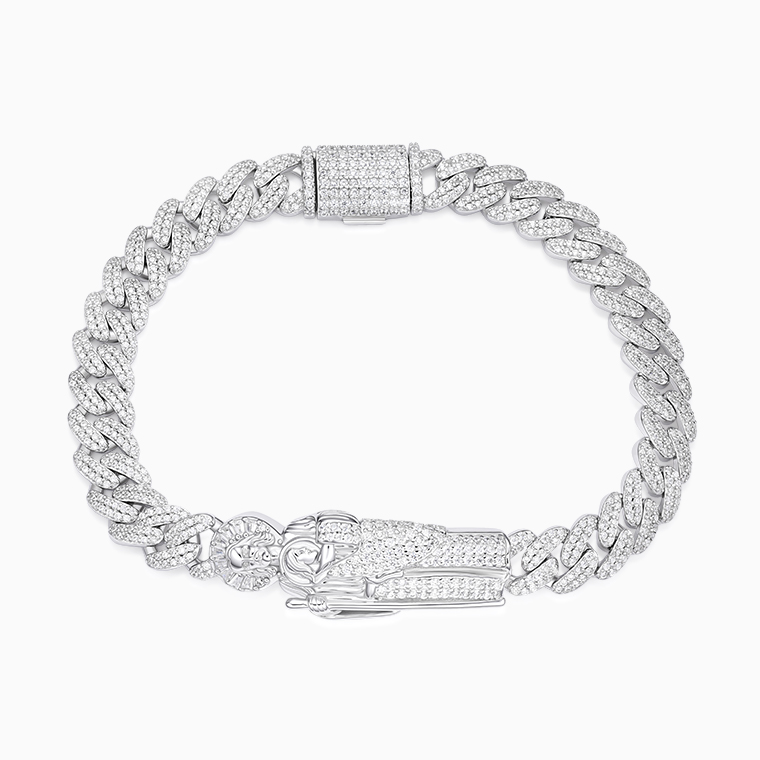
A thick Cuban link chain has a certain appeal. Its weight, movement, and polished surface are central to the experience of wearing it.
A custom name pendant is different. The lettering carries the design, and small changes to the proportions can alter its character.
A moissanite ring introduces another set of considerations. The stone may attract attention first, but the shape of the setting, the surrounding metal, and the way the ring sits on the finger also matter.
For a retailer, offering several styles is useful. Offering several styles that customers actually want is much harder.
Our company case study describes a collection of more than 10,000 men's hip hop jewelry designs available through Shining Star Jewelry.
That gave Georges a broader range of options to consider.
We don't believe a large catalog automatically makes a manufacturer the right choice for every customer. A collection of thousands of designs is only valuable when the buyer can identify pieces that suit the store's audience.
In Georges' case, access to a wider selection was one way to address the limitations he had experienced with his previous supplier.
The Difficult Part Often Begins With a Drawing
There is a moment in custom jewelry development when an attractive design has to become a practical object.
A customer might send us a logo and ask for it to be turned into a pendant.
On paper, the request seems simple.
But consider what happens when the logo has thin lettering, closely spaced details, and several sharp corners. If the customer wants stones across the entire front surface, the available space becomes even more important.
The designer has to think about where the stones will sit. The metal needs enough structure to support the intended design. The bail must fit the chain, and the finished pendant needs to hang at an appropriate angle.
A design may need adjustment before it can be made into jewelry.
That doesn't mean the original idea was poor. It means jewelry has physical requirements that a two-dimensional image doesn't have.
At Shining Star Jewelry, our design resources include ZBrush, JewelCAD, Matrix, and Rhino. These tools allow designs to be developed and reviewed in three dimensions.
Our published case describes how design support and 3D printing resources helped Georges address the slow development process he had previously experienced.
There is a distinction worth making here.
A digital model is not a finished pendant. A printed prototype is not necessarily the same as a cast and polished piece. And a completed sample is not proof that every future production batch will be identical.
Each stage answers different questions.
We believe buyers benefit from understanding those differences before they approve a custom jewelry project.
Why We Spend Time Thinking About Cuban Links and Stone Settings
A Cuban link chain may look straightforward. It is a series of connected metal links, after all.
But the links have to work together.
Their shape affects how the chain bends. The dimensions influence its appearance and weight. The clasp needs to suit the construction of the piece.
A chain that looks impressive lying flat may not behave in quite the same way when someone wears it.
Stone-set jewelry brings different challenges.
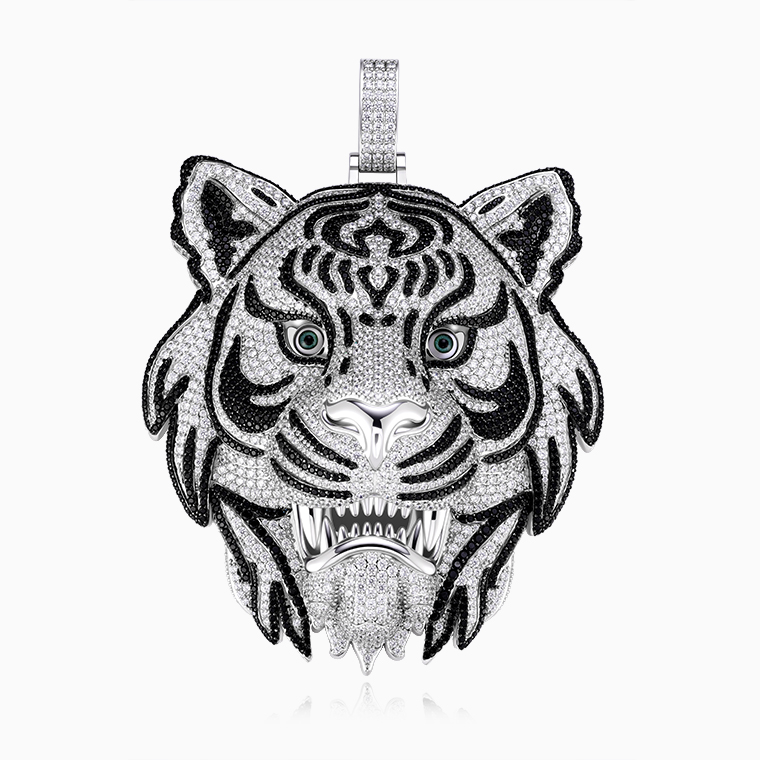
With moissanite pendants, for instance, the stones are only part of the finished appearance. The arrangement, spacing, and surrounding metal influence how the piece looks under light.
A densely set pendant can lose some of its visual balance if the rows do not follow the shape of the design carefully.
The corners are often worth examining. So are narrow sections of lettering, where there may be less room for the intended setting.
For wholesale buyers, these details matter because customers do not purchase manufacturing processes. They purchase finished jewelry.
If a chain feels awkward or a pendant looks uneven, the retailer is usually the first business to hear about it.
That is one reason we encourage careful discussion of product specifications and sample requirements.
The Photography Problem Was Not a Small One
Something that stood out in Georges' case was his need for better product photographs.
Jewelry photography can be difficult, especially with polished metal and highly reflective stones.
A photograph needs to show the design clearly without losing the details that make the product attractive.
For a men's Cuban link chain, customers may want to see the shape of the links, the clasp, and how the chain sits.
For an iced-out pendant, they may want a closer look at the lettering and stone arrangement.
The photograph also needs to communicate proportions accurately.
A close-up image can make a relatively small pendant appear much larger than it really is. Without clear dimensions or additional views, a customer may misunderstand what is being sold.
Our company provides jewelry photography support, including white-background product images.
According to the Georges case published on our website, this was one of the services that helped improve his online product presentation.
For us, it was a reminder that a Wholesale Hip Hop Jewelry Manufacturer can sometimes solve problems that begin after the jewelry leaves the workshop.
The Result, and What We Can Reasonably Learn From It
Our published case study reports that Georges' Amazon jewelry business experienced a 50% increase in sales over one year following our cooperation.
We are pleased that the customer story describes a positive outcome.
But we also recognize that sales growth cannot be attributed to manufacturing services alone.
An Amazon seller's performance depends on pricing, advertising, product selection, competition, customer reviews, and many other decisions.
What we can say about the cooperation is that it addressed several of the difficulties Georges had identified: limited product variety, slow design updates, and insufficient product photography support.
Those were practical problems, and they required practical solutions.
The experience also influenced how we think about wholesale customers.
Some retailers need access to more designs. Others want to develop exclusive pieces. Some need better production coordination, while others are concerned about protecting their original designs.
A useful manufacturing relationship starts by understanding which of those problems actually matters to the customer.
Not Every Jewelry Buyer Needs the Same Kind of Help
Other customer cases published by Shining Star Jewelry reflect this variety.
One US jewelry retailer with multiple stores had experienced difficulties related to product consistency and delivery.
Another wholesale customer was concerned about confidentiality and the protection of exclusive designs.
These are different business situations.
A retailer operating physical stores may be particularly concerned about receiving the right products at the right time.
A brand investing in original jewelry designs may be more concerned about preventing those designs from being shared without permission.
An online seller may place greater emphasis on product updates and photography.
None of these priorities makes one customer more important than another.
They simply demonstrate why wholesale jewelry manufacturing cannot be reduced to a price list.
The manufacturer needs to understand the role the jewelry will play in the customer's business.
What We Would Tell a Brand Planning Its First Men's Jewelry Collection
If a new jewelry brand approached us with plans for a men's hip hop jewelry collection, we would begin with the products it wanted to develop.
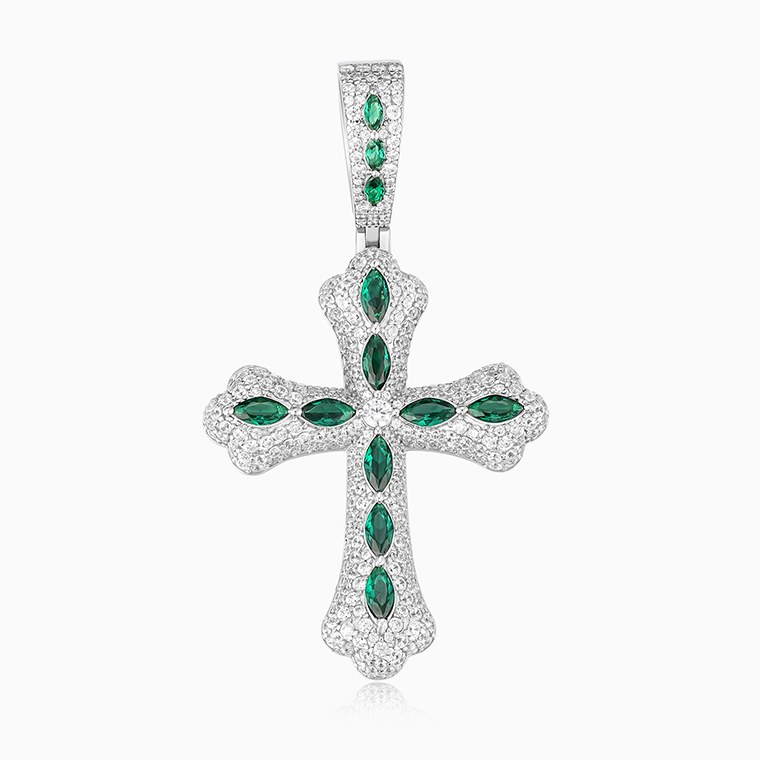
A Cuban link chain and a custom pendant may seem like a natural combination, but they still need to work together.
We would want to clarify the intended chain width, pendant dimensions, material options, stone-setting requirements, and desired finish.
We would also encourage the buyer to think about the customer who will wear the jewelry.
Is the piece intended to be a bold statement accessory? Is it supposed to be comfortable for regular use? Will the brand offer several sizes or variations?
These questions influence the design.
Before moving into a larger order, it is sensible to review physical samples and confirm the relevant specifications.
A photograph can reveal a great deal about appearance. It cannot fully communicate how a chain moves or how a pendant feels when worn.
We also believe buyers should discuss future orders early.
If a design sells well, the retailer will want to know how its specifications can be maintained when the product is reordered.
Those conversations may not be exciting, but they can prevent misunderstandings later.
A Manufacturer's Role Doesn't End With a Finished Piece
When we think back to our cooperation with Georges, the most useful lesson is not simply the reported sales growth.
It is the difference between supplying jewelry and understanding the work a retailer needs to do with that jewelry.
The retailer has to choose products, present them, sell them, respond to customers, and decide what to reorder.
Manufacturing is only one part of that process, but it connects with many of the others.
At Shining Star Jewelry, we continue to focus on custom hip hop jewelry development and wholesale manufacturing, including men's chains, pendants, rings, and other statement pieces.
We want our work to help customers turn their product ideas into jewelry that suits their intended market.
For a business searching for a Wholesale Hip Hop Jewelry Manufacturer, we believe the most useful question is not simply, "Who can make this design?"
It is also, "Who understands what I need this product to do for my business?"
That question may lead to a more valuable conversation than a quotation alone.
About Shining Star Jewelry
Shining Star Jewelry focuses on custom hip hop jewelry and wholesale jewelry manufacturing for brands, retailers, and distributors.