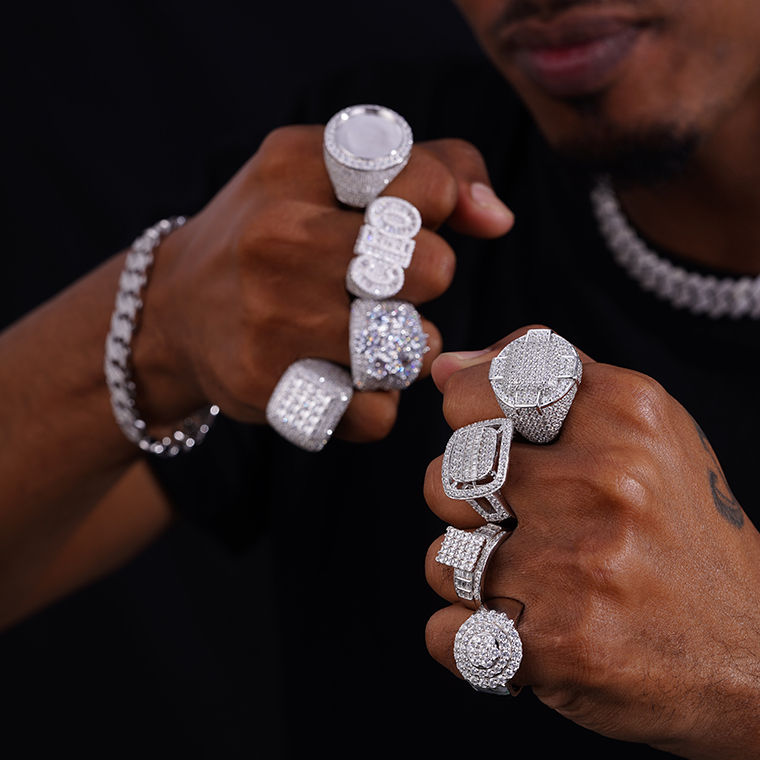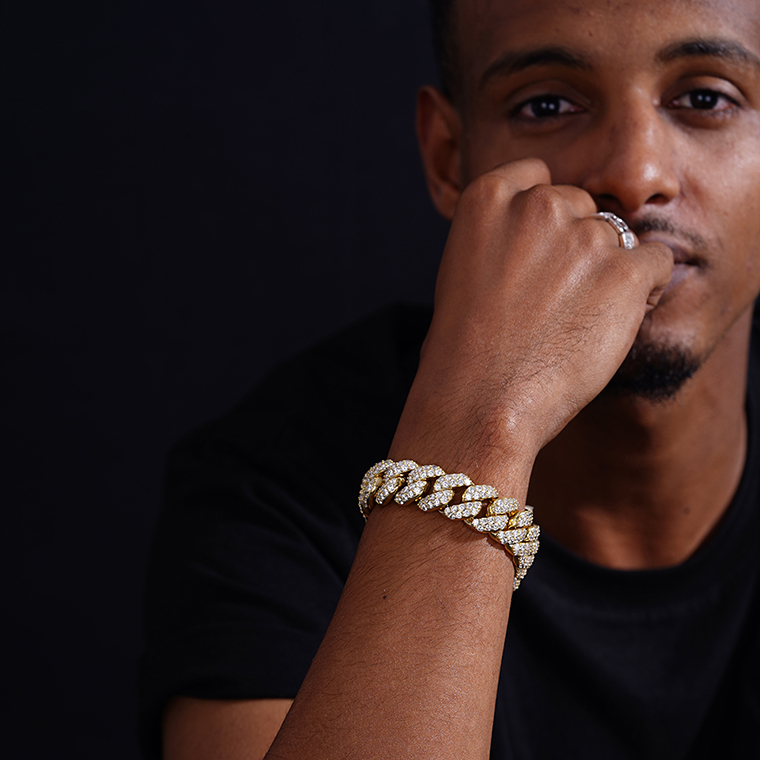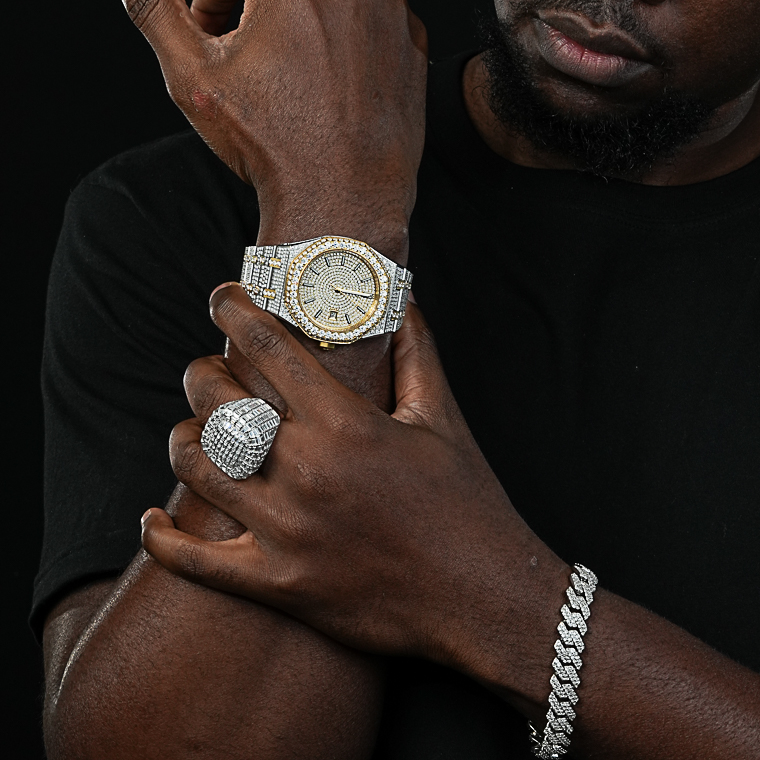






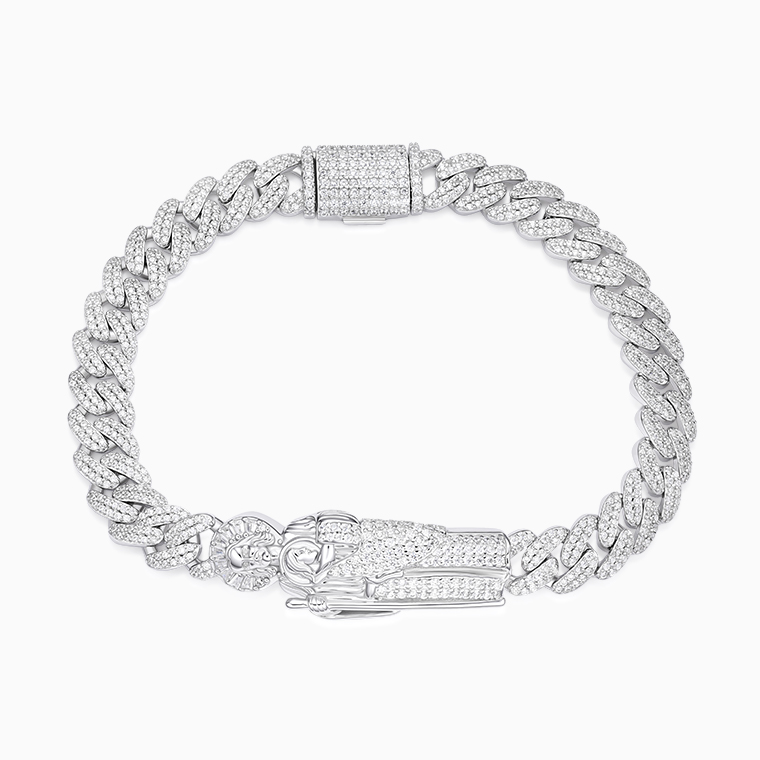
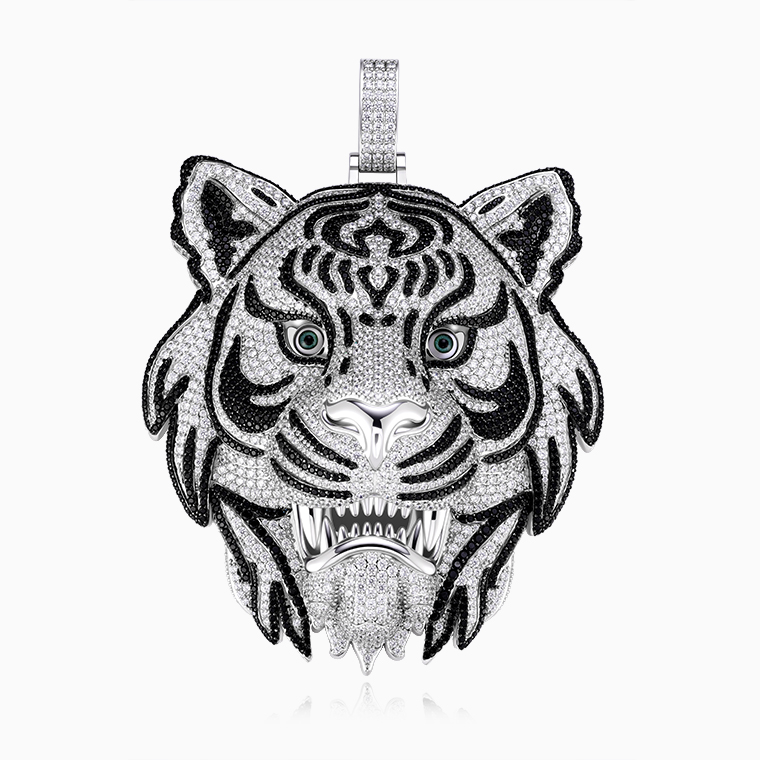

When a jewelry brand approaches a Hip Hop Nameplate Necklace Manufacturer, the first thing it usually has is a design idea. It might be a name written in Old English lettering, a script pendant covered with small stones, or a word the brand wants to turn into its next collection. The image is often clear enough to show the intended style, but it rarely answers all the questions that come up once production starts.
Take the lettering itself. A script font that looks attractive in a digital image may have connections too thin to work well in metal. An Old English design might have narrow openings that become difficult to polish. If stones are part of the design, their size and position have to be considered before the pendant is cast.
These aren't unusual problems. They're part of developing custom nameplate jewelry, and dealing with them early can make the difference between a design that looks good in a rendering and one that works as a finished necklace.
The Font Is Only the Starting Point
Nameplate necklaces are closely associated with hip hop jewelry, but the range of designs is wider than it first appears. Some customers prefer simple polished lettering, while others want heavy pendants with raised borders, textured backgrounds, or fully iced-out surfaces.
Script and Old English are among the most recognizable styles. They also require different approaches in production.
Script lettering depends on its flowing connections. Those curves give the pendant its character, but they can leave weak sections where one letter joins another. On a larger pendant, the problem may become more noticeable because the weight of the piece puts additional stress on the connections.
Old English lettering tends to have thicker strokes, although its sharp corners and narrow internal spaces bring their own difficulties. A small opening inside a letter may look fine in the artwork but become less distinct after casting and polishing.
There is no reason to change a font more than necessary. Still, a slight increase in stroke width or a small adjustment to letter spacing can sometimes make a design more suitable for production.
The position of the chain attachments deserves attention as well. A nameplate should hang naturally when worn. If the attachment points are poorly placed, the pendant may tilt even when the lettering itself is balanced.
Getting the Size Right
Customers often have a particular size in mind. They may ask for a pendant 1.8 mm thick, a chain 22 or 24 inches long, or a nameplate that sits across the upper chest.
Those details are useful, but they don't tell the whole story.
A short nameplate with wide letters can have a different structure from a longer pendant made with narrow script lettering. Two designs may share the same thickness yet have very different weak points.
The material changes the calculation too. Brass and sterling silver are both common in custom hip hop jewelry, but their weight, cost, and mechanical properties are not identical.
For larger pendants, the chain should be considered alongside the nameplate. A chain that works well with a small polished pendant may be too light for a heavier iced-out design.
The practical approach is to review the lettering, dimensions, and chain together before settling on the final specifications.
From Artwork to a Metal Sample
Once the design is reasonably settled, CAD modeling gives the manufacturer a way to examine it in three dimensions.
This is where the thickness of the letters, the shape of the back, and the attachment points can be checked more closely. If the pendant will have stones, the setting positions can also be planned.
A drawing may show a neat row of stones running through a letter. In the CAD model, there may not be enough metal between the settings to hold them securely. The layout then needs to be adjusted, perhaps by changing the stone size or leaving a narrow section polished.
The same applies to decorative borders. A raised edge that looks prominent in an enlarged rendering may be barely visible at the actual pendant size.
At Shining Star Jewelry, CAD design is part of the custom jewelry development process. Customers can review the proposed structure before moving into sample production.
A wax or resin model may be used when the design calls for a closer look at the physical proportions. The metal sample then provides a better opportunity to assess the finish, weight, and overall appearance.
There may still be changes at this stage. That's one reason sampling should be treated as part of development rather than simply as a formality before placing a bulk order.
Choosing a Metal That Fits the Product
Brass and 925 sterling silver are two materials frequently used for custom nameplate necklaces. They can produce similar-looking designs, particularly when both are finished in a gold color, but the products are not necessarily aimed at the same market.
Brass is commonly selected for fashion jewelry because it allows brands to develop larger or more decorative pieces at a relatively accessible material cost. It can be polished and plated in different finishes.
Sterling silver is generally chosen for collections where the precious-metal content is part of the product's appeal. It contains 92.5% silver and is often used for custom pendants with detailed lettering or stone settings.
For higher-end pieces, solid gold may also be considered. In that case, the amount of metal used becomes a significant part of the price, so the pendant's dimensions and estimated weight need careful attention.
A brand developing an entry-level fashion collection may make a different material choice from one selling premium personalized jewelry. Neither approach is automatically right or wrong. The metal should fit the intended product and its selling price.
Iced-Out Lettering Has Its Limits
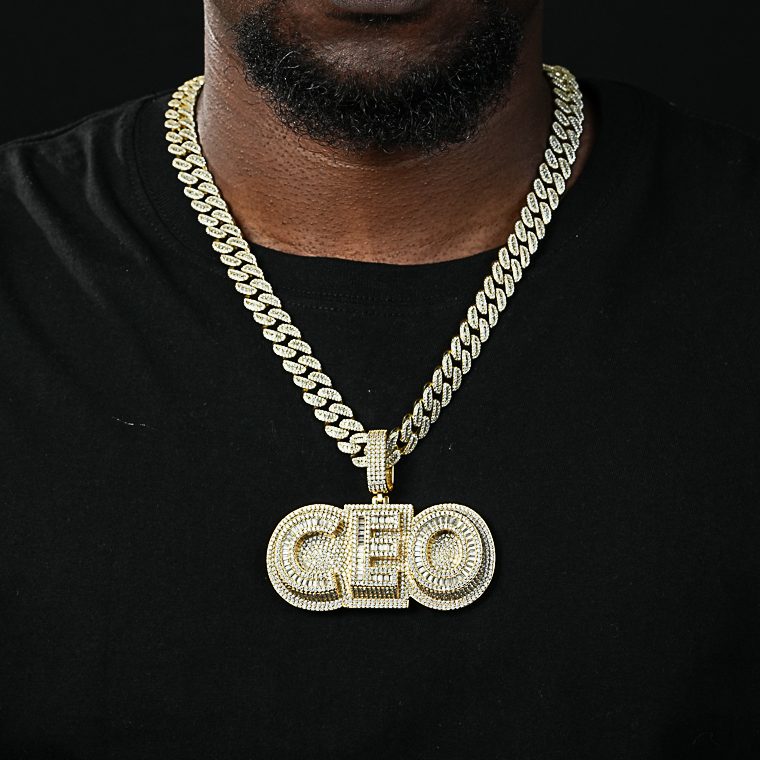
An iced-out nameplate can look striking, especially when the stones follow the curves of the lettering. The difficulty is that not every part of a letter offers the same amount of space.
Wide strokes may accommodate several rows of stones. Thin connections between letters may allow only a single row, or none at all.
Trying to cover every part of the pendant can create problems. Stones need enough surrounding metal to remain secure, and setting them too close together can weaken the structure.
For this reason, the stone layout is best considered while the design is still being developed.
Cubic zirconia is often used for fashion-oriented nameplates. It provides a bright appearance without the cost associated with higher-priced stone options.
Moissanite is frequently selected for more premium hip hop jewelry. It offers strong brilliance and good durability, although its use still depends on whether the pendant has suitable setting space.
The number of stones alone doesn't determine the quality of an iced-out pendant. Their alignment, spacing, security, and the finishing around each setting are just as important.
Gold Plating Is More Than a Color Choice
A gold-colored nameplate may be made from brass, sterling silver, or another suitable metal. The appearance of the finished necklace depends partly on the polishing and preparation completed before plating.
Fine scratches, rough edges, or residue left on the surface can affect the result. Plating may cover the metal with a new finish, but it does not automatically correct poor preparation.
The coating itself also needs to match the product requirements. Its composition and thickness, together with any intermediate layers, influence how it performs during use.
For a fashion necklace intended for occasional wear, one finishing specification may be appropriate. A brand positioning its jewelry for frequent daily use may want to discuss a different option and the testing needed to support its product claims.
Gold-plated jewelry is subject to wear. Friction, perspiration, cosmetics, and cleaning products can affect the finish over time. Terms such as waterproof or tarnish-resistant should therefore be used with care.
If nickel-free materials are required, the chain and clasp matter as much as the pendant. It is possible to focus on the main component and overlook the smaller parts that also come into contact with the skin.
For private-label orders, these details should be agreed upon before production so that the finished product can be described accurately.
The Move from One Sample to a Wholesale Order
A sample allows the customer to see whether the necklace matches the original idea. The lettering can be checked, the chain tried on, and the finish examined under normal light.
Once the sample is approved, the factory has a reference for production. But making a larger quantity brings different considerations.
With a polished nameplate, the edges of the letters need to remain consistent after finishing. Excessive polishing can soften details, particularly around narrow openings and fine strokes.
For iced-out designs, stone placement and setting quality must be checked throughout the order. The appearance of one pendant should not differ noticeably from another made to the same specification.
Chain length, clasp style, and packaging also need to match what was agreed upon.
An approved sample is most useful when it is supported by a clear specification covering the metal, dimensions, finish, stone details, and components.
This becomes especially important for repeat orders. If a brand returns several months later, the original specifications help ensure the new batch follows the same design.
What Goes into a Wholesale Quotation?
A product photograph is useful for discussing style, but it is rarely enough to calculate a reliable production price.
A manufacturer needs to know the metal, approximate dimensions, pendant thickness, chain requirements, surface finish, and whether stones will be used.
A plain brass nameplate and a sterling silver pendant with moissanite may look similar in size, yet their production costs will be very different.
The complexity of the lettering also affects the work involved. A simple polished design may require less finishing than a pendant with layered details, intricate borders, or many small stone settings.
Order quantity is another consideration. Design development, tooling, and setup costs may be spread across more pieces when an order is larger. The amount saved per piece depends on the design and production method.
When comparing quotations, it is worth checking whether sample fees, molds, chains, plating, and packaging are included. Two prices are only useful to compare when they cover the same product specifications.
Planning the First Order
For a new jewelry brand, deciding how many pieces to order can be difficult. Ordering too many creates inventory risk, while very small production runs may carry a higher unit cost.
A practical starting point is often to develop a limited number of designs and confirm the materials and finishes before expanding the collection.
For example, a brand might begin with a script nameplate and an Old English version. Both could use the same metal and chain style, while the lettering provides two distinct looks.
Once the brand has a better understanding of customer preferences, additional variations can be considered.
Minimum order quantities depend on the design and manufacturing requirements. A plain polished pendant may involve different preparation and labor from an iced-out version with numerous stone settings.
Sampling costs also vary. CAD development, prototype work, mold preparation, materials, and finishing may all contribute to the cost of producing the first approved piece.
At Shining Star Jewelry, project requirements can be discussed before sampling, including the intended order quantity and material choices. This helps establish a suitable production plan and quotation.
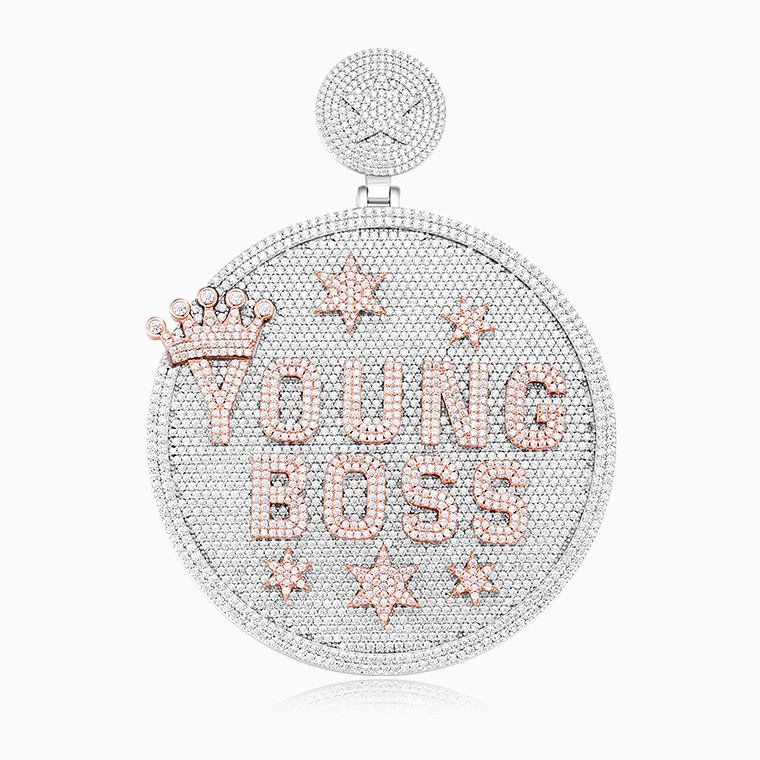
Custom Nameplate Jewelry at Shining Star Jewelry
Shining Star Jewelry provides OEM and ODM services for custom hip hop jewelry, including personalized nameplate necklaces, letter pendants, and iced-out designs.
Our work covers CAD development, sample production, metal manufacturing, stone setting, polishing, surface finishing, and quality inspection.
Customers can discuss script lettering, Old English fonts, brass and sterling silver materials, CZ or moissanite settings, and different chain and finishing options.
The process begins with understanding the design. A reference image or artwork is usually enough to start a discussion, although dimensions, material preferences, and estimated order quantities are needed before a detailed quotation can be prepared.
For brands developing several products, keeping a clear record of the approved designs and specifications also makes future orders easier to manage.
Final Thoughts
Custom nameplate necklaces are closely tied to personal style, but their production depends on a series of practical decisions. The lettering must be suitable for metalwork, the chain needs to match the pendant, and any stone settings have to fit within the available structure.
A design that works well as a single sample must also be suitable for repeated production if it is intended for wholesale.
When choosing a Hip Hop Nameplate Necklace Manufacturer, jewelry brands should look beyond the finished product photograph and discuss the materials, dimensions, finishing requirements, and production process.
Shining Star Jewelry works with brands and wholesalers developing custom hip hop nameplate necklaces, from initial design discussions through sampling and bulk production.
If you have a nameplate design in mind, send us your artwork, preferred material, approximate dimensions, and estimated order quantity. Our team can review the requirements and discuss the available manufacturing options.