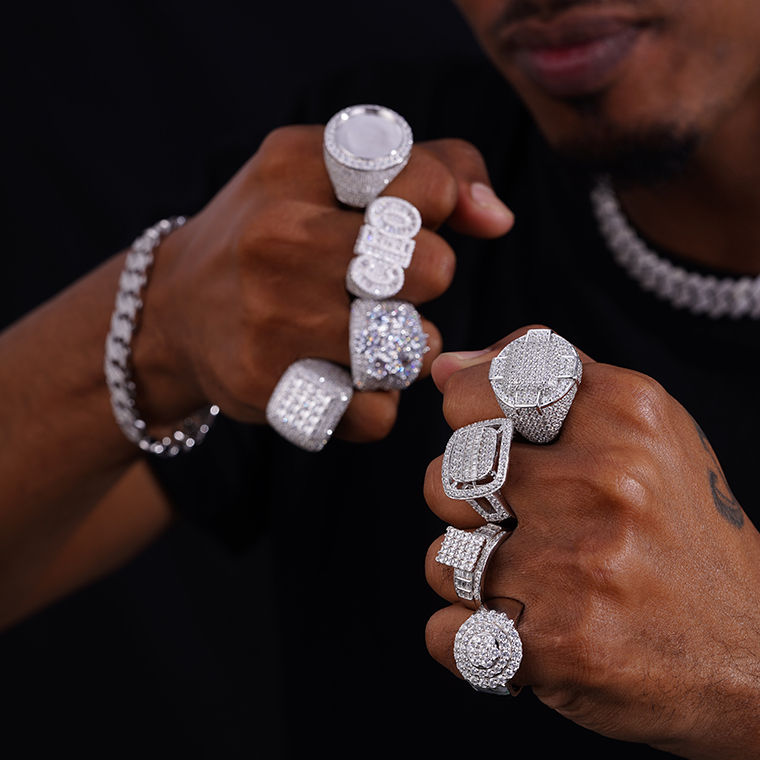






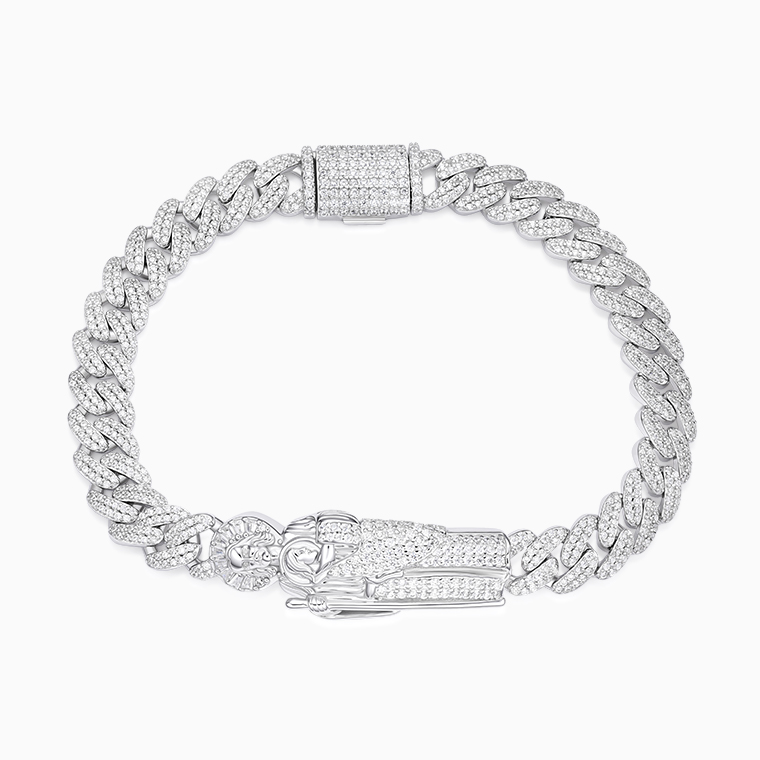

A Cuban link chain looks simple from a distance: a continuous row of interlocking links, polished to catch the light. Up close, its quality depends on decisions that are harder to photograph. Link shape affects how the chain bends. The clasp affects how securely it wears. A small change in spacing can alter the look of the entire piece.
For jewelry brands and wholesale buyers, understanding Cuban link chain manufacturing makes it easier to approve a sample and describe the chain they want to order again. Here is how a design moves from an idea to a finished product, and what to check along the way.
1. Define the chain before choosing a production method
A request for a “12 mm gold Cuban chain” gives a manufacturer a starting point, but it does not describe a complete product. Width alone says little about link thickness, total weight, length, base metal, stone coverage or clasp construction.
A useful production brief should identify:
- Chain width and length
- Preferred metal and target weight or weight range
- Link shape, depth and spacing
- Plain or stone-set finish
- Clasp style and any logo placement
- Plating color and finish
- Intended order quantity
These choices are connected. A wider link may need a different thickness to achieve the desired feel. Adding stones changes the space available on each link. A decorative clasp must look proportionate while still opening and closing reliably.
The manufacturer can then assess which construction and production steps suit that particular design. There is no single process that fits every Cuban link chain.
2. Develop the link as part of a moving chain
The link is the chain’s repeating unit. Its proportions determine more than appearance: they affect how closely the links sit together, how the chain curves and whether it lies comfortably when worn.
During design development, the team should consider the link from the front, side and underside. A front view may show the intended pattern, yet reveal little about the metal touching the wearer or the clearance between neighboring links. For an iced-out chain, the design must also leave enough room for the planned stone seats without interfering with movement.
CAD drawings can help confirm dimensions and structure before a sample is made. They cannot fully show how a finished chain will drape. That is one reason the physical sample remains important.
3. Make and assemble the chain body
Depending on the material, link design and project requirements, production may involve forming or casting components, preparing the links, joining them and finishing the assembled chain. The precise route should be agreed for the product being ordered.
At this stage, consistency matters as much as the appearance of any single link. Links that vary slightly in shape or spacing can interrupt the chain’s visual rhythm. Connections must also allow the intended movement without leaving rough contact points.
A buyer reviewing a sample should ask to see the chain laid flat, lifted and turned over. Does it bend evenly? Does one section twist more than the rest? Does the underside feel smooth? These observations tell more about the assembled chain than a front-facing product photo.
4. Plan stone setting around the chain’s movement
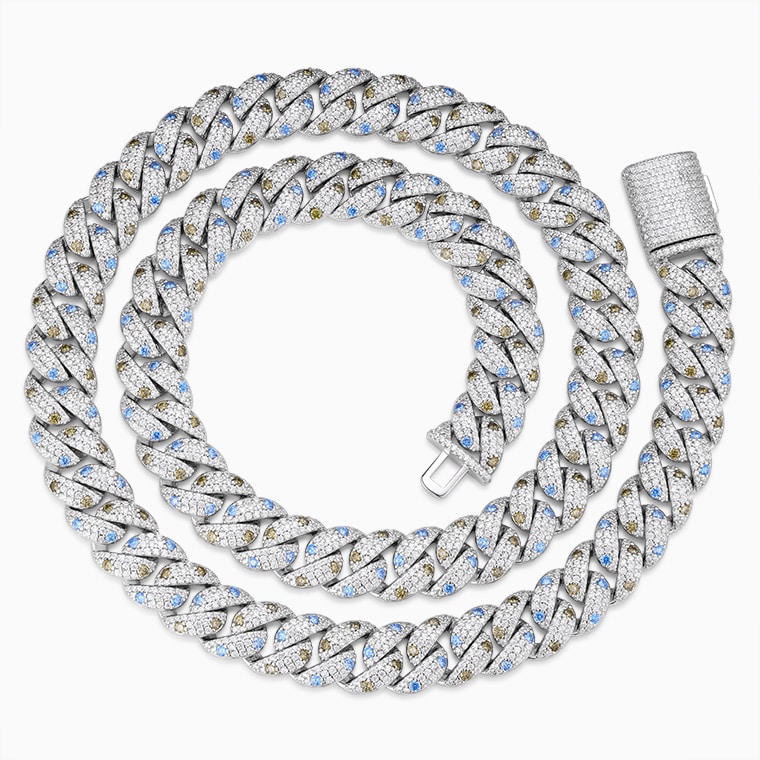
For an iced-out Cuban chain, stones add a separate design and manufacturing challenge. The stone layout must follow a surface made of individual moving links. Stone size, spacing and setting style affect both the overall pattern and the metal left around each stone.
The buyer should specify where coverage is required: on the link faces, along their edges, on the clasp or across other visible areas. “Fully iced out” can mean different things to different suppliers unless the approved drawing or sample shows the intended result.
After setting, inspect more than sparkle. Look for uneven rows, stones that sit noticeably higher than their neighbors and settings that create sharp areas. Turn the chain and gently move it to check whether adjacent links interfere with one another. The agreed inspection method should match the design and stone choice.
5. Finish the metal and fit the clasp
Polishing gives the chain its final surface, but it must reach the areas between links and around the clasp as well as the broad faces seen in photos. Where plating is specified, the base metal and finish should be recorded separately. A gold-colored surface does not, by itself, identify what the chain is made from.
The clasp deserves its own sample review. Open and close it several times. Check how it meets the first links, whether it fastens cleanly and whether any safety feature works as intended. On a wide chain, the clasp is also a visible design element; its size and finish should belong to the same product as the chain body.
6. Approve a sample that can guide production
A good sample approval records more than “looks right.” Keep the approved dimensions, material, finished weight, stone specification, clasp details and finish together with clear photos or a physical reference. If the sample needs a change, mark the revision and confirm the new version before bulk production.
For wholesale orders, inspection should compare finished pieces with that approved reference. Width and length are straightforward to measure; movement, link alignment, clasp operation, stone security and surface finish also need practical checks. Agree on the acceptance criteria before production so the factory and buyer are evaluating the same product.
From a reference photo to a repeatable chain
The strongest Cuban link chain specification describes how the piece should look, move, feel and fasten. Each production decision supports one or more of those outcomes. That is what turns an attractive sample into a chain a brand can confidently reorder.
Shining Star Jewelry develops custom Cuban link chains alongside other hip hop jewelry. Our process can include design review, CAD development, sampling, production and quality inspection, with the exact steps confirmed for each project. If you have a reference image, send it with your target dimensions, material, stone preference and estimated quantity through our contact page. We can review the design and discuss a production specification before quoting.