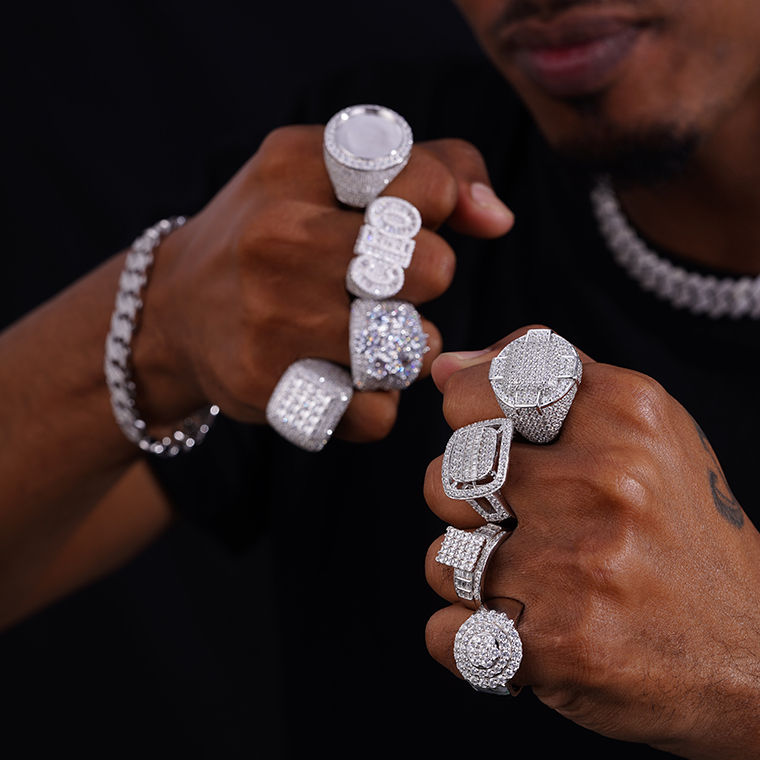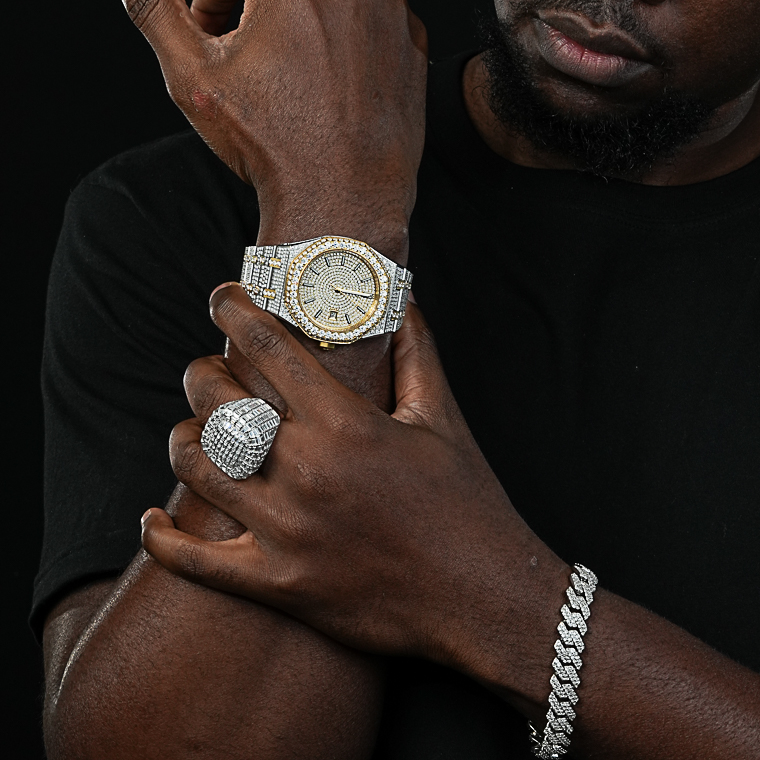






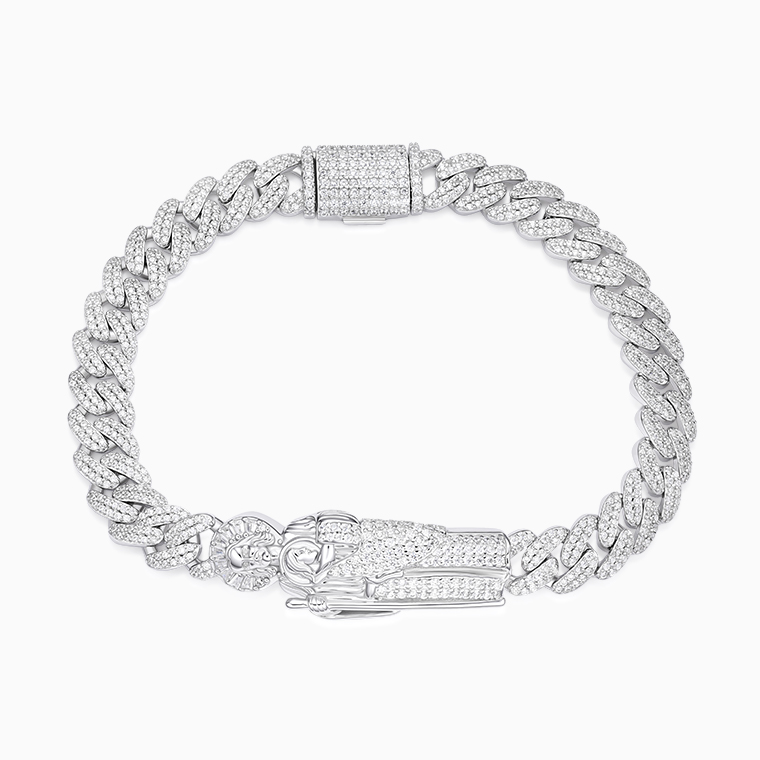
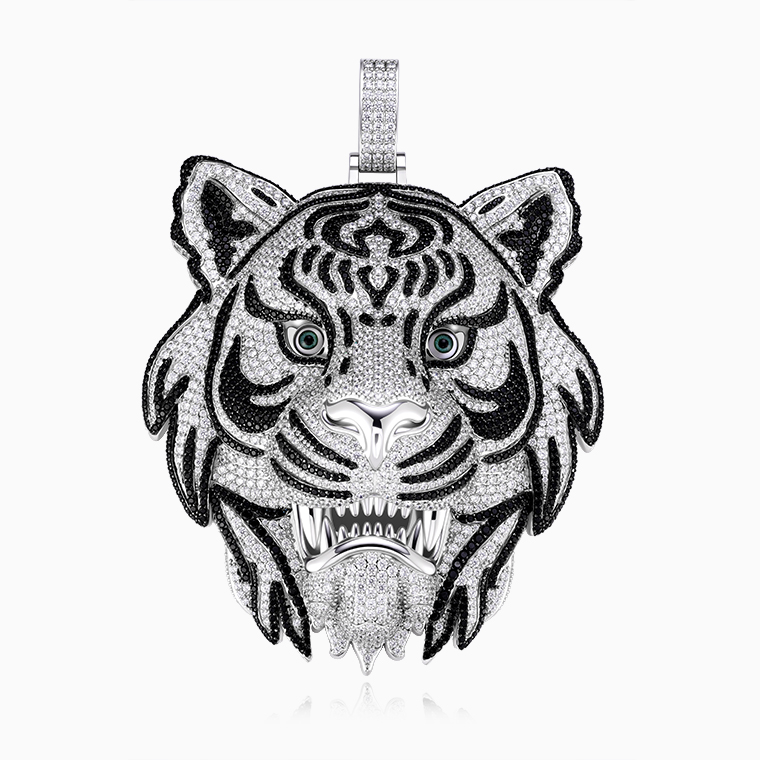

For a brand working with a men’s hip hop jewelry manufacturer, coordination begins before the products are photographed together. It involves the dimensions, materials, finishes and construction of each piece—and the decisions that allow those pieces to be produced and reordered as a range.
Give each product a role
A collection does not need every item to make the same visual statement. In fact, several large, heavily stone-set pieces can compete for attention when worn or displayed together.Start by deciding which product carries the collection’s identity. It may be a sculptural pendant, a distinctive Cuban chain or a ring with an original motif. Then develop supporting pieces around it. A simpler chain might give an elaborate pendant space to stand out. A bracelet could repeat the chain’s link profile at a scale that works on the wrist. Earrings might borrow a geometric detail or stone arrangement without reproducing the entire pendant.
This gives buyers a more useful brief than “make everything match.” Tell the manufacturer which piece is the centerpiece, which products should work with it, and which should also sell independently. The answer affects how much detail belongs in each design.
Design the connections between pieces
Products that look compatible in separate images may fail as a set.The most direct example is a pendant and chain. The pendant’s bail—the opening through which the chain passes—must accommodate the chain’s end fitting and clasp, which may be larger than its links. Its size also affects how the pendant hangs. An opening that technically fits can still leave a large pendant sitting at an awkward angle.
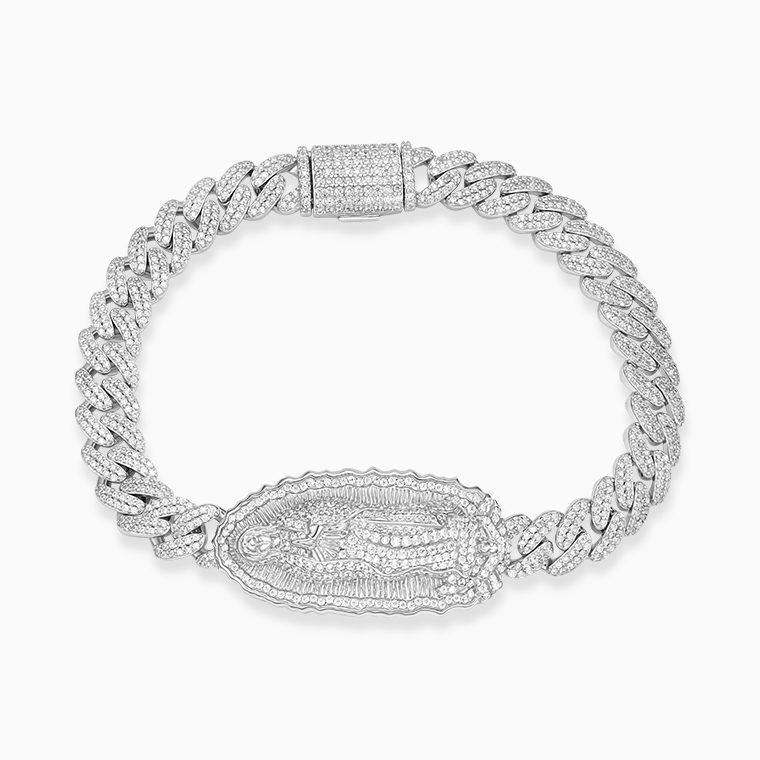
Scale matters elsewhere in the collection. A chain and bracelet may share a link design, but the bracelet must bend comfortably around a wrist and close securely. A ring can repeat the collection’s motif while needing a different depth and edge treatment for daily wear. An earring inspired by a large pendant needs its own balance between visible detail and wearable weight.
These are design questions to settle with the actual products together. Ask to review the pendant on its intended chain, the bracelet fastened, and the smaller pieces at their finished size. A rendering of each item in isolation will not answer every question about the range.
Shining Star’s custom jewelry FAQ specifically asks buyers to provide chain width, thickness, clasp and end-fitting dimensions when developing a pendant. That is the level of detail a coordinated collection needs: the relationship between products must become part of the specification.
Create a visual language, not a repeated logo
A collection can feel consistent without placing the same symbol on every piece. Consistency may come from a particular link profile, the way metal borders a stone, the shape of a clasp, or the balance between polished surfaces and pavé setting.Choose a small number of features that matter to the brand. For example, a pendant could establish an angular outline and a restrained row of baguette-cut stones. The bracelet might carry the same stone rhythm. A ring could use the angular edge without stones at all. Each item would have its own purpose while still belonging to the group.
Test those connections at real size. Fine lettering or a complicated motif that reads clearly on a large pendant may disappear on an earring or ring. Enlarging it to preserve detail can change the piece’s proportions and cost. A manufacturer should be able to show where a design feature can be carried across products and where it needs to be simplified.
Plan price levels through product specifications
Many brands want an accessible piece, a core seller and a higher-priced statement item in one range. That is a sensible commercial structure, but changing a stone or metal does more than move a product into a different price bracket.A brass-and-CZ pendant and a sterling-silver-and-moissanite version may require separate decisions about weight, stone coverage, setting and finish. If the lower-priced version is made thinner, does its outline still look substantial? If the higher-priced version uses larger stones, does the original design leave room for secure settings? Buyers should review each version as a product, rather than assume that one approved drawing covers every material combination.
The same care applies to color. “Gold finish” is not a complete collection standard. A chain, bracelet and pendant made in separate batches should be compared against an agreed color reference if they will be marketed as matching pieces. Record the base metal and finish for each SKU so the product descriptions remain accurate.
Shining Star says it can discuss different combinations of metal, stone, dimensions and coverage against a buyer’s target budget, while assessing each version separately. That approach is more useful than treating a change of material as a simple substitution. Its FAQ explains the available comparison.
Approve the collection as a system
Sampling should answer two questions: Does each product work? Do the products work together?Inspect individual pieces for the details that apply to them: chain movement, clasp operation, ring comfort, earring balance, stone alignment and surface finish. Then review the collection as a group. Put the pendant on the intended chain. Place matching finishes side by side under consistent lighting. Check whether the bracelet and necklace share the proportions the brand approved, even if their dimensions differ.
This stage may reveal a problem that no single-product inspection would catch. A beautiful pendant may dominate the chain chosen for it. Two pieces may use slightly different plating colors. A ring motif may appear much less defined than the same motif on the pendant.
Record the approved result for each SKU: design version, dimensions, material, stones, finish, weight where relevant, packaging and the sample used as a reference. Also record the intended pairings. That gives the manufacturer a clear basis for production and helps the brand keep product photography, descriptions and future orders consistent.
Launch a range that can grow
A coordinated collection need not launch with every possible product. Start with the pieces that establish its identity and give customers a clear way to wear them together. A chain and compatible pendant may be enough to test the central idea. A bracelet, ring or earring can follow when the brand has evidence of which forms, finishes and price points customers prefer.Plan that possibility during the initial design work. Keeping approved drawings, finish references and product specifications makes it easier to extend the range later. It also helps distinguish a straightforward reorder from a new variation that needs another sample.
The manufacturer’s value here is the ability to connect the brand’s visual idea with decisions that survive production: how the pieces fit, how their details translate across sizes, and how each approved version is identified. Shining Star Jewelry’s men’s product range covers chains, pendants, bracelets, rings and earrings, while its design service supports development from sketches, logos, reference images and CAD files.
If you are planning a men’s hip hop jewelry collection, share the centerpiece design, your intended product pairings, target price levels and preferred materials. Ask for the range to be reviewed both piece by piece and together. That is how a set of attractive products becomes a collection a brand can present, sell and develop further.