






An iced out Cuban link chain is easy to notice under showroom lighting. The broad links provide a generous surface for stones, and a slight movement can send reflections along the entire necklace. Judging its quality takes a closer look.
Pick the chain up. Let it settle into a natural curve. Turn it over, move the links, and open the clasp. Those simple actions raise questions that a front-facing photograph cannot answer. Does the chain follow the body comfortably? Are the undersides finished carefully? Does the clasp close without forcing the adjoining links into an awkward position?
For a brand buying Cuban chains wholesale, these details deserve attention before the first production order. They affect how the product feels when a customer opens the box, wears it, and compares it with the images that led to the purchase.
At Shining Star Jewelry, we approach a Cuban chain as a complete piece of jewelry. Its appearance depends on the relationship between the link structure, stone layout, finishing, and connections. Assessing those elements together gives buyers a more useful basis for judging quality.
Start With the Shape and Movement of the Links
Two Cuban chains described as the same width can have noticeably different proportions. One may have broad, rounded links with a substantial side profile. Another may sit flatter, with a more open shape and a different amount of overlap between adjoining links.
The width measurement alone does not describe the chain.
When comparing samples, look at the link length, thickness, profile, and spacing. Observe how the links sit against one another when the necklace follows a gentle curve. A product image taken with the chain carefully arranged on a flat surface can make these relationships difficult to judge.
Movement is especially important on an iced out design. The links need enough freedom to articulate, while the stones and surrounding settings must fit within the intended structure. Ask the manufacturer whether the selected stone coverage changes the clearance between adjoining links.
A useful sample review involves handling the chain in several positions. Lay it flat, lift it gently, and place it on a display bust or a wearer. Notice whether a particular section repeatedly catches or forces the surrounding links out of position. If it does, identify the location and ask the supplier to investigate.
Some chain profiles naturally feel more substantial or less flexible than others. The objective is to establish whether the movement is appropriate for the selected design and whether it remains consistent along the piece.

Read the Stone Pattern at Actual Size
The visual effect of an iced out Cuban chain comes from many small decisions repeated across its length.
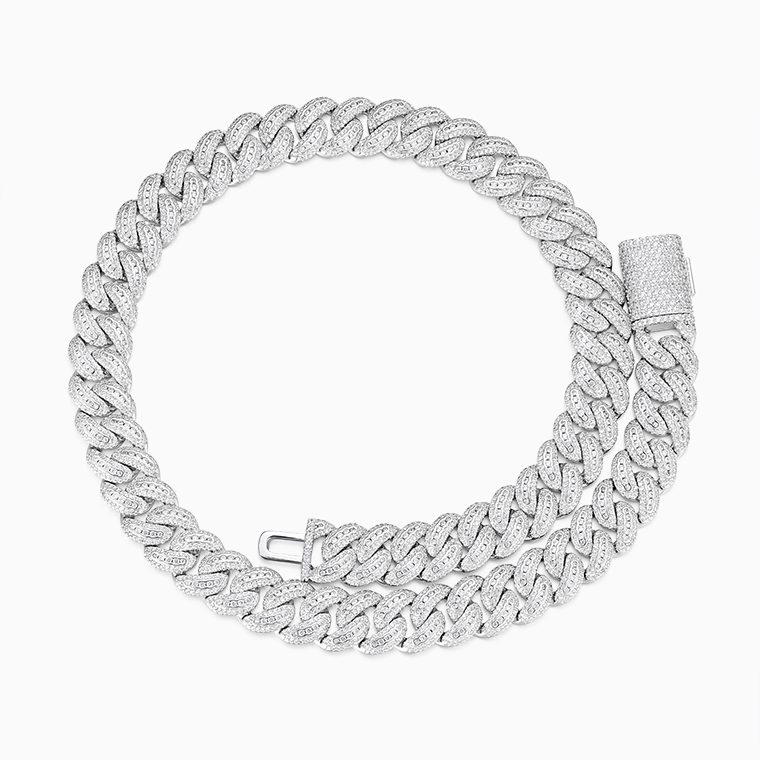
Stone size, spacing, orientation, and the visible metal between stones all contribute to the pattern. The result should feel deliberate when viewed at normal wearing distance, then hold up to closer inspection.
Look first at the chain as a whole. Does the stone coverage appear even? Does one link seem noticeably different from those beside it? Are transitions between stone sizes handled consistently?
Then inspect individual links. Pay attention to curved edges and narrower areas, where the available space changes. These sections can reveal whether the layout was developed for the actual link shape or whether the design needs further adjustment.
More coverage is not automatically the right choice for every chain. A brand may want a dense, continuous surface of sparkle, or it may prefer a visible polished border that defines each link. Both are legitimate design directions. The manufacturer should understand which effect the buyer wants and explain how the proposed layout achieves it.
For a custom project, review the stone arrangement alongside the link dimensions before sampling. An enlarged CAD rendering can make the layout easier to understand, but it should be accompanied by measurements. The finished sample will show how the pattern reads at its real scale.
This is also the stage to decide whether the clasp should continue the same pattern or introduce a separate design feature. Leaving that question until late in development can produce a clasp that looks disconnected from the chain.
Examine How the Stones Are Held
Sparkle attracts attention, but the surrounding metal deserves inspection too.
On a finished sample, look for missing stones, visibly uneven settings, and areas where the metal appears rough or unfinished. Check the edges of the links as well as their central surfaces. Inspect from several angles because a straight-on view may conceal raised or irregular details.
A photograph cannot prove that a stone is securely held. Buyers should ask how the manufacturer checks setting security and how pieces that fail inspection are handled. The answer should relate to the construction being ordered.
It is useful to distinguish the stone itself from the quality of the setting. A stone description, clarity label, or gemstone document addresses different questions from those involved in assessing the finished necklace. None of those details, on its own, establishes how reliably the chain has been assembled.
For wholesale orders, agree on the inspection requirements before production. If a particular mechanical test is needed, discuss its method and acceptance criteria with the manufacturer. Avoid improvising forceful checks that could damage an otherwise acceptable sample.
The practical question is whether the supplier can explain how the proposed design will be inspected and what reference will be used to decide whether it passes.
Give the Underside the Same Attention as the Front
The underside of a chain is easy to overlook in an online catalog. It is also the surface the wearer may feel most directly.
Turn the sample over and examine the backs of the links, their inner edges, and the areas near connections. Look for unfinished surfaces, rough transitions, or edges that feel uncomfortable during ordinary handling. Check whether the finishing remains consistent through the length of the chain.
Polishing should be considered alongside the design. A broad reflective surface, a recessed area, and a narrow space around a setting do not present the same finishing challenge. Ask the manufacturer how it reviews the areas that are less visible in product photography.
The feel of the chain matters here. A substantial necklace can still be comfortable when its proportions and contact surfaces suit the wearer. A lighter chain can feel awkward if an edge or connection repeatedly catches against clothing.
Weight therefore needs context. Buyers sometimes use it as a shortcut for quality, but a weight figure is most useful when considered with the metal, dimensions, and construction. If two samples differ considerably in weight, ask what accounts for the difference.
For a brand offering several widths, evaluate the proportions of each size. A wider version should be reviewed as its own product, especially if the link profile, stone layout, or clasp changes.
Treat the Clasp as Part of the Chain
A clasp has to perform a practical job every time the necklace is worn. It also occupies a visible place in the design.
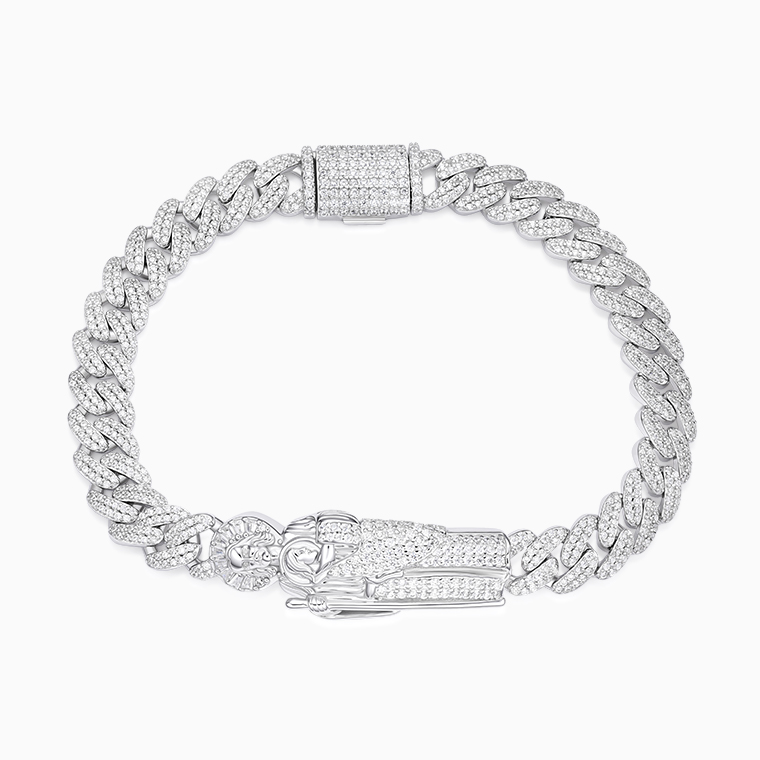
Examine how it connects to the end links. Does the transition look proportionate? Does the chain sit naturally when the clasp is closed? Is the finish consistent with the surrounding links?
Operate the closure several times during the sample review. You should understand how it opens, how it closes, and how to recognize that it is properly secured. Where the design includes additional safety catches, check their operation as well.
A closure that requires an awkward angle or excessive force deserves discussion with the supplier. So does one that appears to close but does not engage as intended. Describe the problem with a short video where possible; movement can be easier to explain that way than through a still image.
If the clasp carries a logo or stones, review those features together with its function. Branding should remain legible at the intended size, and decorative details should be assessed in the finished sample.
For a wholesale collection, it is worth deciding whether the same clasp design will be used across all chain widths. Confirm suitability for each version instead of assuming a component approved on one sample will work equally well throughout the range.
Specify the Metal and Finish Clearly
“Iced out Cuban link chain” describes a style. It does not identify the materials used to make the product.
A quotation should state the base metal and stone material, along with the intended finish. Buyers comparing 925 sterling silver and brass versions, or moissanite and cubic zirconia options, need to keep those differences visible in their purchasing records.
This helps with pricing and with the descriptions that will eventually appear on the brand’s website. A gold-colored finish should be described separately from the metal underneath it.
Finish approval also needs more than a color name. Review the surface appearance and the agreed color reference. If the chain will be sold with a matching bracelet or pendant, inspect those pieces together under the same lighting.
Ask how any specified plating requirements will be checked. Where thickness measurements or other testing are part of the order, clarify the method, the areas assessed, and how the results relate to the products being supplied.
Normal use and care will affect a plated surface over time. A useful supplier discussion establishes the finish specification and appropriate care guidance without relying on unlimited claims about color retention.
Shining Star’s manufacturing FAQ describes material and production-stage inspection capabilities. The checks and documentation relevant to a particular Cuban chain should be confirmed against its materials, construction, and destination market.
Decide Whether the Chain Must Carry a Pendant
A Cuban chain worn on its own and one intended to carry a pendant may need different development discussions.
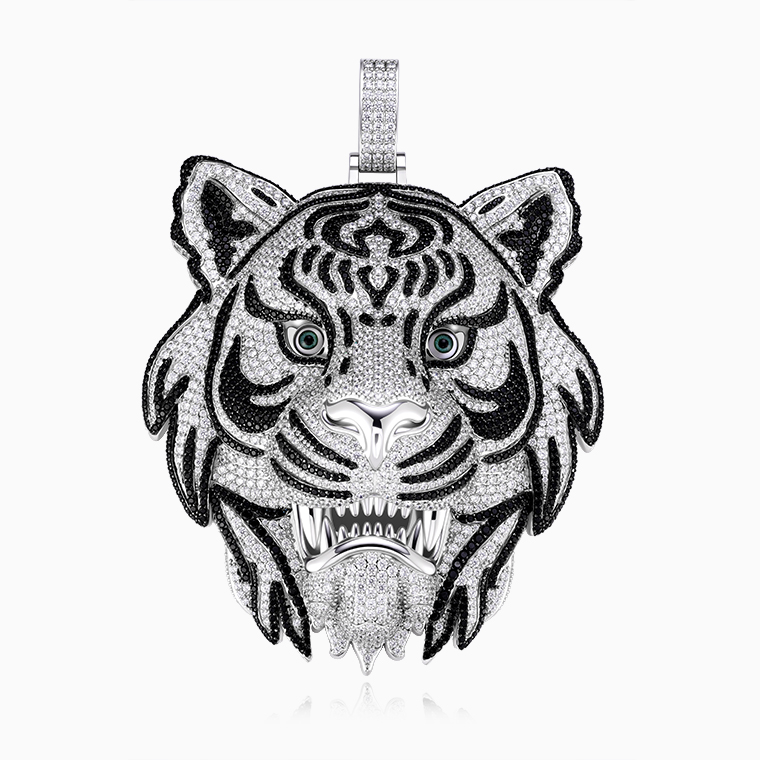
If a pendant is part of the product, provide its approximate dimensions and weight, together with the proposed bail opening. The chain’s width and thickness matter, but so do the dimensions of the end fittings or clasp that must pass through the bail.
A pairing can look balanced in a photograph and still be incompatible when assembled.
Use the actual chain and pendant samples together whenever possible. Check that the pendant can be fitted as intended and that it hangs in the expected direction. Observe whether the combination changes how the chain settles around the neck.
For a brand planning to sell one pendant with several chain widths, review every intended combination. Approval of one pairing does not automatically establish compatibility with the others.
Shining Star’s custom design service allows these details to be discussed during development. Bringing chain and pendant requirements into the same brief gives the design team a clearer basis for reviewing proportions and fit.
Make the Approved Sample Useful for Future Orders
A good sample gives you a physical reference. Its value increases when the details that define it are recorded clearly.
Keep the approved chain length, width, construction, metal, stones, finish, clasp, and branding with the sample reference. If weight is commercially important, record the agreed basis for checking it. Also clarify how length is measured, including the treatment of the clasp.
List any final revisions and identify the version that controls production. A change approved in a message should make its way into the final order specification.
Before bulk manufacturing begins, agree on the inspection approach. Decide which features will be checked and how differences from the approved reference will be handled. This creates a clearer basis for evaluating the shipment and for placing later orders.
For the buyer, quality becomes easier to manage when it can be described. “The chain should look like the photo” leaves questions about dimensions, movement, finish, and construction unanswered. A sample linked to a complete specification gives the factory and the brand a shared reference.
Developing an Iced Out Cuban Chain With Shining Star
A quality iced out Cuban link chain should satisfy the buyer at several distances: across a display, in a close-up photograph, and in the wearer’s hands. The stone pattern creates the first impression. The links, clasp, finishing, and fit determine how the complete piece is experienced.
Shining Star Jewelry develops custom chains and other iced out designs with its own factory and design team. Through our iced out jewelry manufacturing service, buyers can discuss a proposed link profile, dimensions, stone coverage, materials, finish, and branding before moving into sampling and production.
If you are developing a Cuban chain collection, send us your reference images, preferred widths and lengths, estimated quantities, and target budget. Include any matching bracelet or pendant requirements so they can be considered together.
Contact Shining Star Jewelry to discuss your Cuban chain project.