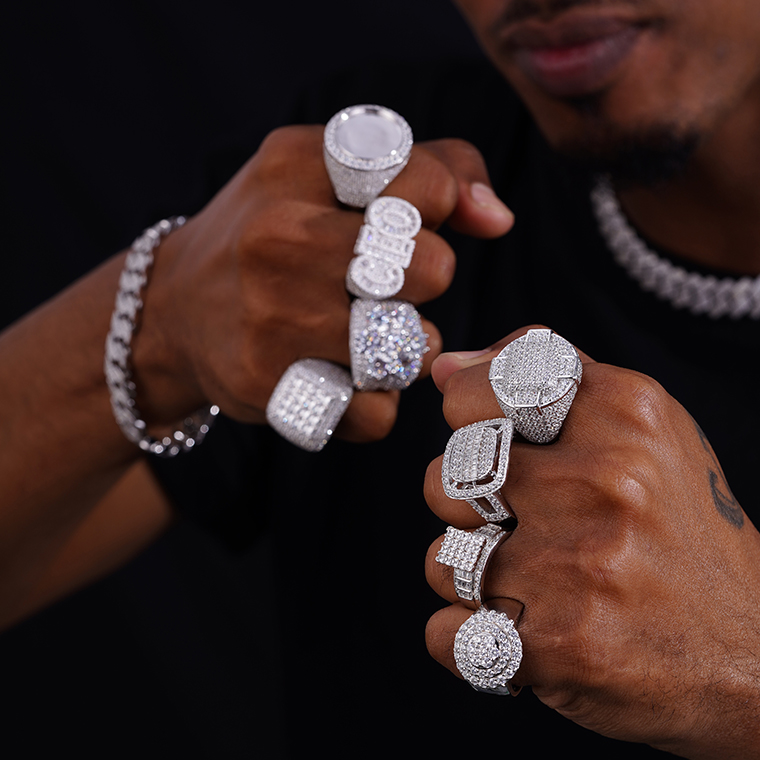






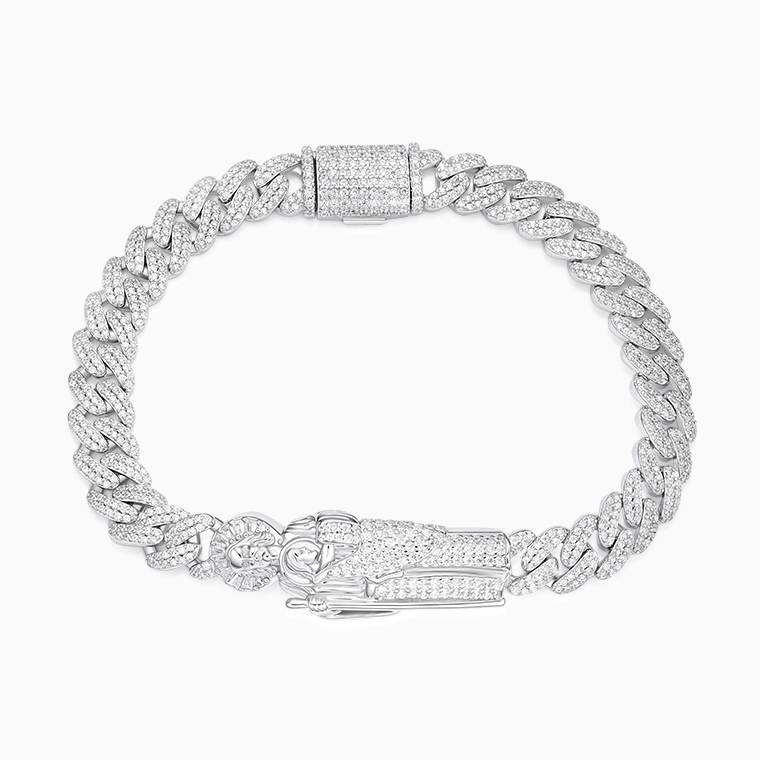
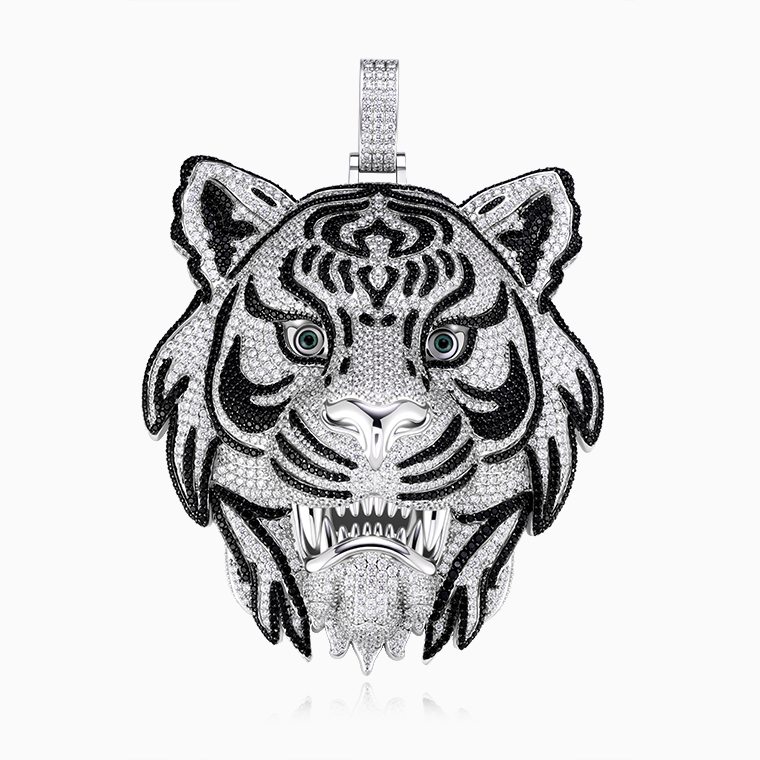

On a plain silver pendant, a dark patch might be tarnish. On a gold-plated ring, a pale area beneath the finger could be exposed silver where the coating has worn away. An iced-out chain may simply have a film of lotion and dirt around its settings. These pieces can look equally tired, yet each needs a different response. Polishing all three with the same cloth may improve one and damage another.
Understanding the difference is useful long before a piece needs cleaning. The decisions that shape its maintenance requirements begin with the design: how a link moves, where a pendant rubs against its chain, how much metal supports a stone, and which finish covers the silver underneath.
For a retailer choosing a hip hop jewelry wholesaler, those details deserve a place beside the price and product photographs. For someone buying a single chain or custom pendant, they explain what to expect after the first few weeks of ownership. A good piece should still make sense when the display lights are off and someone has to wear, clean, and occasionally repair it.
What the 925 Mark Actually Tells You
Sterling silver contains 92.5 percent silver. The remaining portion consists of alloying metals, commonly copper, added to make the material more useful for jewelry. The Silver Institute describes this relationship between silver purity and the strength needed for everyday objects.That small 925 mark answers a question about the stated alloy. It does not explain everything else about the piece.
A hollow chain and a heavier chain can both be sterling silver. So can a bright white rhodium-plated pendant and a yellow gold-plated one. Their surfaces, weight, construction, and maintenance may differ considerably even though their underlying silver has the same nominal fineness.
This is where wholesale descriptions can become confusing. If a listing says “solid silver,” establish whether it means silver throughout the metal rather than silver-plated brass, or whether it also means the piece has no hollow interior. Those are separate questions. A hollow silver link is not automatically an inferior product, but the buyer should know what is being supplied.
There is also a limit to what a stamp can prove. Where material verification matters, ask how the alloy has been checked and whether the method is appropriate for a plated article. A mark is an identification claim; it is not an independent test report.
Designing a Chain That Someone Wants to Wear
Take a wide Cuban link chain. In a photograph, the eye goes straight to its width, polish, and perhaps the rows of stones across its face. On the body, movement becomes much more noticeable.The links must settle around the neck without fighting one another. If their shape or spacing restricts movement, the chain may bunch up or twist. Making every component thicker will not necessarily solve this. The geometry of the connection matters as much as the amount of metal.
A useful sample review starts with handling. Lay the chain flat, lift it, and let it settle again. Fasten it and see how it hangs. Run a finger gently along the underside, away from exposed stone points. Rough finishing in a hidden area is still rough finishing when it touches skin.
Then look at the transition into the clasp. A large decorative clasp may suit the design, but it should not force the end links into an awkward angle. Nor should the closure require so much force that the owner pulls on the rest of the chain each time it is opened.
Stone-set links introduce another constraint. There must be room for movement without neighboring parts striking vulnerable settings. This is difficult to judge from a front-facing render. The sample needs to bend through the range of movement it will encounter in use.
Weight should be considered in that same physical review. A substantial chain may be exactly what a customer wants, while another customer will find it tiring. Record the sample's weight alongside its length and width so the approved wearing experience can be reproduced. “Heavy” is too vague to function as a production specification.
Getting a Letter Pendant to Hang Properly
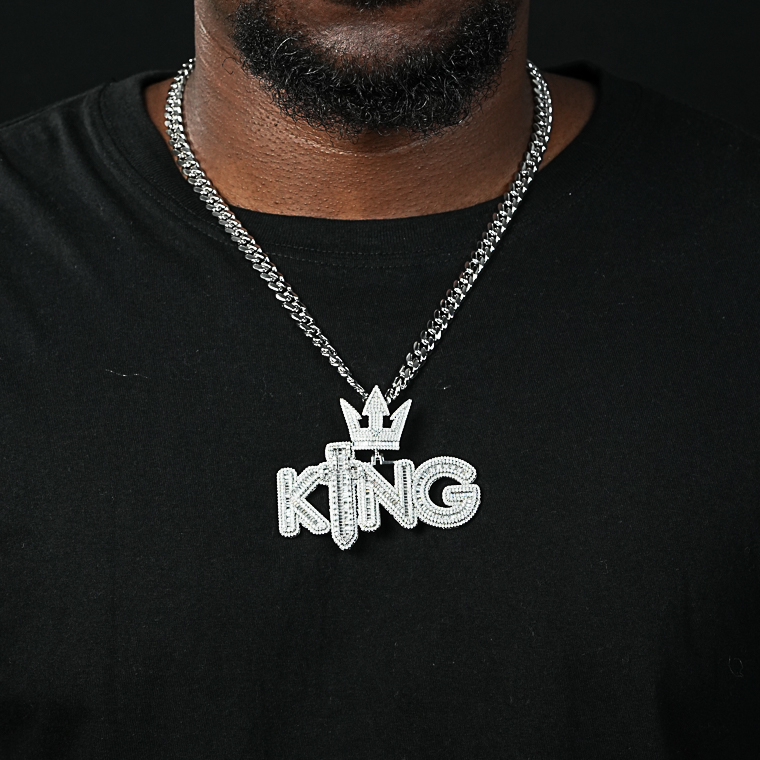
Imagine approving a silver name pendant from a large image on a screen. The letters are crisp, the stones fill the face, and the bail disappears neatly behind the top edge. Then the sample arrives. On its intended chain, the pendant leans forward enough to hide part of the name.The image was never going to reveal that problem. The position of the bail and the distribution of weight need to be checked with the pendant hanging freely. For an unusually shaped piece, this is a good reason to request a physical sample before committing to a production run.
Chain fit can cause another surprise. Suppose the chain itself slides through the bail, but its end fitting does not. Unless the bail opens, the owner cannot assemble the necklace as intended. Give the manufacturer the dimensions of the relevant chain components, or supply the chain with the design brief. Allowing some clearance also helps the pendant move without binding.
Lettering brings its own compromises. A thin stroke that looks elegant in a font may connect two much heavier parts of the finished pendant. Stone seats take more material out of that stroke. At some point, preserving the exact typeface becomes less sensible than thickening a connection or adjusting the stone layout. Such changes should be settled before approving the appearance, rather than left as unrecorded corrections during production.
Turn the sample over as well. Is the back smooth enough for contact with skin? Can a cloth reach the recesses? Are there sharp internal edges where an opening was cut? Removing metal from the back can reduce weight, but it leaves a framework that still has to support the face. The remaining thickness needs a manufacturer's assessment; there is no useful universal measurement for every pendant shape.
For a purchase made online, ask for a short video on the intended chain. A hand rotating the pendant against a plain background tells you something about its finish. A second view, with the piece hanging under its own weight, answers the balance question.
Where the Stones Leave Room for Silver
A heavily iced-out design can make its metal almost disappear from view. The metal still has a job to do. Around every stone, enough must remain to form a secure setting and support the surrounding structure.This becomes awkward near the tapered end of a letter or along the outside curve of a link. Continuing the same stone size all the way to the edge may leave too little room. Smaller stones, a slightly wider outline, or a plain border may solve the layout more convincingly than squeezing in another row.
It is worth looking at the design at its actual size. A tiny gap can look enormous in a magnified rendering; an equally tiny retaining detail can appear reassuringly substantial. Neither impression survives the change of scale. Use the enlarged view to inspect workmanship, then step back to judge the overall surface.
Pavé gives closely arranged stones a continuous appearance. Prong settings expose more of each individual stone, while channels and bezels make the metal boundaries more visible. The choice affects the character of the piece and how exposed parts meet clothing or other objects. It does not remove the need for careful setting.
A ring needs particular attention along its sides. Extending stones toward the palm may suit the look, but it also puts those settings where the hand grips things. The design should account for that contact. Ask about resizing too: a fully decorated band can leave a jeweler fewer straightforward options than one with a plain lower section.
Before approving a sample, look across the stones from a low angle. Check any uneven rows or conspicuously high stones with the supplier. If a stone seems to move, stop handling that area and have the setting inspected. There is no benefit in waiting to see whether it falls out.
Deciding What Color the Surface Should Be
Sterling silver does not need a decorative coating to look bright. Polished, unplated silver has its own appearance, although it can tarnish and pick up scratches. A purchaser who chooses it should know how to care for exposed silver.Rhodium plating gives the piece a bright white surface and can help reduce tarnishing. GIA mentions this use of rhodium in its guide to white jewelry metals. The silver underneath has not changed into another metal; it has been covered by a coating whose condition matters.
Gold plating makes the distinction easier to see. When a yellow finish wears through, the silver below may show as a pale patch. On a ring, that patch can develop where the hand repeatedly contacts other surfaces. A protected recess may retain its color much longer.
For a wholesale order, a description such as “18K gold-plated silver” leaves an important detail missing. It states the claimed gold fineness, but gives no coating thickness. Ask for the thickness specification and how it is checked. If there are intermediate layers or a protective topcoat, include those in the product record as well. Thickness is useful information, although it cannot compensate for poor preparation or application.
The intended finish may also include dark areas. An oxidized background can help a raised symbol stand out, and dark lines can separate details in a sculpted pendant. Those areas belong to the design. Someone trying to make the whole piece uniformly white could remove the contrast that made it attractive in the first place.
Care instructions should therefore describe the finished article, not just the alloy stamped on it. Two pieces marked 925 can require different treatment.
When the Color Starts to Change
Before cleaning a discolored piece, look at where the change has occurred. Is it spread over exposed silver? Confined to rubbing points? Packed into the spaces behind the stones? The location will not provide a certain diagnosis, but it can prevent an inappropriate first attempt.Tarnish is a chemical change at the surface. Silver reacts with sulfur-containing substances in its surroundings, and the resulting layer can appear yellowish, brown, or dark. The Canadian Conservation Institute explains both this process and the material loss associated with repeated abrasive cleaning. Tarnishing by itself is not evidence that sterling silver is counterfeit.
A pale area on gold-plated jewelry raises a different possibility: the coating may be thin or missing there. Trying to polish the color back is unlikely to help if the gold has already worn away. Have the surface assessed for refinishing instead.
Sometimes the issue is less involved. Lotion and dirt can collect around settings and behind stones, making a piece look flat. Fine scratches can also scatter the reflections from a once-smooth surface. A chain can have residue, scratches, and tarnish at the same time, which explains why one cleaning step may not restore its original appearance.
The word “fading” covers all of these in ordinary conversation. For a repair request, a description such as “the underside of the gold-colored ring has turned silver-colored” is much more useful. Send photographs of the affected area and an unaffected area under the same lighting, together with the original finish information if you have it.
Cleaning an Iced Out Piece at Home
The first thing to find is the product description, particularly the stone and coating information. “925 silver” alone does not tell you whether the piece can be soaked, polished with an abrasive cloth, or placed in an ultrasonic cleaner.For light surface residue, begin gently with a clean, soft cloth. Work around projecting settings instead of pulling the cloth across them. If there is a bent prong or a suspected loose stone, arrange an inspection before doing more.
Where the materials are confirmed to be compatible, lukewarm water and a little mild soap can help remove everyday dirt. Use a light touch, rinse carefully, and dry the recesses. Water can remain around closely arranged components after the front looks dry. GIA's cleaning guide explains that this familiar method has exceptions, including certain sensitive or treated gem materials. It should not be applied indiscriminately to an unidentified piece.
Removing tarnish takes a separate decision. A silver polish intended for bare metal may affect plating or remove intentional darkening. Check the instructions for the jewelry and the cleaner. If either leaves compatibility unclear, seek advice before applying it to the whole surface.
A cloth sold for polishing silver may contain polishing compounds. It should not be assumed to be equivalent to a plain soft cloth. This matters especially when someone has been rubbing a plated ring repeatedly in the hope of restoring its color.
Household shortcuts create similar uncertainty. Toothpaste, abrasive powders, and aggressive scrubbing offer poor control over a detailed finish. An iced-out pendant contains small edges and recesses that make it a particularly unsuitable place to experiment.
Ultrasonic cleaning also depends on construction and stone identity. Some treated stones and sensitive materials should not be cleaned this way, and existing setting problems need attention first. GIA sets out relevant cautions in its jewelry care guidance. A machine that cleans one plain chain successfully is not automatically appropriate for everything in the jewelry box.
For a valuable or complicated piece, take the material description along when requesting professional cleaning. Identifying the finish beforehand is far easier than trying to explain afterward that the dark background was intentional.
Between Wearings
Consider where the jewelry goes when it comes off. A heavy pendant dropped into a drawer with several chains can scrape neighboring pieces or catch their links. Separate storage avoids much of that contact without requiring an elaborate setup.Put pieces away dry. Use packaging suitable for silver, and avoid forcing a wide chain into a tight bend. Appropriate anti-tarnish materials can help during storage; Rio Grande's silver maintenance guidance recommends protective packaging and tarnish-control products. A presentation box should not automatically be assumed to provide the same protection.
During wear, repeated friction deserves as much attention as storage. Layered chains rub. Two pendants may strike each other. A ring contacts handles and work surfaces. These encounters help explain why a finish wears unevenly, even on jewelry made from a correctly specified alloy.
Putting jewelry on after applying cosmetics and fragrance reduces direct exposure to those products. Removing it before swimming, household cleaning, and strenuous activities is another practical precaution. After taking it off, a brief look at the clasp and settings can reveal a developing problem before the next wearing.
None of this supplies a reliable countdown to replating. An occasionally worn pendant and a daily ring do not experience comparable use. A fixed promise about how many months their finishes will last needs conditions and supporting evidence, rather than being inferred from the 925 mark.
Comparing Wholesale Samples Beyond the Photograph
Two quotations from a 925 silver wholesaler can appear to describe the same bracelet and still cover quite different products. One may use hollow links. The clasps may differ, as may the stone sizes and surface coatings. Establish those details before deciding what the price difference means.Keep a written specification beside the approved sample. It should identify the alloy, construction, dimensions, weight range, stones, and finish. Record agreed tolerances with the supplier, rather than treating the sample's measurements as an unexplained promise of exact repetition.
The sample itself is useful evidence. Photograph the underside and closure as well as the decorative face. Note how it articulates and how the clasp operates. For a pendant, record which chain it was checked with. A later shipment is easier to assess when approval was based on those observable features.
A hip hop jewelry wholesaler should also be able to clarify care for the particular finish supplied. Ask what to do if the surface dulls and where a customer can seek repairs. “Use silver polish” is incomplete advice for a product whose visible surface is gold plating.
Replacement components matter too. A damaged clasp or missing stone may be a manageable repair when its specification is known. Without that information, matching a small part can become disproportionately difficult. Ask about repair options while the item is still in production and the details are readily available.
For stock held over a longer period, inspect the packaging and check older inventory periodically. The conditions in storage form part of the product's history. A bright sample kept under ideal conditions does not tell you how an entire shipment is being stored.
The same attention is useful at home on a much smaller scale. Keep the finish description with the purchase record. If the piece changes color later, you will know whether you are dealing with exposed silver, a decorative coating, or an intentionally darkened surface. That one detail can save an unnecessary polishing attempt and make the next conversation with a jeweler considerably easier.