





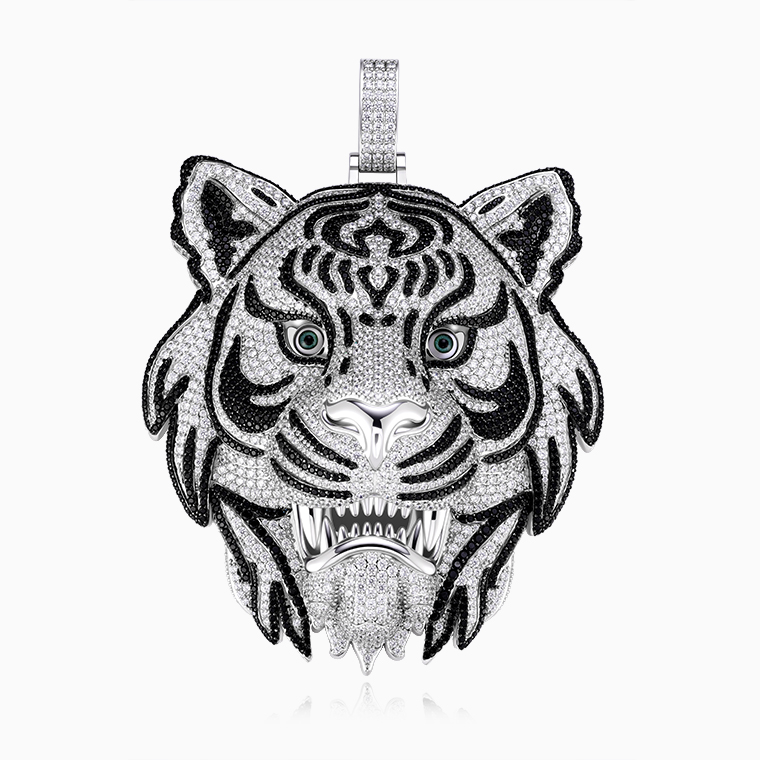

What Changes When You Switch From CZ to Moissanite?
Cubic zirconia, or CZ, and the lab-created moissanite commonly used in jewelry are different materials. CZ is zirconium oxide, while moissanite is silicon carbide. Both can resemble diamond, and neither is a laboratory-grown diamond. That distinction matters when you read a supplier’s product sheet and when you write the title customers see on your store.Moissanite is harder than CZ on the Mohs scale, which measures resistance to scratching. It can also show pronounced flashes of spectral color, known as fire. Both traits can be relevant when choosing a stone, but I’d be careful about what they tell me about the finished piece. The hardness of a stone doesn’t tell me whether the clasp works smoothly, whether the plating is even, or whether the stones are securely set. Those are separate things to check on the sample.
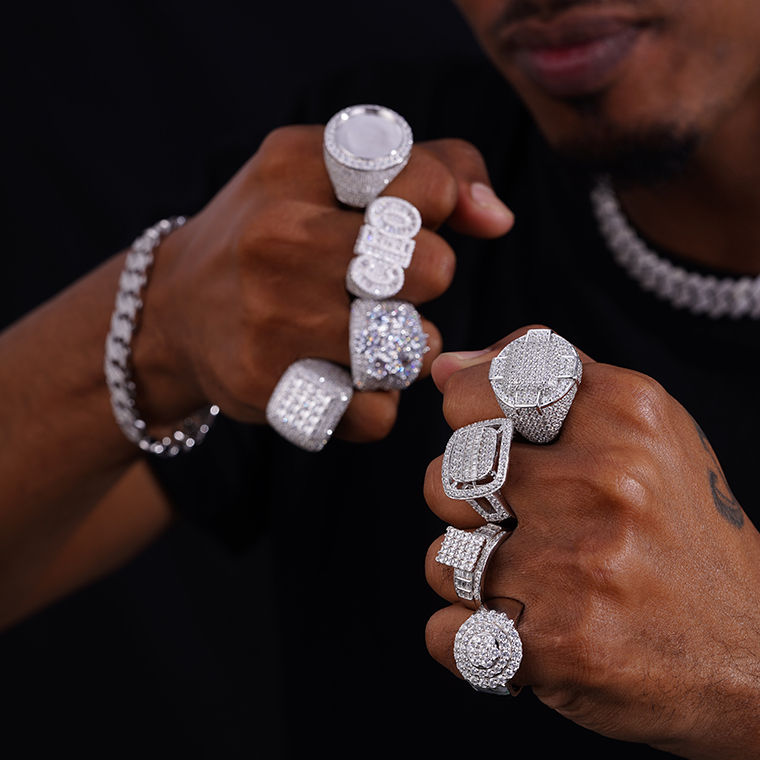
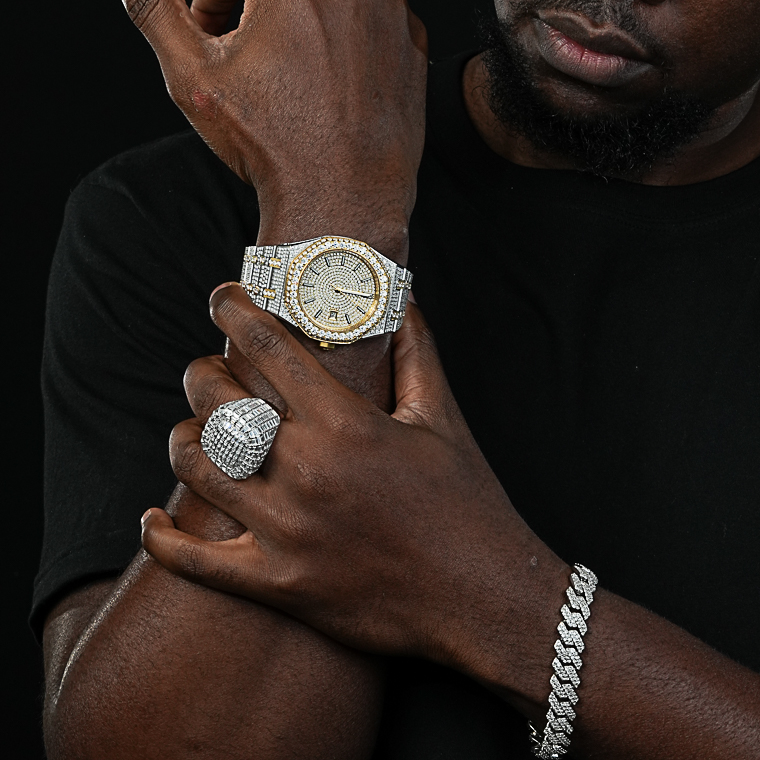
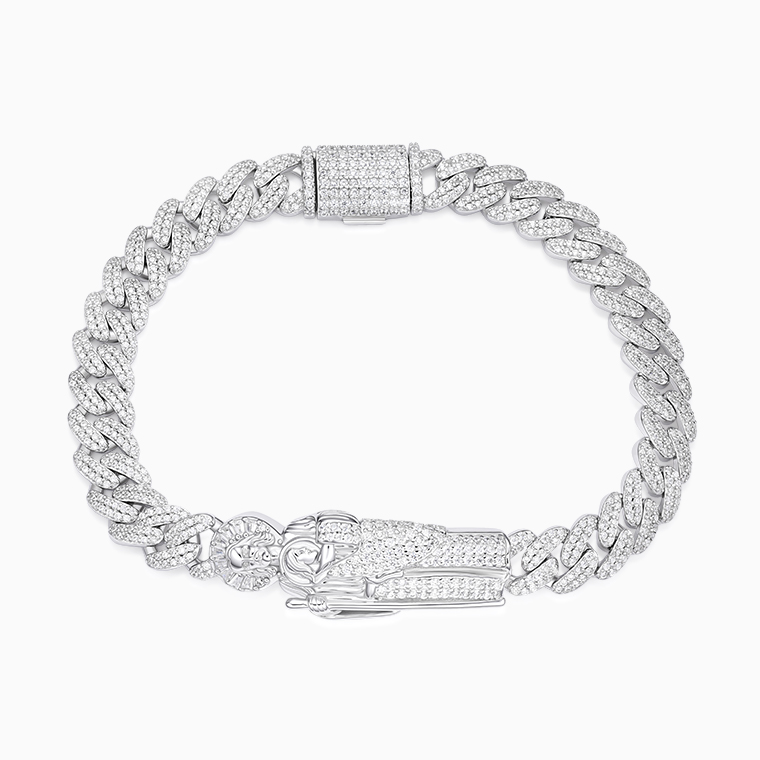
Stone size also changes what I look for. On a pendant with one large center stone, the stone itself gets plenty of attention. On a Cuban chain covered in small pavé stones, the customer may notice the continuity of the sparkle, the width of the links, and the way the chain moves before looking closely at any individual stone. I’d compare the pieces at the distance someone would normally see them when worn, then take a close-up to show the setting.
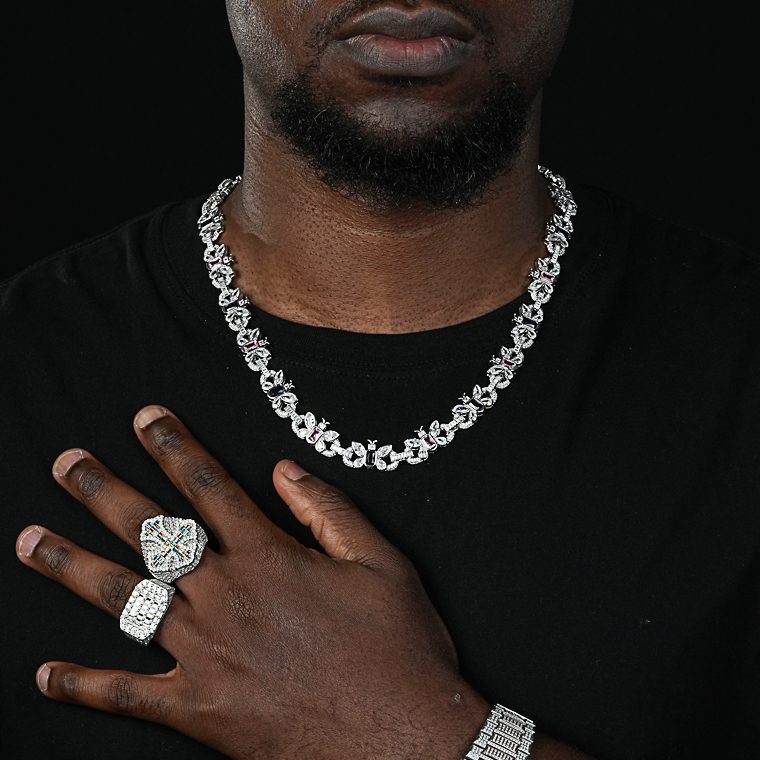
Compare Two Pieces Built to the Same Specification
Suppose a supplier shows me a CZ pendant in plated brass and a moissanite pendant in sterling silver. Both may make sense for the store. But the difference in their prices reflects at least two changes: the stone and the base metal. If one also has a larger bail, more side stones, or a chain included, the comparison gets harder to interpret.To see what the stone change actually costs, I’d ask the supplier to quote the same design twice. I’d hold the pendant dimensions, base metal, finish, stone layout, chain inclusion, packaging, and order quantity as close as possible. If the setting needs to change for one version, I’d ask for that difference to be shown on the quote. That gives me a usable starting point before I decide whether to build a broader upgrade around the stone.
For the samples, I’d look at both pieces under the same lighting and use the same camera settings. I’d photograph the face, the side, and the back, then take one shot at normal wearing distance. On a Cuban chain, I’d also record a short video of the links moving and the clasp closing. The comparison should still make sense when both versions get the same lighting and attention.
Give Each Price Tier a Reason to Exist
CZ can carry the lower price tier on its own merits
A CZ piece should feel like a finished product in its own right. For a bold pendant, I’d prioritize a clear outline, even stone spacing, a clean back, and a bail that works with the intended chain. Those details matter to the buyer who wants the look at a particular price.I’d put CZ in the product title or specifications and make it easy to see what is included. If the pendant comes without a chain, say so near the price. If the ring or bracelet is offered in several sizes, give the actual dimensions. The customer should be able to judge what they’re getting without having to decode terms such as “premium stones” or “diamond look.” The FTC’s U.S. jewelry advertising guidance explains how to clearly describe simulated stones when using diamond-related wording.
Moissanite works best where the upgrade is easy to explain
I’d consider moissanite first for a piece a customer is likely to examine closely, such as a pendant with a prominent center stone or a tennis bracelet shown in a close-up video. I’d also consider it for an existing design that shoppers already ask for in a higher price tier. Either case gives me a reason to buy a sample and test demand.On the listing, I’d explain exactly where moissanite is used. If the center stone is moissanite and the surrounding stones are CZ, list both and identify their positions. If the version also changes from plated brass to sterling silver, say so plainly. The price difference should make sense to someone reading the two product pages side by side.
Check the Margin at the Price Customers Actually Pay
I use landed cost when comparing tiers. It is the cost of getting a sellable piece to my receiving location, including the wholesale unit price and the applicable packaging, freight, duties, and other inbound costs. If there are one-time sample or tooling fees, I track those separately so I can see what the opening order costs and what a repeat order might cost.Here is an illustrative example for two versions of the same pendant. The figures show how the calculation works and are not market prices.
| CZ pendant | Moissanite pendant | |
| Landed cost per unit | $24.00 | $42.00 |
| Planned retail price | $59.00 | $89.00 |
| Gross profit per unit at full price | $35.00 | $47.00 |
| Gross margin at full price | 59.3% | 52.8% |
| Selling price after a 20% discount | $47.20 | $71.20 |
| Gross profit per unit after discount | $23.20 | $29.20 |
| Gross margin after discount | 49.2% | 41.0% |
In this example, the moissanite pendant earns $12 more gross profit per unit at full price, while putting $18 more cash into each unit of inventory. Under the same 20% promotion, its gross profit advantage falls to $6 per unit. These calculations are before selling expenses such as payment processing, advertising, and fulfillment.
That’s why I look at dollars per sale, margin percentage, and how long stock takes to sell. A higher price can make sense even at a lower margin percentage if the style sells steadily and customers rarely need a discount to buy it. If I have to promote it heavily or wait months for it to move, I’d reconsider how much stock that tier deserves.
Test One Pair Before Expanding the Collection
For an opening order, I’d choose a familiar silhouette and test two versions of it. A retailer with a proven alphabet pendant might start with one letter that already sells. A store known for tennis bracelets might use its strongest wrist size. Starting with an established SKU helps limit how many things change at once.Once the products go live, I’d track how many visits each version gets, how many units sell, the actual selling price, and the reasons for any returns. I’d also pay attention to the questions customers ask. If they keep asking why one costs more, the photos or specifications may need work. If customers understand the difference and still buy the CZ version more often, that may tell me where to put the bulk of the next order. If the moissanite version sells steadily at full price, I have a reason to test another design.
When requesting wholesale hip-hop jewelry quotes, send the supplier a reference image, your preferred base metal and finish, and the estimated quantity and target retail price for each version. Ask for the CZ and moissanite options on the same specification sheet, with any differences in materials or construction clearly marked. That way, you can see what the upgrade costs and decide whether the difference is one your customers will pay for.