





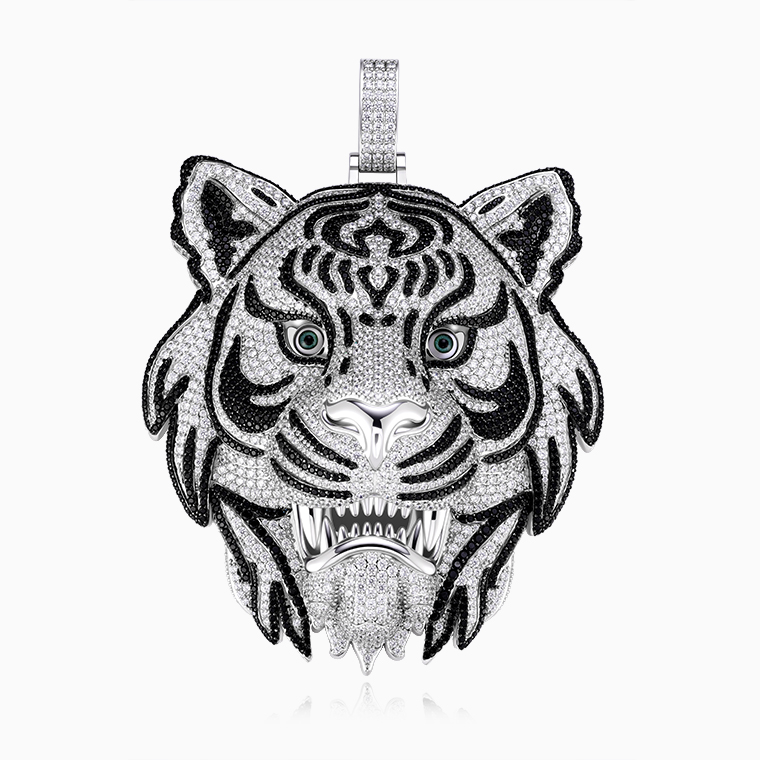

A custom pendant can become the piece people remember when they think of your brand. But the design has to work beyond the screen: the size needs to feel right, the stones need to suit the layout, and the pendant has to hang properly from the chain.
When I look for a custom hip hop pendant manufacturer, I want more than someone who can reproduce a drawing. I want a team that will talk through the details with me, make the design clear before sampling, and give me a reliable reference for production.
Can the manufacturer understand the idea behind my design?
I usually begin with the reason I want to make the pendant. Is it a logo piece that should be recognizable from across the room? A one-off statement design? Or part of a set that needs to work with chains already in my collection? The answer affects the size, thickness, lettering, stone coverage, and even the way the bail is shaped.
I send whatever references I have—sometimes a finished sketch, sometimes a few images and a rough idea. I mark the details I want to keep and the ones I am open to changing. That distinction matters. I may want the logo and outline left untouched while asking the design team to advise on the depth, stone placement, or chain opening.
I also make sure we are looking at the same version of the artwork. If I have a new logo file or have changed a small detail, I replace the old file instead of assuming everyone will notice the difference. For an unreleased design, I ask whether we can discuss a confidentiality agreement before I share the files.
The first conversation tells me a lot. I want the manufacturer to ask about things I may have overlooked: the chain the pendant will go on, how large it should look when worn, whether the lettering will remain clear at that size, and how the stones affect the design. Those questions help me see whether the team is thinking about the finished piece, not just the image I sent.
Shining Star Jewelry has its own design team and factory, and its custom jewelry service supports product development discussions. For any project, I still confirm what design work is included, what I will receive for review, and what decisions need my approval.
What should I look for in the design and production process?
Before I commit to sampling, I ask the manufacturer to walk me through the next steps. The process may include a design review, a drawing or CAD view, material confirmation, a physical sample, revisions, and final approval. The exact scope can vary, so I ask what is included in the quote and whether design, model, or sample fees are charged separately.
I look at the whole pendant, not just the face. The side and back can change how the piece feels and hangs. I check the thickness, raised sections, edges, bail opening, and how the pendant will sit on the chain. If the design has small lettering or detailed artwork, I want to see how those details will translate at the actual size.
A drawing or CAD view helps me review dimensions and placement. It cannot tell me everything about the finished piece, though. I may need a physical sample to judge the weight, surface, setting, and how the pendant moves when worn. I ask which questions the drawing can answer and which ones we will leave for sample review.
I also ask who handles the different production steps. Shining Star’s company and product information describes its own factory and design team, as well as processes such as setting, molding, polishing, inspection, and packaging. I confirm which steps apply to my pendant and whether any part of the work is handled by a partner. That gives me a clearer picture of the project without assuming every style follows the same process.
How do I choose the right materials, stones, and finish?
I try to be precise about materials from the start. If I am considering moissanite or cubic zirconia, I name the material rather than using a general term like “diamond look.” They are different stones, and the choice should be clear in both the quotation and the product description.
I share the stone shape, approximate size, color preference, and where I want the stones placed. Then I ask the manufacturer to review whether that layout works with the pendant’s dimensions and construction. A pattern that looks good in a reference image may need adjustment when it is translated into a smaller or thicker piece.
Shining Star lists moissanite and cubic zirconia among its stone options. Its product information also describes hand-setting and wax-setting methods, prongs used to help secure stones, and an additional stone check before shipment. I ask which method and checks apply to my design. I want to understand the process, while keeping in mind that stones can still be affected by impact or wear.
For the base metal, Shining Star lists 925 sterling silver and brass among common materials. I confirm the material for my specific pendant and have it written into the order details. I do the same for the plating color and surface finish. The company’s product information describes multiple polishing stages and, for relevant plated products, multiple plating stages followed by a final e-coating step. I confirm which finish process applies to the piece I am developing.
The pendant also needs to be comfortable enough to wear. A large face, raised edges, or extensive stone coverage may affect the weight and how it sits. I check the back and edges, and I make sure the bail opening works with the chain I plan to sell with it. These details are easier to resolve during development than after a full order is underway.
What information should I send with my inquiry?
I do not need a complete technical drawing before I contact a manufacturer. I do need to give the team enough information to understand the idea and tell me what they need next.
My starting brief includes the purpose of the pendant, the design references, and the parts I consider essential. If I have dimensions, I include the height, width, thickness, and any important proportions. If I am still deciding on size, I describe the look I want and ask for guidance.
I include my material and stone preferences, plating color, finish, chain type, chain width, and bail requirements. I also say whether I need help refining the design, a drawing or CAD review, a physical sample, a one-piece custom order, or a wholesale quote. Those are different stages of work, so I ask the manufacturer to explain the costs and steps for the option I need.
I add the estimated quantity, number of variations, branding or engraving details, packaging needs, and target launch date. If something is flexible, I say so. If a launch date is important, I share it as a target and ask whether the project schedule looks workable once the design and order details are clear.
| What I include | Why it helps |
|---|---|
| Sketches, artwork, and reference images | Shows the look and identifies details to keep |
| Dimensions and views | Clarifies the scale, thickness, and construction |
| Metal, stones, and finish | Gives the manufacturer a defined starting specification |
| Chain and bail details | Helps confirm that the pendant will fit and hang as intended |
| Quantity, sample needs, and timing | Helps the team discuss the right project scope |
When I compare manufacturers, I send the same brief to each one. That way, I can compare their responses on the same design instead of trying to reconcile quotes based on different assumptions.
How do I review the sample and compare quotes?
I use the sample to check the things a drawing cannot fully show. I compare it with the latest design and written specifications, then look at the overall size, thickness, lettering, logo placement, back, edges, and finish. I put it on the intended chain to see whether it fits the bail and hangs the way I expected.
For a stone-set pendant, I look at the layout under consistent lighting. I check that the stone pattern matches the approved design and inspect the visible setting edges. I handle the piece normally and look for areas that might catch on clothing or feel uncomfortable. If I have a concern, I describe exactly where it is and what I would like changed. A marked-up photo or a short numbered list is usually more helpful than saying only that something “doesn’t look right.”
Before approving the sample, I ask which version will guide production. I want the final drawing or sample, the material and finish, and any important dimensions recorded clearly. If revisions affect the price or schedule, I ask the manufacturer to explain that before I approve the change.
I compare quotes only when they cover the same product. That means checking the dimensions, metal, stones, setting, finish, branding, packaging, quantity, sample scope, and shipping terms. I also ask whether the quote includes design or model fees, sample costs, and revisions. A lower price is hard to assess if one supplier has left out work that another has included.
Shining Star’s FAQ describes a one-piece starting point for custom pendant orders when the applicable model-fee terms are confirmed. Standard wholesale orders usually start at 30 pieces; lower quantities may sometimes be available at a higher unit price. Custom designs without a model fee generally require 50 pieces. I confirm the terms for my particular design and order structure before proceeding.
I also confirm the production estimate after the design and order details are settled. Factory production and shipping are separate parts of the schedule, so I plan for both and leave time for sample review and transit.
How do I make reorders easier?
Once the pendant is approved, I keep the final drawing or sample together with the order details. My product record includes the design version, dimensions, base metal, stone material and layout, finish, bail details, branding, and packaging. If I have several sizes or finishes, I label each one separately.
I ask the manufacturer how the approved reference will be used for production and what checks will be carried out before shipment. If I change the materials, dimensions, or stone layout for a later version, I make sure that change is documented. That way, the next order does not depend on someone interpreting an old photo or an email from months earlier.
I also confirm what starts the production timeline and which approvals or materials need to be ready first. I discuss shipping separately and plan around the actual project schedule. A clear product record and a shared approval reference make it easier for both sides to discuss a reorder and keep the pendant consistent with the version my customers know.
I choose a custom hip hop pendant manufacturer by discussing the design in detail, checking the sample against clear specifications, and confirming the order terms before production.