




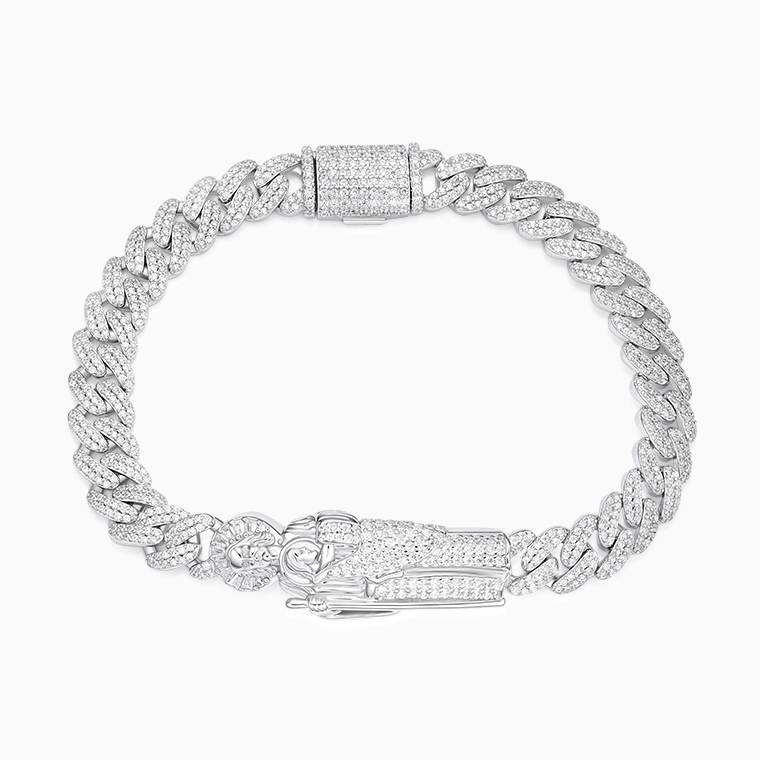
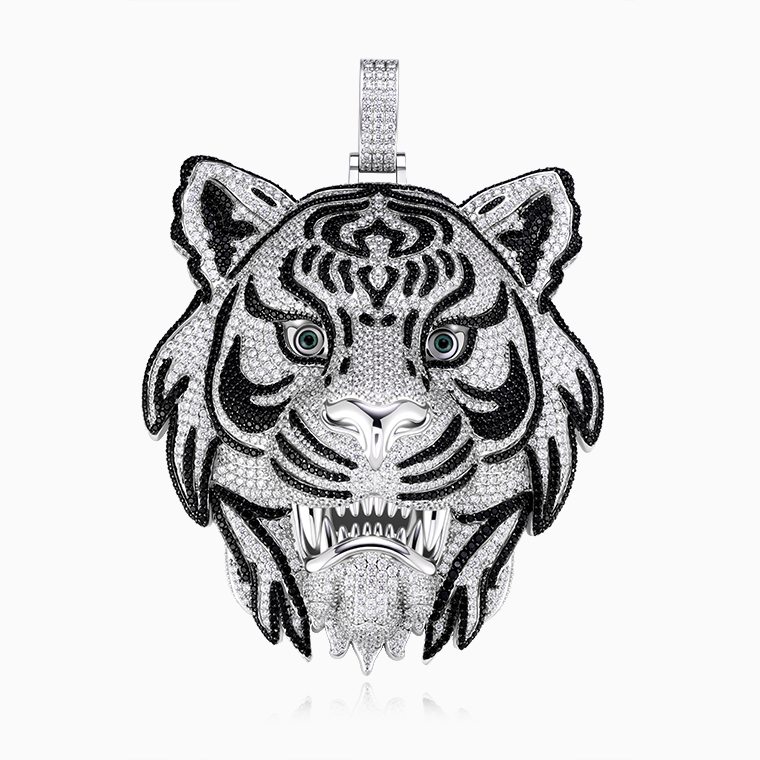

The buyer and manufacturer must define the dimensions, structure, material, stones, plating, budget, quantity and quality standard before production begins. A capable manufacturer then translates those requirements into a production-ready CAD model, creates a physical sample, obtains approval and reproduces the agreed specification in bulk.
This guide explains how the process works and what international buyers should evaluate when selecting a Chinese custom jewelry factory.
Why Is China Important for Custom Hip Hop Jewelry?
China has developed extensive supply chains for fashion jewelry, sterling silver products, metal components, gemstone setting, electroplating, packaging and international logistics.For overseas brands, this can provide access to:
- CAD design and 3D modeling;
- wax printing and mold development;
- brass, stainless steel, silver and gold production;
- CZ, moissanite and diamond options;
- custom logos and engraving;
- different plating colors;
- small-batch and larger-scale manufacturing;
- private-label packaging;
- coordinated international delivery.
Buyers should therefore select a factory based on the product being developed rather than the country alone.
Step 1: Define the Product Brief
A clear product brief reduces quotation errors and unnecessary revisions.At minimum, provide:
- product category;
- reference images or sketches;
- desired dimensions;
- approximate weight, if known;
- base metal;
- stone type;
- plating color;
- chain length and width;
- logo or engraving requirements;
- estimated order quantity;
- packaging expectations;
- target price;
- required delivery date.
For example, a buyer may request a “gold custom logo pendant” without specifying whether “gold” means solid gold, gold vermeil, or gold-colored plating over silver or brass. These alternatives have very different costs and production requirements.
The first responsibility of a professional manufacturer is therefore clarification.
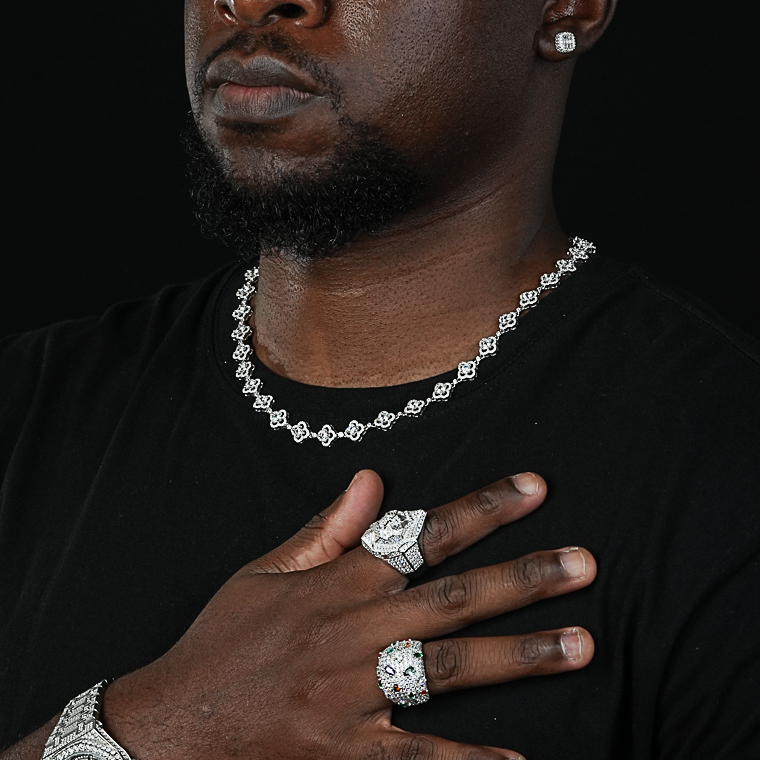
Step 2: Review the Design for Manufacturability
A creative image must be adapted into a piece that can be cast, polished, set with stones and worn safely.The factory should review:
- minimum metal thickness;
- vulnerable projections;
- depth of raised and recessed details;
- stone spacing;
- prong or setting structure;
- bail strength;
- chain compatibility;
- weight distribution;
- back construction;
- sharp corners;
- moving parts;
- engraving visibility.
Without it, a digital rendering may look impressive while creating production problems. Thin areas may not fill during casting. Small lettering may lose definition after polishing. A heavy pendant may tilt forward. A detailed face may become unclear when reduced to a small size.
Shining Star Jewelry’s design team uses jewelry CAD tools to convert buyer concepts into three-dimensional models while evaluating these structural points.
Step 3: Create and Approve the CAD Model
CAD stands for computer-aided design. It allows the manufacturer to establish the three-dimensional geometry of the jewelry before physical production.A useful CAD approval should show or confirm:
- front, side and back views;
- overall measurements;
- estimated metal volume;
- stone positions and sizes;
- bail opening;
- logo and engraving;
- solid or hollow sections;
- separate components;
- assembly points.
Ask:
- Is the piece the correct physical size?
- Will the selected chain fit through the bail?
- Is the back solid, hollow or open?
- Are the stones appropriately sized?
- Will the lettering remain readable?
- Is the estimated weight acceptable?
- Are the engraving and logo correctly positioned?
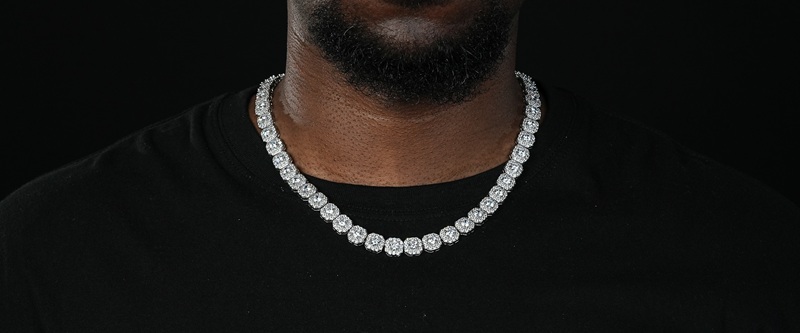
Step 4: Produce a Wax Model or Prototype
After CAD approval, the manufacturer can create a wax or resin model using 3D printing.This physical model allows the team to review:
- overall proportions;
- thickness;
- logo definition;
- bail dimensions;
- stone-setting areas;
- structural connections;
- manufacturability.
A wax model is not the finished sample. It is the pattern used to create the metal form through the casting process.
Step 5: Select the Metal
The appropriate metal depends on the design and market position.Brass
Brass is widely used for fashion-oriented hip hop jewelry because it can support detailed shapes and is generally more affordable than precious metals.It may be suitable for:
- trend-driven collections;
- larger statement pendants;
- price-sensitive products;
- wholesale fashion jewelry.
925 Sterling Silver
Sterling silver contains 92.5% silver and a smaller proportion of other metals to improve strength.It is commonly selected for:
- moissanite jewelry;
- premium pendants;
- rings and earrings;
- higher-value collections;
- customers who prefer precious-metal products.
Stainless Steel
Stainless steel provides good resistance to everyday corrosion and can be suitable for chains, bracelets and simpler designs.However, its manufacturing and stone-setting options may differ from those of brass or silver. Buyers should confirm whether the intended design is suitable for the selected steel grade and production method.
Gold
Solid gold may be selected for luxury jewelry. The buyer must confirm gold purity, finished weight, stone specification and testing documentation. Because the material value is high, dimensional and weight approval become especially important.Step 6: Choose the Stones
Cubic Zirconia
CZ offers an affordable diamond-like appearance and is widely used in fashion jewelry. It supports multiple shapes, sizes and colors.It is appropriate when the buyer prioritizes:
- accessible pricing;
- trend-driven collections;
- visual coverage;
- a lower wholesale cost.
Moissanite
Moissanite is harder and more durable than CZ and produces strong brilliance and fire. It is frequently used in premium hip hop jewelry.It is appropriate when the buyer wants:
- stronger market positioning;
- high visual impact;
- better resistance to scratching than CZ;
- a product below typical diamond pricing.
Laboratory-Grown or Natural Diamond
Diamond may be selected for luxury collections. Buyers should define whether they require natural or laboratory-grown stones and specify the reporting, grading or documentation expected.CZ and moissanite are diamond simulants, not diamonds. Product listings, packaging and sales materials should identify stones accurately.
Step 7: Produce and Inspect the Sample
The complete sample may involve:- mold preparation;
- casting;
- cutting;
- assembly;
- soldering;
- rough polishing;
- final polishing;
- stone setting;
- electroplating;
- cleaning;
- final inspection.
The buyer should evaluate the physical sample rather than approving production from photographs alone whenever practical.
Inspect:
- measurements;
- weight;
- structural strength;
- polish;
- plating color;
- stone security;
- stone alignment;
- clasp operation;
- bail fit;
- logo accuracy;
- comfort;
- packaging compatibility.
Step 8: Confirm the Commercial Specification
Before bulk production, consolidate the project into one final specification.It should contain:
- product code;
- approved CAD version;
- approved sample reference;
- dimensions;
- weight tolerance;
- metal;
- stones;
- plating;
- logo;
- engraving;
- quantity;
- packaging;
- inspection requirements;
- production time;
- shipping terms;
- payment terms.
Step 9: Begin Bulk Production
After sample approval and commercial confirmation, the manufacturer prepares materials and schedules production.Bulk manufacturing may repeat the following processes:
- casting or forming;
- component production;
- soldering and assembly;
- polishing;
- stone setting;
- plating;
- cleaning;
- inspection;
- packaging.
Buyers should avoid changing dimensions, stones or plating after materials have been prepared. Late changes may affect cost, quality and delivery.
Step 10: Conduct Quality Control
Bulk production should be checked against the approved sample and specification.Important inspection points include:
Material
- correct metal;
- expected weight;
- correct stone type;
- correct components.
Appearance
- consistent plating color;
- smooth surfaces;
- no visible scratches;
- no casting defects;
- clean engraving;
- correct logo.
Stone setting
- correct stone sizes;
- aligned rows;
- secure settings;
- no missing stones;
- clean edges.
Function
- working clasp;
- suitable bail opening;
- secure hinge;
- correct moving parts;
- wearable dimensions.
Packaging
- correct quantities;
- correct labels;
- protected surfaces;
- suitable separation between pieces;
- accurate cartons and shipping marks.
MOQ for Custom Jewelry in China
MOQ varies according to the product and production process.Factors include:
- custom mold requirements;
- metal purchasing;
- stone quantities;
- plating batch;
- component production;
- packaging;
- labor complexity.
The factory must still review the exact design before confirming MOQ. A customized catalog product may support a different minimum from a completely original product with special components.
Protecting Original Designs
If a buyer is developing an original logo, character or collection, intellectual-property protection should be discussed before files are exchanged.Useful practices include:
- signing an NDA;
- marking confidential files;
- identifying who owns the CAD and mold;
- limiting production to approved quantities;
- recording permitted uses of product photography;
- registering trademarks and designs where appropriate;
- avoiding unauthorized reproduction of another brand’s work.
Payment and Shipping
Buyers should confirm:- quotation currency;
- deposit requirement;
- balance payment timing;
- sample charges;
- mold charges;
- revision costs;
- shipping method;
- insurance;
- duties and taxes;
- Incoterms;
- customs documentation.
Why Work With Shining Star Jewelry?
Shining Star Jewelry supports international wholesalers, brands, retailers, designers and e-commerce sellers with custom hip hop jewelry development.Its service scope includes:
- custom design consultation;
- CAD modeling;
- wax-model production;
- sampling;
- brass and sterling silver options;
- CZ and moissanite options;
- casting;
- polishing;
- stone setting;
- plating;
- multi-stage inspection;
- wholesale production;
- international delivery coordination.
Information to Send With an Inquiry
To receive a useful evaluation, send:1.Reference image, logo or sketch
2.Desired product dimensions
3.Base metal
4.Stone type
5.Plating color
6.Chain or bail requirements
7.Estimated quantity
8.Target price range
9.Packaging requirements
10.Required delivery dateIf
some details are undecided, explain the target market and expected retail price. The design team can then recommend practical options.
Submit your requirements through www.ssfjewelry.com to discuss a custom hip hop jewelry project.