





A successful wholesale order begins with the target customer. A startup streetwear brand selling accessible statement pieces may need a different material and MOQ from an established jeweler offering premium sterling silver and moissanite chains.
This guide explains the main decisions wholesale buyers should make before placing an order.
What Is Wholesale Hip Hop Jewelry?
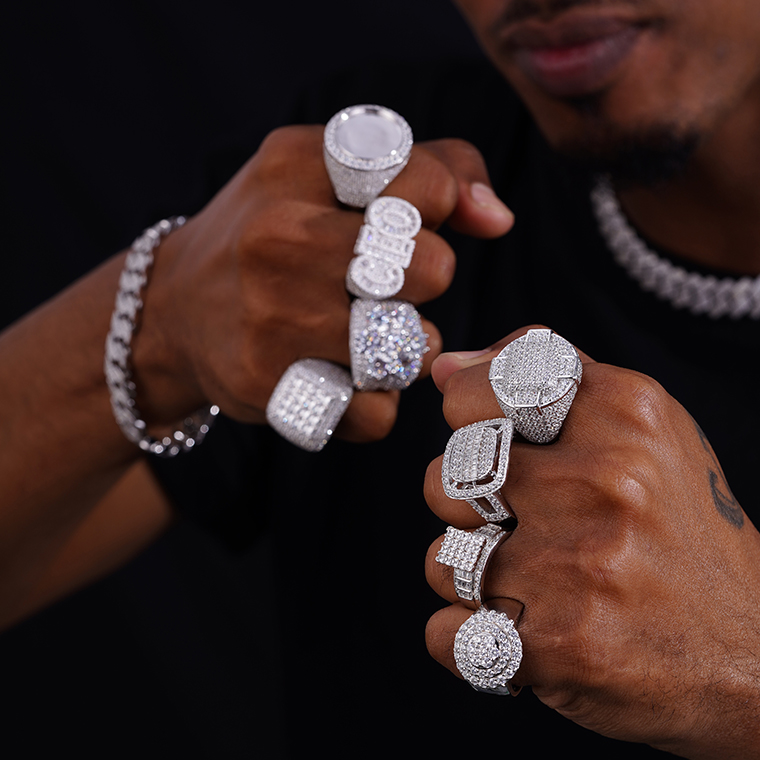
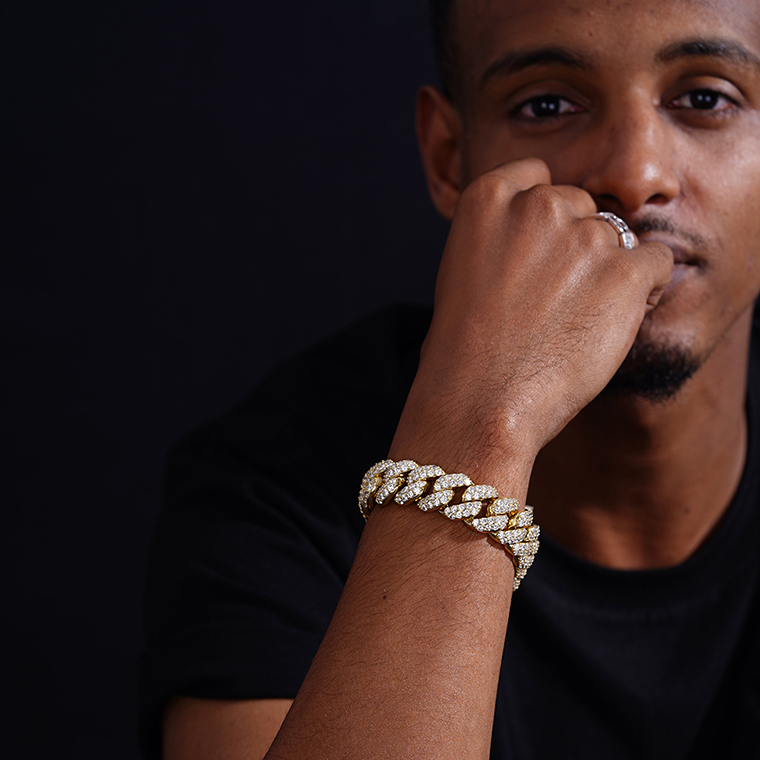
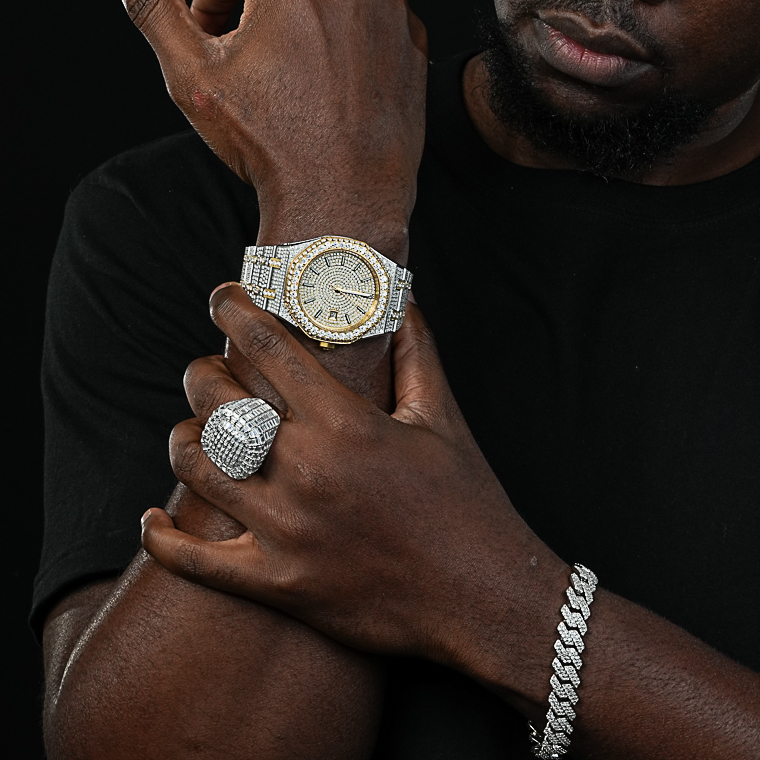
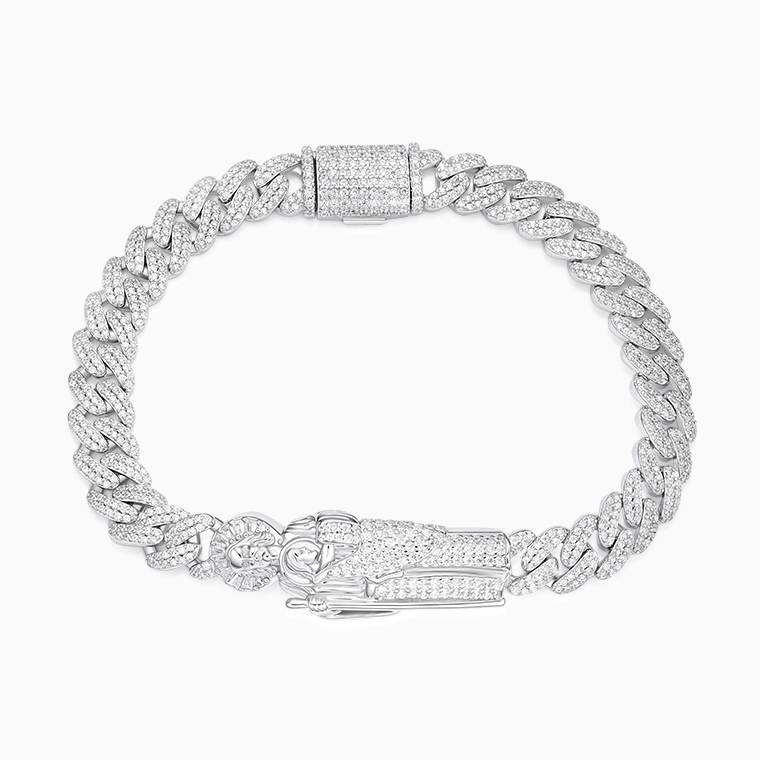
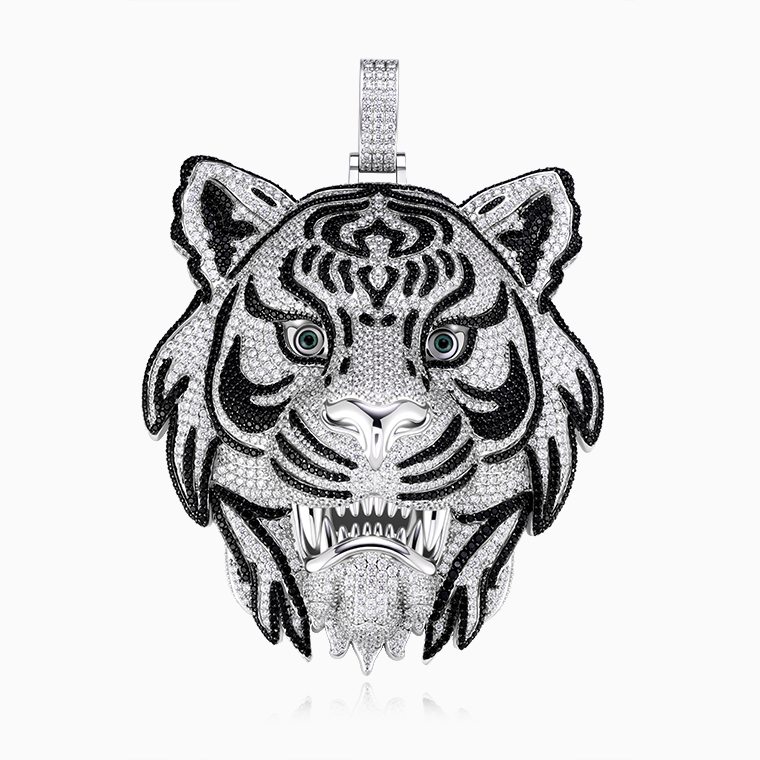
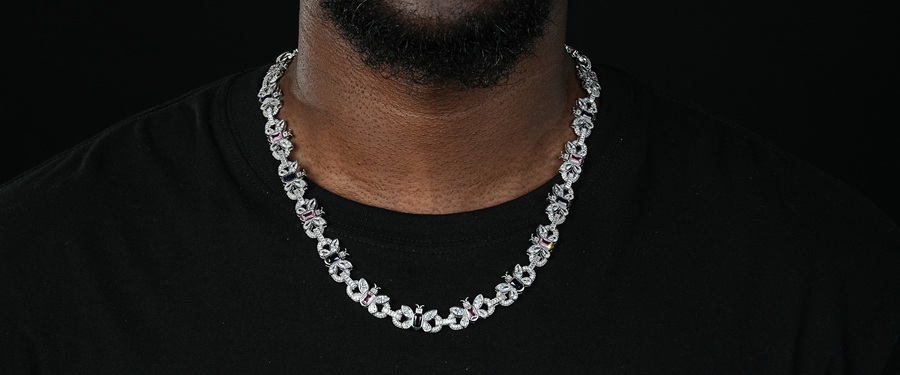
Wholesale hip hop jewelry includes finished jewelry purchased in quantity for resale, as well as private-label and custom products manufactured for a brand.Common categories include:
- Cuban link chains;
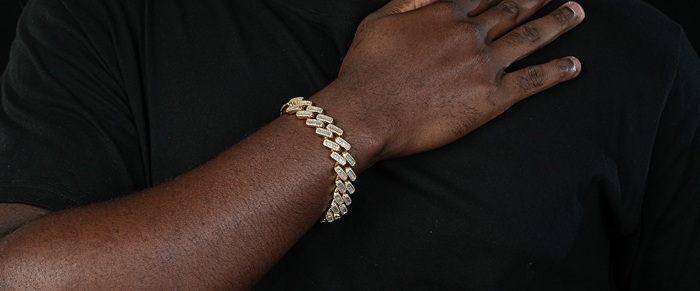
- Cuban link bracelets;
- tennis chains;
- tennis bracelets;
- custom pendants;
- letter and name pendants;
- photo pendants;
- rings;
- earrings;
- grillz;
- watches and watch accessories.
Stock Products
Existing designs that are ready or regularly produced. These may offer faster ordering and lower development costs.Modified Products
Existing designs customized through plating color, stone color, logo engraving, clasp, length or packaging.Fully Custom Products
Original jewelry developed from a logo, sketch, image or design brief. These usually require CAD development, a sample and formal approval before production.Buyers should identify which category applies because it affects MOQ, cost and lead time.
What Does MOQ Mean?
MOQ means minimum order quantity: the smallest quantity a supplier will accept for a particular order or specification.However, MOQ can refer to:
- one design;
- one size;
- one metal;
- one plating color;
- one stone color;
- one package;
- one complete order.
Before accepting an MOQ, ask:
Is this MOQ per design, per color, per material, per size or per complete order?
Why Do Manufacturers Have MOQs?
Manufacturing includes setup costs that do not disappear when the order is small.These may include:
- CAD design;
- mold development;
- metal purchasing;
- stone preparation;
- casting setup;
- polishing setup;
- plating batch preparation;
- custom components;
- logo application;
- packaging setup;
- inspection and administration.
MOQ therefore reflects production efficiency rather than simply a supplier’s willingness to accept an order.
Shining Star Jewelry Wholesale MOQ
For eligible Shining Star Jewelry products, wholesale MOQ is generally around 20–30 pieces. The exact quantity depends on the product, material, stone, plating and customization requirements.One-piece customization can be used for selected custom projects or sample development. This allows a buyer to:
1.Develop the concept
2.Examine a physical sample
3.Revise the design
4.Confirm the commercial specification
5.Place a wholesale order
6.Increase future quantities
according to sales A custom sample and a wholesale MOQ serve different purposes. The sample proves the design, while the wholesale order establishes repeat production.
Choosing the Base Metal
Material selection affects price, weight, durability, plating, production method and market positioning.Brass
Brass is widely used in fashion and hip hop jewelry.Advantages may include:
- suitability for detailed designs;
- practical casting characteristics;
- lower cost than precious metals;
- appropriate weight for statement pieces;
- compatibility with multiple plated finishes.
Buyers should confirm:
- metal specification;
- plating;
- coating or finishing;
- care instructions;
- applicable material testing;
- expected use.
925 Sterling Silver
925 sterling silver contains 92.5% silver, with the remaining proportion normally composed of other metals that improve strength.Advantages include:
- precious-metal positioning;
- suitability for moissanite jewelry;
- acceptance in higher-value collections;
- suitability for rings, pendants and chains;
- multiple plating options.
For plated sterling silver, aggressive polishing may damage the external finish. Care instructions should match the actual plating.
Stainless Steel
Stainless steel is valued for resistance to everyday corrosion and may suit chains, bracelets and simpler jewelry.Potential advantages include:
- durability;
- resistance to tarnish;
- practical maintenance;
- stable base color;
- suitability for certain PVD finishes.
Gold
Solid gold is used for luxury jewelry and high-value custom pieces.The buyer should specify:
- gold purity;
- expected finished weight;
- solid or hollow structure;
- stone type;
- grading documentation;
- weight tolerance;
- testing method.
CZ, Moissanite or Diamond?
The stone should match the price level and customer expectation.Cubic Zirconia
CZ is a laboratory-created diamond simulant. It offers an affordable, bright appearance and is available in many sizes, cuts and colors.It is suitable for:
- accessible fashion collections;
- trend-focused designs;
- large stone coverage at a lower cost;
- sellers working within strict price targets.
Moissanite
Jewelry-quality moissanite is generally laboratory-created silicon carbide.It offers:
- strong brilliance;
- intense rainbow-colored fire;
- hardness of approximately 9.25;
- better resistance to scratching than CZ;
- a premium position below typical diamond pricing.
Moissanite is not a diamond and should be clearly identified. GIA explains that moissanite and CZ are diamond simulants with different chemical, physical and optical properties from diamond.
Diamond
Diamond may be natural or laboratory-grown. A laboratory-grown diamond is still a diamond rather than a simulant.Diamond offers:
- Mohs hardness of 10;
- luxury positioning;
- recognized fine-jewelry status;
- options for natural or laboratory-grown collections.
Plating and Finish
Plating strongly influences the initial appearance of hip hop jewelry, but color descriptions alone are insufficient.Common finishes include:
- yellow gold color;
- white gold color;
- rose gold color;
- rhodium;
- black finish;
- two-tone plating;
- gold vermeil on sterling silver;
- polished;
- matte;
- sandblasted;
- enamel details.
- base metal;
- plating method;
- color reference;
- thickness specification where applicable;
- protective coating;
- testing method;
- care instructions;
- replating expectations.
No plated jewelry should be marketed as permanently resistant to wear. Longevity depends on the plating system, base preparation, contact with sweat and chemicals, frequency of use and care.
What Determines Wholesale Price?
Wholesale price is affected by:- metal type;
- metal weight;
- product dimensions;
- stone type;
- number of stones;
- stone sizes and cuts;
- setting labor;
- structural complexity;
- plating;
- logo customization;
- mold requirements;
- order quantity;
- packaging;
- inspection;
- shipping.
Do not compare one supplier’s brass-and-CZ quotation with another supplier’s silver-and-moissanite quotation as though they describe the same product.
How to Request an Accurate Quotation
Provide:1.Product image or model number
2.Desired quantity
3.Dimensions
4.Metal
5.Stone type
6.Plating color
7.Chain length or bracelet size
8.Logo requirements
9.Packaging
10.Destination country
11.Required delivery dateIf
requesting a custom design, include an editable logo file or high-resolution reference where possible.
A target price can also help the manufacturer recommend a realistic combination of material, weight and stone coverage.
Sampling Before a Wholesale Order
Sampling is strongly recommended when:- the design is original;
- the product uses a new material;
- dimensions are uncertain;
- plating color is important;
- custom packaging must be tested;
- the order value is significant;
- the buyer has not worked with the supplier before.
Check:
- size and weight;
- logo accuracy;
- structural strength;
- polish;
- stone setting;
- plating;
- clasp;
- comfort;
- packaging;
- correspondence with the quotation.
Confirming the Order
The purchase confirmation should record:- product code;
- final specification;
- approved sample;
- quantity;
- unit price;
- mold or setup charges;
- packaging;
- production time;
- payment;
- shipping;
- quality standard;
- defect handling;
- required documents.
Wholesale Production Time
For Shining Star Jewelry, a custom physical sample generally takes approximately one to two weeks. Bulk manufacturing commonly requires around two to four weeks after the sample and order details have been approved.Published wholesale schedules may also be expressed as approximately 20–30 business days depending on the product and inventory status.
The schedule can change because of:
- design revisions;
- unusual materials;
- custom stones;
- large quantities;
- complicated setting;
- special plating;
- custom packaging;
- peak production periods;
- shipping or customs delays.
Quality Control for Wholesale Orders
The buyer should establish quality priorities before manufacturing.For hip hop jewelry, inspection may cover:
- material;
- dimensions;
- weight;
- casting;
- soldering;
- polish;
- plating color;
- stone alignment;
- stone security;
- clasps;
- hinges;
- logo;
- engraving;
- scratches;
- sharp edges;
- packaging;
- quantity.
Buyers should still communicate product-specific requirements. A heavy Cuban chain, pavé pendant and hinged bracelet require different functional checks.
Packaging and Private Label
Private-label options may include:- logo engraving;
- branded clasps or tags;
- cards;
- pouches;
- boxes;
- labels;
- care instructions;
- barcodes;
- outer cartons.
Packaging should be tested with the sample to ensure:
- the jewelry fits;
- surfaces do not rub;
- chains do not tangle;
- pendants remain centered;
- products are protected in international transit.
International Shipping
Shipping cost depends on:
- destination;
- parcel weight;
- volume;
- declared value;
- service level;
- insurance;
- customs requirements.
Clarify:
- who arranges shipping;
- who pays duties and taxes;
- whether insurance is included;
- the applicable Incoterm;
- which customs documents are provided;
- responsibility for loss or damage;
- whether the buyer’s courier account can be used.
Avoiding Common Wholesale Mistakes
Choosing only by unit price
A low price may result from a different metal, lower weight, different stone or reduced production scope.Skipping the sample
This increases the risk of disputes about size, color, weight and workmanship.Approving only from photographs
Photographs may not reveal weight, comfort, sharp edges, clasp quality or stone security.Changing the design during production
Late revisions may create additional cost, delays and inconsistent output.Ignoring packaging MOQ
A jewelry order may meet MOQ while customized boxes do not.Using inaccurate product descriptions
CZ, moissanite, laboratory-grown diamond and natural diamond must be identified correctly. Plated products should not be described as solid gold.Failing to define defect handling
The buyer and supplier should agree on inspection, reporting and corrective action.A Practical First-Order Strategy
For a new brand, a sensible approach is:1.Select a focused product category
2.Define the target customer and price
3.Compare material options
4.Develop or select several designs
5.Produce samples
6.Test product photography and packaging
7.Place a small wholesale order
8.Collect customer feedback
9.Reorder successful products
10.Expand the collection gradually
This reduces inventory risk and helps the buyer learn which dimensions, stones, colors and price levels perform best.
Why Source From Shining Star Jewelry?
Shining Star Jewelry provides custom and wholesale manufacturing for international hip hop jewelry buyers.Available capabilities include:
- stock and custom designs;
- CAD development;
- custom pendants;
- Cuban and tennis jewelry;
- brass and sterling silver;
- CZ and moissanite;
- multiple finishes;
- private-label options;
- sampling;
- multi-stage quality control;
- small-batch wholesale;
- international shipping coordination.
Buyers can browse product categories and submit an inquiry at www.ssfjewelry.com. Include the product model or image, quantity, material, stone, plating, destination and customization requirements to receive a more accurate recommendation.