






A delayed custom order rarely causes only one problem. The product launch moves back, promotional content must be rescheduled, inventory plans change, and money remains tied up in products that cannot yet be sold. For jewelry wholesalers, production time has a direct effect on sales and cash flow.That is why buyers researching custom jewelry production time need more than a general answer such as “a few weeks.” They need to understand what happens during those weeks, how quickly the manufacturer can turn an idea into a workable design, and whether the approved sample can be reproduced consistently in bulk.
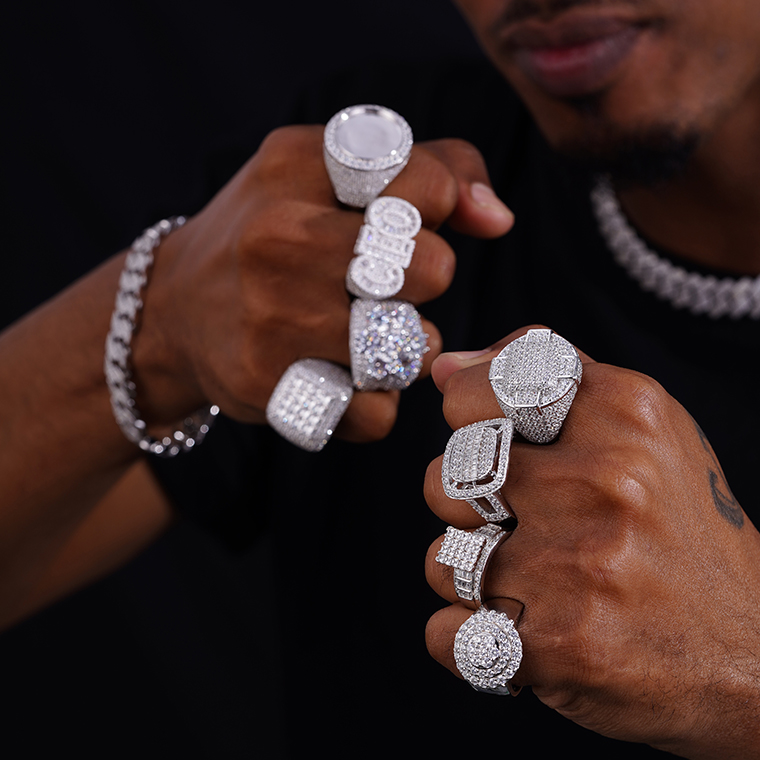
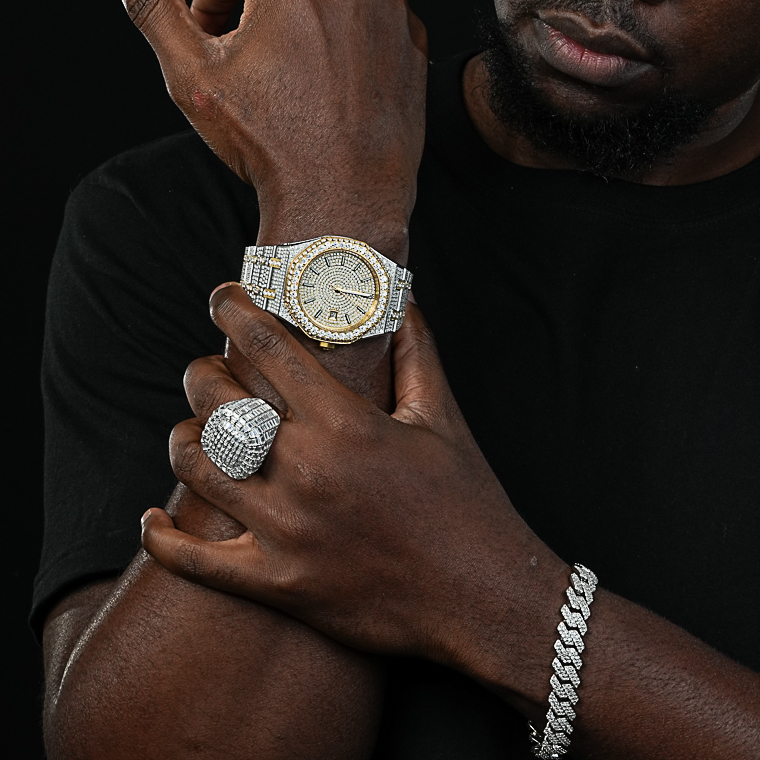
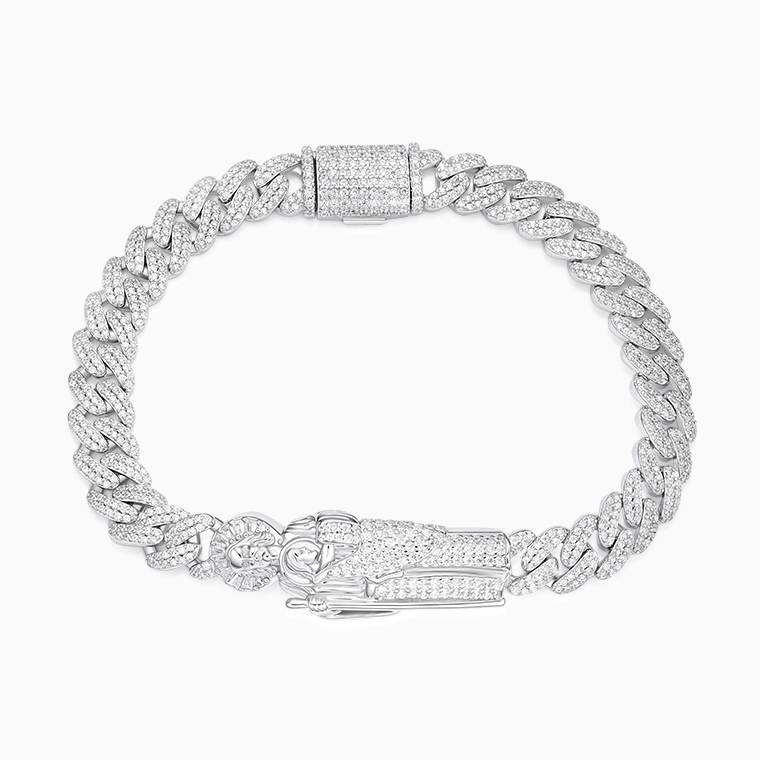
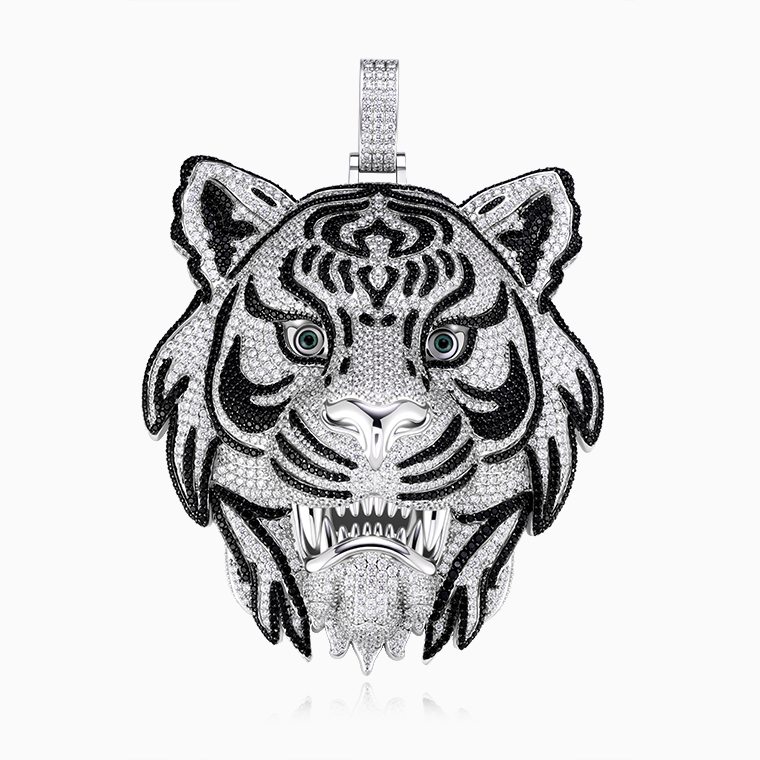
This is particularly important when choosing a custom hip hop jewelry manufacturer. Hip hop jewelry often involves detailed lettering, three-dimensional characters, custom logos, dense stone settings, unusual shapes, special bails, and several plating or finishing options. Each element must be translated into accurate production instructions before manufacturing begins.
Shining Star Jewelry provides a one-stop customization service covering design consultation, 3D modeling, wax-model production, sampling, bulk manufacturing, inspection, and delivery. By handling these stages within one coordinated process, the company helps wholesalers reduce unnecessary waiting between design and production.
How Long Does Custom Jewelry Production Take?
For a typical project at Shining Star Jewelry, the design plan can be completed within approximately 2 to 4 hours after the requirements have been clearly confirmed. The approved 3D design can then be converted into a printed wax model within approximately 4 to 6 hours.
The complete physical sample generally takes 1 to 2 weeks, while bulk production usually requires around 2 to 4 weeks after sample approval.
These timeframes provide a useful planning reference:
- Design proposal: approximately 2–4 hours
- 3D printed wax model: approximately 4–6 hours
- Finished sample: approximately 1–2 weeks
- Bulk production: approximately 2–4 weeks after approval
The actual schedule still depends on the design, material, stone-setting requirements, order quantity, plating specification, packaging, and number of revisions. A simple logo pendant and a complicated three-dimensional character pendant should not be expected to follow exactly the same timeline.
Shining Star Jewelry also supports customization starting from one piece. This allows buyers to develop or test a design before moving into a wholesale production order. For regular small-batch wholesale orders, the company offers flexible minimum quantities of approximately 20 to 30 pieces for eligible products. The precise minimum should be confirmed according to the material and manufacturing process. These service details are described on the company’s design and customization page.
Why the First Few Hours Matter
The earliest stage of a custom project often determines whether the following weeks will proceed smoothly.
A reference image may communicate the general appearance of a pendant, but it does not tell the manufacturer how large the finished piece should be, what it should weigh, or whether the back should be solid, hollow, or partially open.
A logo file also leaves several questions unanswered. Should the lettering be raised or recessed? Will stones be set inside the letters? What chain must pass through the bail? Which parts need to be reinforced? Is the buyer aiming for an accessible fashion product or a higher-value silver and moissanite piece?
Before a useful design plan can be created, the manufacturer normally needs to understand:
- Product dimensions and approximate weight
- Base metal and stone type
- Plating color and thickness requirements
- Chain size and bail dimensions
- Logo, lettering, or engraving placement
- Order quantity
- Packaging requirements
- Target price range
- Required delivery date
Not every buyer has all these answers when making the first inquiry. A professional manufacturer should help organize the idea and identify the missing decisions.
Once the requirements are clear, Shining Star Jewelry can prepare the design plan within 2 to 4 hours. This rapid response is made possible by an 11-member development team that uses professional jewelry design software, including ZBrush, Matrix, and Rhino. The team includes experienced designers who work on complex men’s pieces, character and animal forms, women’s jewelry, stone layouts, wax printing, and mold development.
From a Flat Idea to a Production-Ready 3D Model
CAD, or computer-aided design, transforms a sketch, photograph, logo, or verbal concept into a three-dimensional model that can be manufactured.
This is where the visual idea must meet practical jewelry engineering.
The designer needs to consider whether thin sections can be cast cleanly, whether the piece will be strong enough for normal wear, and whether the stone positions are suitable for secure setting. The bail must fit the selected chain, while the weight and thickness must remain appropriate for the intended market.
These details can be easy to overlook on a flat image. On a finished piece, however, they determine both appearance and usability.
A pendant may look impressive on a screen but hang at the wrong angle because its weight is poorly distributed. A highly detailed logo may lose definition after casting and polishing. Stones placed too close to an edge may be difficult to set securely. A custom bail may match the pendant visually but fail to accommodate the chain selected by the buyer.
Shining Star Jewelry’s designers review these practical points while preparing the 3D model. The objective is to preserve the buyer’s creative direction while making sure the design can be produced, inspected, and repeated.
A 4–6 Hour Wax Model Makes Design Review More Efficient
After the 3D design has been confirmed, Shining Star Jewelry can use 3D printing technology to produce a wax model in approximately 4 to 6 hours.
The wax model is an important bridge between digital design and physical jewelry production. It allows the structure and proportions of the piece to be evaluated before the complete sample is manufactured.
At this stage, the buyer and design team can examine whether:
- The overall dimensions feel appropriate
- Letters and logos remain clear
- The bail is correctly proportioned
- Raised and recessed areas have sufficient depth
- Character or animal details are recognizable
- Stone-setting areas are properly arranged
- The back structure suits the intended weight
- Different parts connect as expected
Finding a structural issue at the wax-model stage is far more efficient than finding it after casting, polishing, stone setting, and plating have been completed.
Fast wax production does not mean that every project should be rushed into sampling. The buyer should still review the design carefully. A few additional hours spent checking the model may prevent several days of avoidable rework.
Why Sample Production Still Takes 1–2 Weeks
If the design plan and wax model can be produced within hours, buyers may wonder why the complete sample still requires one to two weeks.
The reason is that a finished sample must pass through several physical manufacturing processes. Depending on the product, these may include mold preparation, casting, cutting, soldering, polishing, stone setting, electroplating, cleaning, assembly, and final inspection.
Some designs also require specialized handling. Three-dimensional character pendants may contain fine facial or clothing details. Fully iced-out pieces can use several stone sizes to cover curved surfaces. Moving components, rotating sections, hinges, or custom locks require additional fitting and testing.
Material selection affects the process as well. Shining Star Jewelry works with copper, silver, gold, zircon, moissanite, and CVD diamonds. The appropriate production method depends on the material combination and the buyer’s intended market position.
The one-to-two-week sample period therefore includes much more than printing the initial model. It is the time required to turn the approved design into a wearable, inspectable piece.
Use the Sample to Judge Commercial Readiness
A sample should not merely prove that the factory can make one attractive product. It should help the buyer decide whether the design is ready for wholesale production.
When the sample arrives, buyers should compare it with the approved drawings and inspect it under different lighting. The product should also be handled and worn rather than evaluated only through photographs.
Useful points to examine include:
- Finished dimensions and weight
- Overall proportions
- Logo and lettering accuracy
- Surface smoothness and polish
- Stone alignment and security
- Plating color and consistency
- Bail and chain compatibility
- Clasp or hinge performance
- Engraving quality
- Comfort during wear
- Fit with the intended packaging
Feedback should be specific. A comment such as “make it look more premium” leaves too much room for interpretation. Instructions such as “increase the pendant thickness, reduce the space around the center stone, and use a warmer gold tone” are easier for the design and production teams to follow.
Wholesalers should also collect comments from everyone involved before sending a revision request. If the purchasing, design, marketing, and management teams submit separate changes at different times, the sample may be revised repeatedly. That will extend the original production schedule.
What Happens After Sample Approval?
Sample approval marks the transition from product development to repeat production.
At this point, the factory prepares the required materials, schedules production capacity, and arranges each manufacturing process in sequence. Depending on the piece, bulk production may involve casting, cutting, soldering, polishing, stone setting, electroplating, cleaning, assembly, inspection, and packaging.
Shining Star Jewelry generally completes bulk production within 2 to 4 weeks after the sample and order details have been approved. More time may be needed for especially complicated structures, unusually large quantities, special materials, or custom packaging.
Late design changes can be disruptive during this stage. If a buyer changes the dimensions, logo, stone type, or plating specification after production materials have been prepared, the factory may need to adjust the price and schedule.
For this reason, sample approval should be treated as a real commercial decision. The approved sample becomes the reference for bulk manufacturing and quality inspection.
One-Piece Customization and Wholesale MOQ Serve Different Purposes
The option to start from one piece gives a buyer a low-risk way to turn an idea into a physical product. It can be used for design development, personal customization, sample evaluation, or preparation for a future collection.
A wholesale order serves a different purpose. It requires the factory to arrange materials and production processes efficiently for repeated output.
For eligible small-batch wholesale orders, Shining Star Jewelry’s minimum order quantity is generally around 20 to 30 pieces. The actual quantity may vary because a simple design made with standard materials has different production requirements from a complex sterling silver and moissanite piece.
For wholesalers, this structure creates a practical route to market:
1.Develop one custom piece or sample.2.Examine the design and workmanship.
3.Revise the sample if necessary.
4.Confirm the commercial specification.
5.Place a small wholesale order.
6.Increase the reorder quantity according to actual sales.
This can help startup brands, online sellers, designers, and established distributors test new ideas without immediately committing to excessive inventory.
Craft Options for Different Brand Styles
Custom hip hop jewelry does not follow a single visual formula. Some buyers want heavily iced-out pieces, while others prefer modern minimalism, vintage details, sculptural characters, or a mix of polished and textured surfaces.
Shining Star Jewelry offers several craft and finishing options, including:
- Enamel
- Etching
- Engraving
- Matte finishes
- Glossy sandblasting
- Gold vermeil
- Gold, rose gold, rhodium, and other electroplated colors
These processes allow a buyer to build a more recognizable product instead of simply changing the logo on a standard catalog item.
Material and finishing decisions should be made early because they affect appearance, cost, production steps, and lead time. A copper and zircon design may be suitable for a more accessible retail range, while silver and moissanite may be chosen for a higher-value collection.
The right specification depends on the target customer. The manufacturer’s role is to explain what each choice means for the finished product and manufacturing process.
Fast Production Must Include Quality Control
Speed is useful only if the delivered products are ready to sell.
An order that arrives on time but contains inconsistent plating, loose stones, scratches, incorrect logos, or unreliable clasps still creates a delay for the wholesaler. The products must be inspected again, separated, discussed with the supplier, and possibly replaced.
Quality inspection should therefore be included in the production plan rather than treated as an optional step after manufacturing.
For custom hip hop jewelry, inspection may cover:
- Dimensions and weight
- Casting and soldering quality
- Surface polishing
- Stone placement and security
- Plating color
- Logo and engraving accuracy
- Moving parts, clasps, and hinges
- Product quantity
- Packaging and labeling
The finished bulk products should be checked against the approved sample. This is especially important for reorders, where customers expect the new batch to match the product they purchased previously.
Production Capacity Becomes Important When a Design Sells
A buyer may begin with one sample or a small test order, but a successful design can quickly require a much larger reorder.
Shining Star Jewelry reports a monthly necklace production capacity exceeding 20,000 pieces and annual sales of more than 500,000 pieces of hip hop jewelry. The company combines design development, customer service, and manufacturing within the same organization.
This matters because wholesale buyers are not evaluating only the first order. They also need to know whether the factory can reproduce the product as demand grows.
A repeat order should be based on identifiable design files, specifications, sample standards, plating information, and packaging requirements. When these records are managed correctly, the product can return to production without restarting the original development process.
That continuity can save considerable time over the life of a successful collection.
Include Shipping in the Full Project Schedule
Production time and delivery time are not the same.
The two-to-four-week bulk manufacturing period does not automatically include CAD approval, sample review, international transportation, customs clearance, or final delivery to the buyer’s warehouse.
Shining Star Jewelry can arrange shipping through DHL, FedEx, and UPS. Buyers may also use their own freight agents or courier accounts. The company states that its products have been sold in more than 110 countries and regions.
Wholesalers should plan backward from the date on which the products must be physically available. A launch scheduled for the first day of the month should not depend on the factory shipping the order on that same day.
Additional time should be allowed before holidays, sales events, artist collaborations, and other campaigns with fixed dates.
How Buyers Can Receive a More Accurate Production Estimate
The manufacturer can provide a better schedule when the inquiry contains usable information.
Buyers should send the clearest available design file and state the preferred dimensions, material, stone type, plating color, quantity, packaging requirements, and delivery destination. A fixed launch deadline should be mentioned at the beginning.
It is also helpful to ask when the quoted production period starts. Does it begin after payment, after CAD approval, or after the physical sample has been confirmed? Does it include inspection and packaging? How will design revisions affect the schedule?
Clear answers make the project easier to manage for both the buyer and the factory.
Choosing a Custom Hip Hop Jewelry Manufacturer for Long-Term Growth
A manufacturer should not be judged only by the number of days promised for the first sample. Wholesalers need a partner that can understand the concept, prepare a workable design, explain technical limitations, produce a reliable sample, and maintain the approved standard in future orders.
Shining Star Jewelry provides a full-process customization service from initial design and 3D modeling to wax printing, sample production, bulk manufacturing, and finished-product delivery. Its design team can complete a design proposal within 2 to 4 hours and produce a 3D printed wax model within 4 to 6 hours once the requirements have been confirmed. A complete physical sample generally takes 1 to 2 weeks.
For wholesalers, these capabilities create a clearer route from inspiration to inventory. A buyer can begin with one custom piece, verify the concept through an actual sample, and then move into small-batch or larger wholesale production according to market demand.
Reliable custom jewelry production time does not mean rushing every design through the factory. It means moving quickly where speed is useful, allowing enough time where craftsmanship is required, and giving the buyer a schedule based on the real work involved.
That combination of design speed, manufacturing discipline, and scalable production is what wholesalers should look for when choosing a custom hip hop jewelry manufacturer.