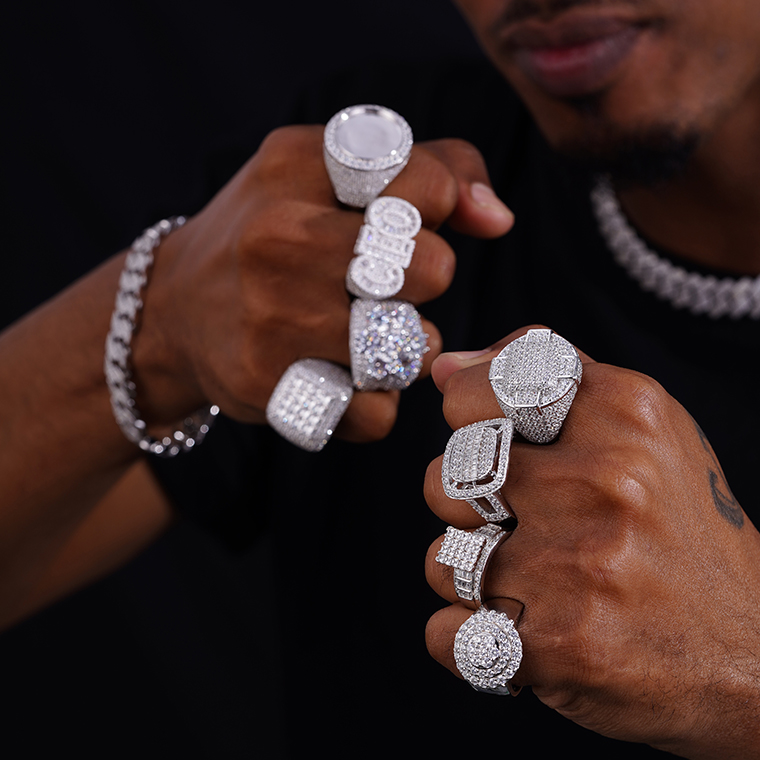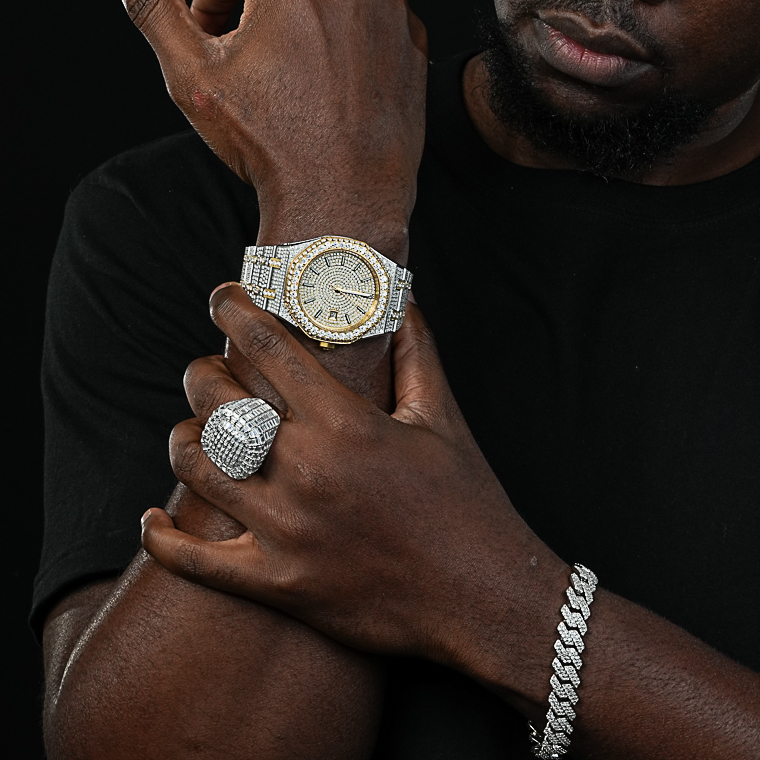






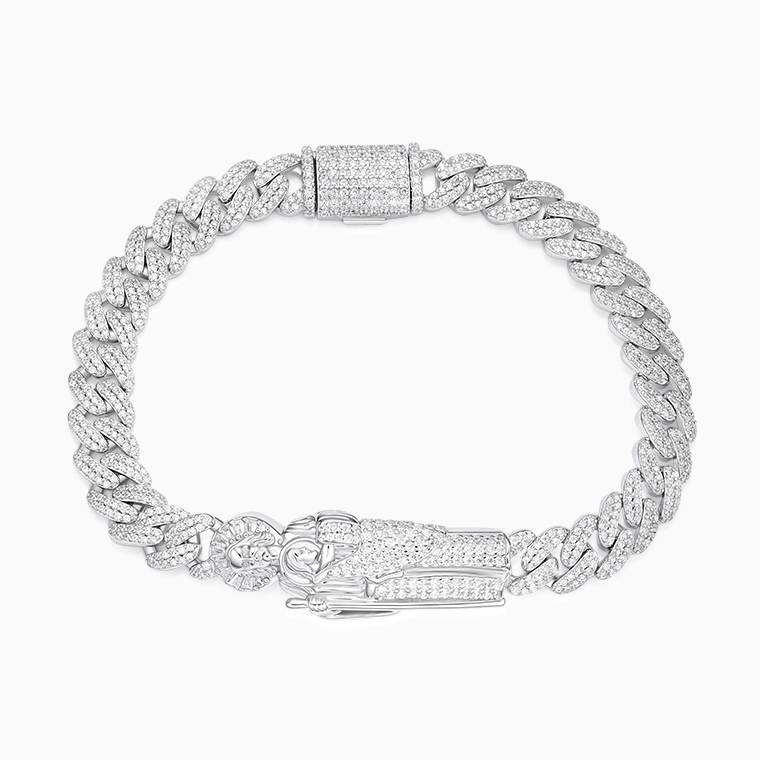
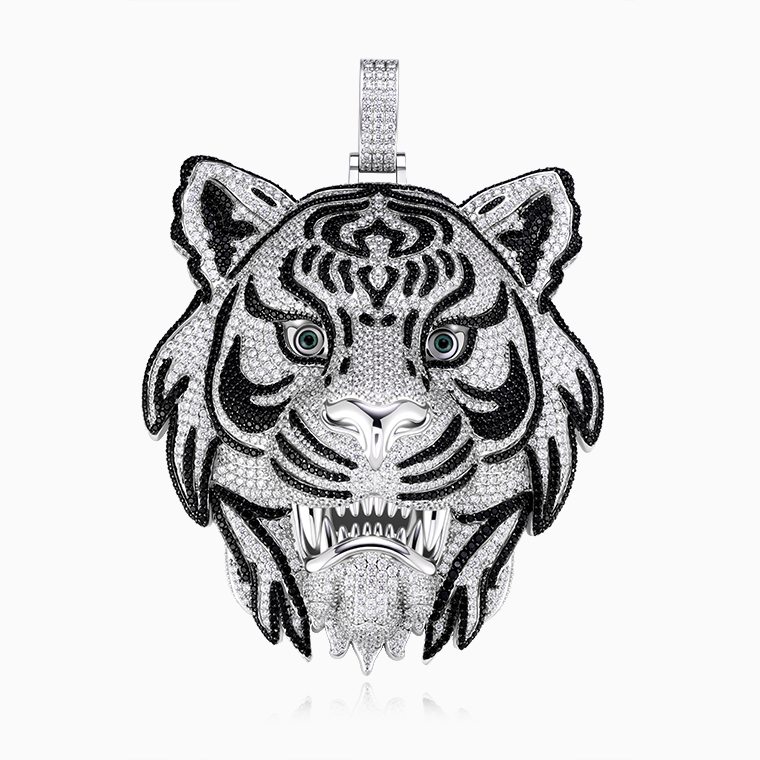

The descriptions offer little help. They repeat the stone name, mention a color and clarity grade, and give the chain width. The difference could be in the metal weight, setting work, clasp, coating, or several details that the camera never shows.
This is where choosing a hip hop jewelry wholesaler becomes more involved than comparing attractive designs. Moissanite identifies the gemstone, but it does not describe the whole piece.
A chain still has to bend comfortably. A pendant needs to hang correctly on its intended necklace. Small stones must remain secure in settings that can be inspected and cleaned. When those details are overlooked, an impressive first appearance can lead to an awkward ownership experience.
For wholesale buyers, the useful questions begin with the material and quickly move toward construction. What exactly is being supplied? How was the sample approved? Can the same specifications be maintained when the order is repeated?
What You Are Buying When the Listing Says Moissanite
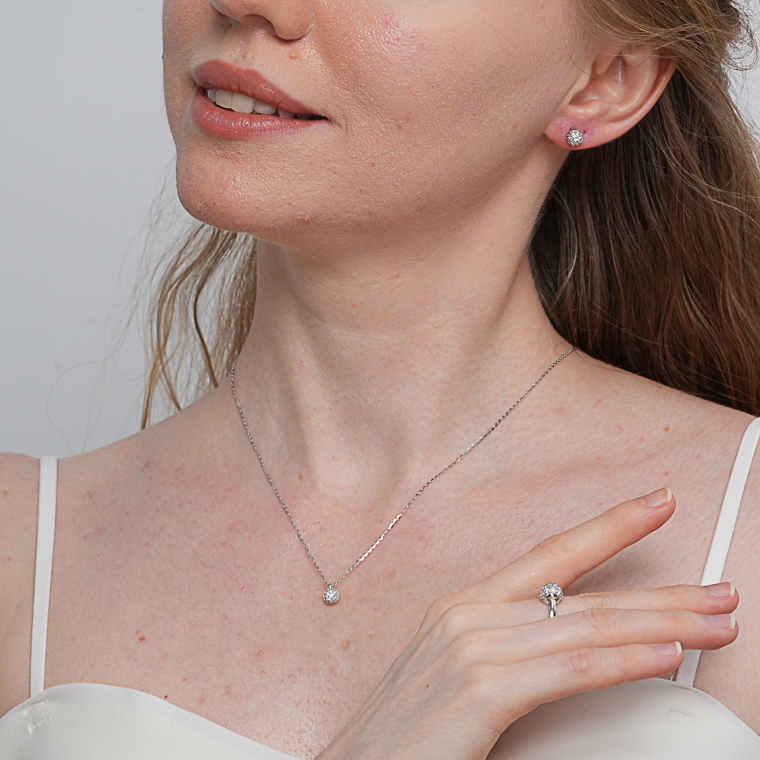
Moissanite is silicon carbide. The material used in commercial jewelry is generally laboratory-grown. It is a different gemstone from diamond, including laboratory-grown diamond, and it is also different from cubic zirconia.These distinctions matter when writing product descriptions or discussing stones with customers. “Laboratory-grown” describes origin; it does not make different materials interchangeable.
Moissanite also has its own optical character. Its dispersion is higher than diamond’s, which can produce more noticeable colored flashes, often called fire. That appearance is part of the material rather than proof of a particular quality grade.
For a buyer, the next question is whether the product description applies to every stone in the piece.
A large pendant may contain several stone sizes or decorative sections. Ask whether all the specified stones are moissanite or whether the design includes other materials. Have any mixture recorded clearly. A headline description should not leave uncertainty about the smaller stones surrounding a central feature.
This is particularly useful when comparing quotations. Two products described as “moissanite pendants” may differ in more than their outlines.
Look at the Chain Without the Sparkle Video
A short video under concentrated lighting can show how a piece responds to light. It cannot tell you how comfortably the chain sits around a neck.Ask for another view in ordinary, even lighting. Then, if the order matters enough to justify sampling, handle the actual piece.
Lay the chain flat. Lift it from the center and allow the links to settle. Fasten it and check whether the end links meet the clasp naturally. A rigid transition near the closure may be difficult to notice in a front-facing photograph but quite obvious when the necklace is worn.
On a stone-set Cuban chain, examine how neighboring links interact. The links need room to move without forcing exposed settings into one another. A design that looks tightly packed on a table may bind when curved.
The underside deserves attention as well. Rough edges, unfinished recesses, and awkward connections affect wear even when the visible face is well polished.
Record the sample’s length, width, and weight together. Weight alone is not a quality score, but it helps define the product. A wide hollow chain and a more substantial chain can have similar outlines while feeling quite different in the hand.
If the supplier proposes reducing weight to reach a target price, ask where the change will be made. Removing material from an appropriate area is a design decision. Quietly changing construction after sample approval is a different matter.
Try the Pendant on the Chain Before Approving It
A letter pendant can pass a careful review of its front view and still be troublesome to wear. Consider a wide initial with its bail tucked behind the top. Nothing looks unusual when the pendant is lying flat. Once suspended, however, the lower part may swing away from the body, leaving the lettering tilted.A side-view video is useful here. The pendant needs to hang without someone supporting it, preferably on the chain that will accompany the finished product. Watch where the chain rests inside the bail and whether the pendant settles naturally after it moves. If it repeatedly returns to an awkward angle, that gives the designer a specific problem to investigate.
There is an even simpler fitting mistake: the chain fits, but its end fitting does not pass through the opening. This can happen when a bail is sized from the chain width alone. Sending the intended chain with the sample brief avoids guesswork, especially with broad links or a substantial clasp.
A close fit is not always a comfortable fit, either. The necklace and pendant need room to move relative to one another. Before approving a smaller, less visible bail, try the assembly on rather than judging only how neatly the attachment disappears in a photograph.
The lettering itself may need revision during sampling. On a script initial, a thin connecting stroke might look perfectly proportioned until stone seats are added. The available silver around those seats then becomes a practical concern. The designer may suggest changing a few stone sizes or broadening that stroke slightly. Review the change at the pendant’s actual size; a modification that looks dramatic in an enlarged drawing may be barely noticeable when worn.
The back can reveal further compromises. Deep pockets are difficult to reach during cleaning, while an excessively open back may leave parts of the face poorly supported. There is no single ideal pattern for every letter. What matters is whether the chosen structure suits this particular shape.
For the approval record, keep a photograph of the reverse and a short clip of the pendant on its chain. Months later, those two references may answer a fitting question that the polished front image cannot.
Stone Size Changes More Than the Price
In an iced-out surface, larger stones create a different visual rhythm from several rows of smaller stones. The choice affects spacing, the visible metal between stones, and the amount of room available for settings.More stones do not automatically create a better-looking piece.
Near a corner or a tapered section, continuing a regular grid may leave cramped settings or awkward gaps. A slight change in stone size can help, although a design using many different sizes may require more detailed production and repair records.
Look at the proposed layout at its actual size. Magnification is useful for inspecting details, but it can distort judgment about their visual importance. A narrow gap that dominates a large rendering may be barely noticeable in the finished pendant.
The opposite happens with small retaining details. They may look substantial on screen and prove very fine in the physical piece.
For wholesale specifications, record stone dimensions in millimeters where appropriate. If a quotation includes a carat figure, clarify whether it refers to actual stone weight or a diamond-equivalent size description. Do not assume those terms mean the same thing.
The dimensions that fit the setting are especially important when a replacement stone is needed later.
When Two Listings Carry the Same Grade
Suppose two bracelets arrive with the same color and clarity description. Under the supplier’s display lights, both looked bright and evenly matched. On the sample table, one seems more consistent across its rows.Before questioning the grade, put the bracelets beside each other under the same light. Separate product photographs are a poor basis for this comparison: backgrounds, exposure, and lighting can make similar stones look different. Turning the pieces and viewing them in another ordinary lighting condition helps show whether the impression persists.
The grade wording needs a closer look too. A description on a listing might refer to the supplier’s stone selection, while an accompanying report might identify only one larger stone. Those documents do not necessarily cover the same thing.
For example, a pendant could have a report associated with its center stone and dozens of small stones around it. That report may be useful, but the buyer still needs an answer about the surrounding stones. The issuing organization, item description, and stated scope should make clear what was examined.
With densely set jewelry, the way the stones look together deserves attention alongside their individual descriptions. An isolated stone may look attractive while standing out awkwardly from the rest of a row. Size, orientation, setting height, and lighting can affect the impression, so a visible difference should be examined rather than immediately attributed to color.
Keep notes on the actual sample being approved. If an uneven-looking area remains noticeable, photograph its location and discuss it with the supplier before placing the order. A more impressive label on a revised quotation will not, by itself, explain what changed in the piece.
What the Testing Clip Actually Shows
The tester touches a stone, the instrument gives a response, and the camera moves on. For a buyer watching a short sales video, it is easy to treat that moment as the end of the identification question.It leaves a few practical details unresolved. The instrument may be responding to a property shared by more than one material. The tested stone may be the easiest one to reach rather than a representative selection. The rest of the bracelet may never appear close enough to examine.
A useful follow-up is to request the instrument model and an explanation of the result. Some thermal testers cannot reliably separate diamond from moissanite. A response from such a device must be interpreted within that limitation; it is not a complete identification on its own.
For a substantial order, decide with the supplier what verification is appropriate before production is approved. That could include independent examination of agreed samples, with the method and scope recorded. The arrangement should suit the order and the assurance the buyer actually needs.
The paperwork should then describe what happened. If selected stones were examined, record that selection. If a laboratory report relates to one item, keep it linked to that item. These details become especially useful when stock from several deliveries is held together.
A demonstration video can remain part of the conversation. Its value is clearer when everyone understands which stone was tested, what the instrument can establish, and what still needs confirmation.

Follow the Stone Rows Around the Corners
On a broad pendant, the middle can be relatively straightforward to lay out. Follow the same rows toward a curved border or the narrow end of a letter, and the available space starts to change.That is a useful place to begin a close inspection.
Imagine a row ending at the tip of an initial. The final stone may sit higher than its neighbors, or the spacing may widen where the regular pattern no longer fits. A small layout adjustment might resolve it. Simply adding another stone could leave too little metal for the setting.
View the sample from the side as well as straight on. A low angle can reveal a raised stone or an abrupt change in the surface that sparkle hides from the front. Photograph anything that needs explanation, marking the location so the supplier can identify it.
The metal details matter here. A rough or projecting tip may catch fabric; an irregular retaining detail may need a setter’s assessment. If a stone appears to move, stop handling that area and have it checked before the piece is worn or cleaned. Avoid pushing at the stone to see how loose it is.
Different setting styles produce different boundaries. Pavé can make the stones read as one continuous surface, while visible prongs separate them more clearly. Channels and bezels bring the metal into the design. The appropriate choice depends partly on where the piece will encounter contact.
A large ring, for instance, may carry stones down its sides toward adjacent fingers. Those settings deserve inspection beyond the top view used in the product listing. The lower section also affects future sizing, so discuss resizing before committing to a range of ring sizes.
Once the sample is approved, keep close photographs of these less obvious areas. They give both parties a concrete reference when checking the next delivery.
Moissanite Does Not Describe the Metal Underneath
A moissanite chain can have a sterling silver body, another specified base metal, or a different construction entirely. Its surface may be uncoated, rhodium-plated, or gold-plated.Those choices affect the finished product independently of the gemstone.
Ask for the metal description and finish specification separately. If the product is gold-plated, the stated gold fineness does not establish coating thickness. If it is described as silver, clarify the alloy and whether the structure is hollow.
The clasp, connecting rings, and other components should also be covered by the material information. Do not assume a description of the main body necessarily applies to every part.
Color matching becomes important when a chain and pendant are sold together. Compare the physical samples under the same lighting, including the clasp. Two finishes that look similar in separate images may differ when placed side by side.
Keep care advice specific to the complete piece. The presence of moissanite does not make a delicate coating resistant to every cleaner, nor does it protect the metal from scratching.
What to Do When the Piece Looks Less Bright
A customer may describe an entire necklace as “cloudy” when the visible change is concentrated around the settings.Before deciding that the stones have changed, inspect where the dullness appears. Residue, surface condition, and the surrounding metal can all affect the overall appearance. A gold-colored edge that has become pale raises a different question from dirt behind a stone.
Start with the original material information and care instructions.
For light accessible residue, use a clean, soft cloth gently, taking care around projecting settings. A treated polishing cloth should not be assumed equivalent to a plain cloth, especially on plated jewelry.
If the manufacturer confirms that the entire piece is compatible with mild soap and lukewarm water, follow that guidance and dry the recesses carefully. Avoid treating an unidentified decorative component or coating as though it were bare gemstone.
Loose stones, bent settings, and damaged connections should be inspected before more extensive cleaning.
Ultrasonic equipment is not suitable for every piece of jewelry. Gem treatments, sensitive materials, and construction need to be considered. If compatibility is uncertain, have a qualified jeweler assess the piece before using an ultrasonic cleaner.
Cleaning also cannot replace a worn coating. If the metal finish is missing at a contact point, repeated polishing will not restore it. A repairer needs to assess whether refinishing is appropriate.
Turn the Approved Sample into a Useful Record
A sample becomes much more valuable when its details are recorded.Keep the model reference, dimensions, weight range, stone specifications, setting description, metal, and finish together. Agree on tolerances with the supplier rather than assuming every measurement will be reproduced without variation.
Photograph the back and connecting parts as well as the face. For a pendant, note the chain used during fitting. For a bracelet, record how the closure operates and whether the links move freely through the required curve.
Any changes requested after the first sample should be reflected in the final approval. Otherwise, the supplier and buyer may be working from different versions.
When the shipment arrives, compare it against that agreed reference. If inspection is based on sampling, establish the plan and acceptance criteria beforehand. A quick look at one attractive piece is a different exercise from a defined incoming inspection.
Packaging is worth reviewing at the same time. A heavy chain should not move freely across a pendant’s face during transport. Projecting settings should not be pressed against other metal components.
These details rarely appear in the main product image, but they influence the condition in which the order reaches the retailer.
Bring a Specific Brief to the Supplier Conversation
A useful inquiry gives the wholesaler something concrete to evaluate.Instead of asking only for a “premium moissanite pendant,” provide the intended dimensions, chain pairing, finish color, and use. Include a reference image if it helps explain the appearance, but allow room to discuss construction.
When discussing a custom project with a hip hop jewelry wholesaler, share the design reference, the intended chain dimensions, and the finish you want. Ask which details need to be resolved before sample approval, especially narrow lettering, stone sizes, and the bail opening.
The value of that conversation lies in the answers and proposed adjustments. A recommendation should explain the practical reason for a change rather than simply replace one image with another.
If the target price requires a revision, ask what would change. It might involve size, stone coverage, metal weight, or another defined feature. The revised quotation should remain traceable to a revised specification.
This gives the buyer a choice that can be understood and approved.
Ask How a Repair Would Be Handled
Before the first order, put a simple example to the supplier: a customer brings back a bracelet with one small stone missing. What happens next?The answer should be practical. The supplier may need photographs, a product reference, and an examination of the setting before recommending a repair. Replacement stones might be available, or the item might need to be returned. Establishing the route now is easier than trying to reconstruct it after the design has left production.
A missing stone and a worn patch of gold plating may require entirely different work. Even when both are reported as a “quality problem,” their causes need to be assessed separately. Ask the supplier to explain how the service terms apply to each situation, including inspection, repair charges, and return arrangements where relevant.
Keep that answer with the product file. A colleague handling the inquiry later should be able to find it without searching through months of messages.
The same file should identify the finish and the stone sizes. If a local jeweler takes on the repair, those details give them a better starting point than a product photograph alone. Any replacement or refinishing work can then be added to the record.
For the wearer, a loose stone or a clasp that has begun to behave differently is a reason to put the piece aside and arrange a check. Continued use can turn a repairable fault into a lost component. During storage, leaving space between heavy chains and stone-set pendants also helps avoid needless contact.
When comparing wholesalers, include one repair question alongside the questions about price and delivery. The response will show how clearly the supplier can discuss the product after the sale. Keep it with the approved sample and quotation—you may need it long after the original order has shipped.