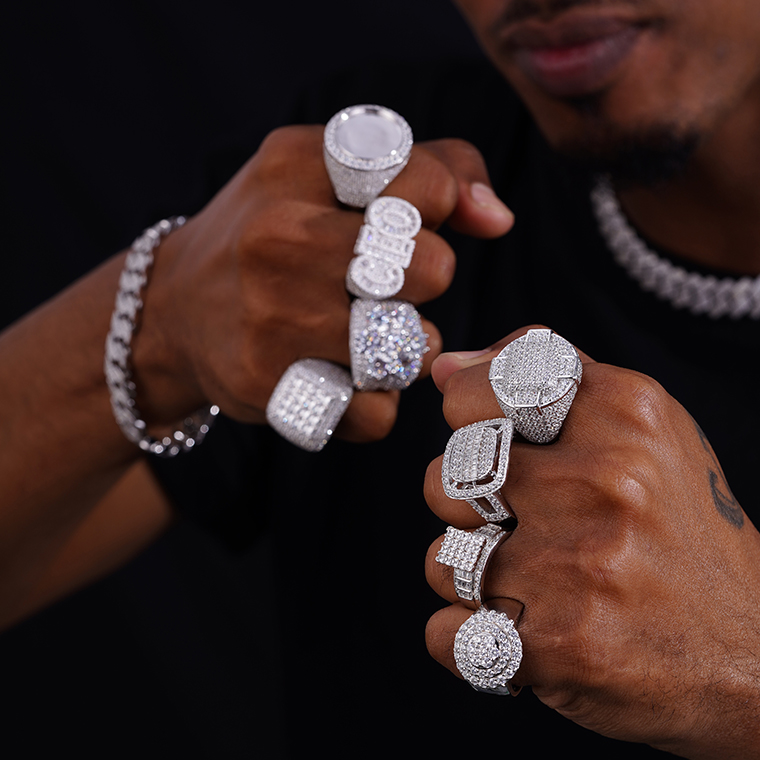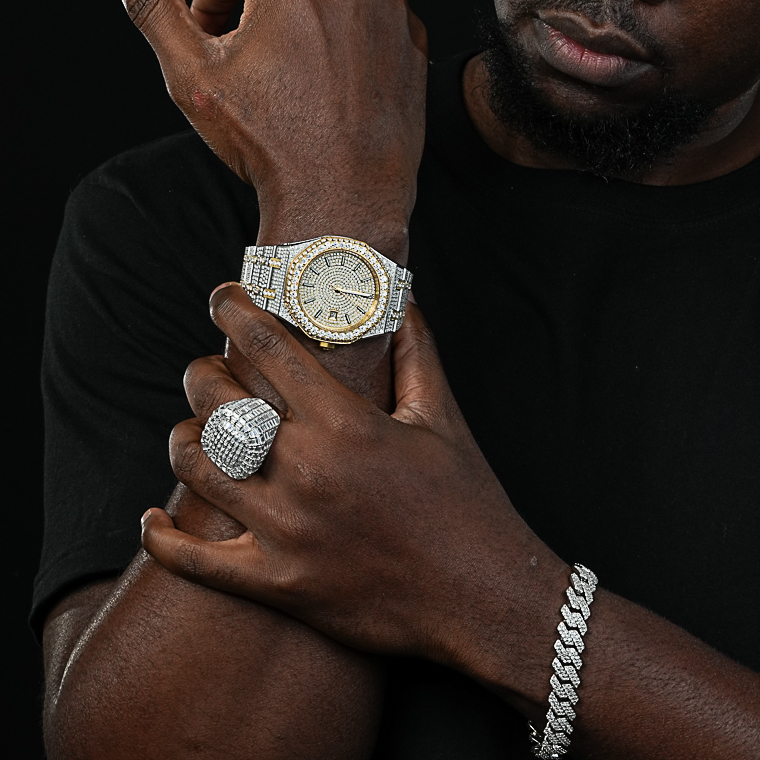






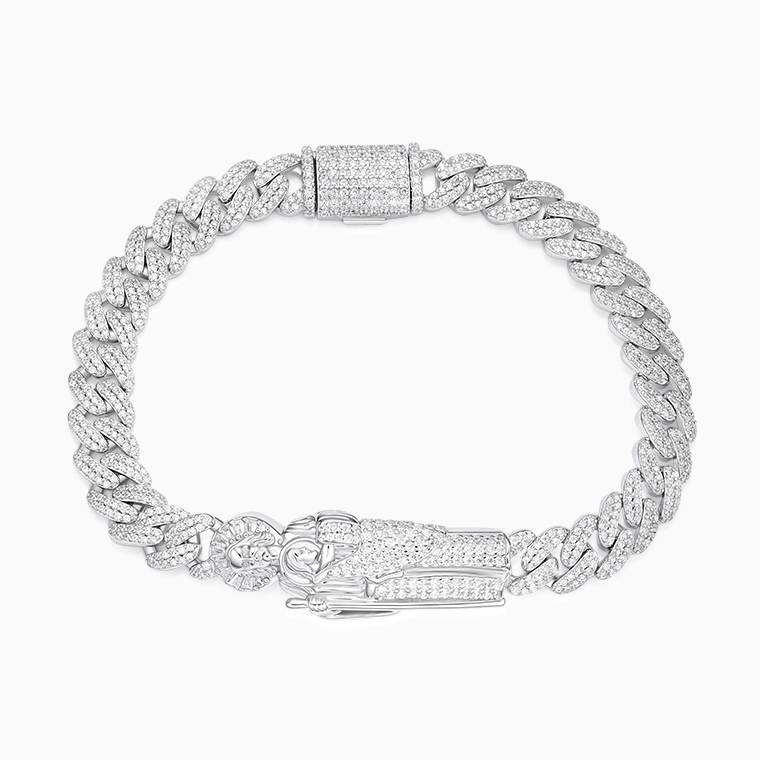
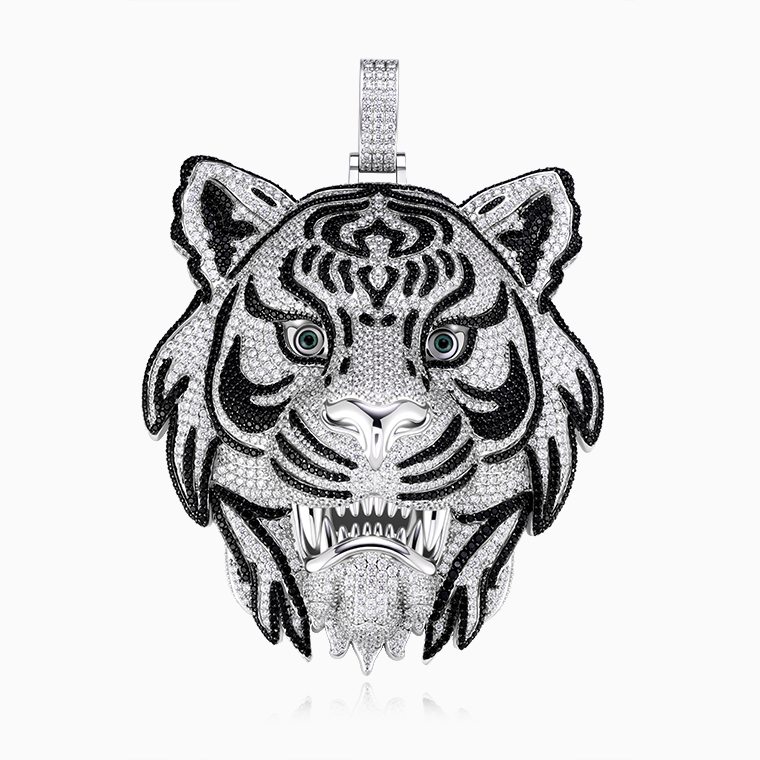

A moissanite tennis chain is a repeated system of stones, settings and articulated connections. Its appearance depends on consistent stone presentation across the full length; its wearability depends on how those settings connect, bend and meet the clasp. A capable moissanite hip hop jewelry manufacturer must develop both dimensions together.
For jewelry brands and wholesale buyers, a useful sample review goes beyond front-facing sparkle. It examines alignment, controlled flexibility, finish, clasp transition and the written specification that will guide production.
Define the intended drape before finalizing the design
“Flexible” can mean different things to different buyers. A tennis chain should follow the intended curve around the neck, while the stone settings remain visually aligned. If the connections are too restricted, the chain may feel stiff. If they move excessively, the settings may rotate or sit unevenly. The design goal is controlled articulation appropriate to the chain’s dimensions and intended use.Before CAD or sampling, specify the target length, approximate width, stone shape and size, base metal, finish and clasp preference. Share whether the chain will be worn alone or layered, and whether it needs to coordinate with a pendant. These details give the design team context for reviewing scale, weight distribution and the relationship between the chain body and its end connections.

Stone matching sets the visual rhythm
A continuous row appears consistent when the stones and settings work as a coordinated system. Buyers should confirm stone identity, shape, dimensions or size range, color expectations and any grading or documentation requirements that apply to the order. For moissanite, the product specification should name the material directly rather than describe it as diamond.Consistency also depends on what the eye sees across repeated settings: spacing, height, orientation and the amount of visible metal. Small variations can become noticeable over a long chain because the pattern repeats. During design review, confirm the intended visual rhythm and ask how the proposed stone dimensions fit the setting geometry. A change in stone size can affect spacing, the setting profile and the overall width of the piece.
Setting geometry affects both security and alignment
Each setting positions a stone and forms part of the chain’s structure. The setting must provide suitable support while maintaining the planned spacing and profile. If seats or surrounding metal vary, stones may sit at different heights or angles. Buyers should review the sample from the front and side, paying attention to alignment, visible gaps, prong or edge finish, and whether settings remain oriented as expected when the chain is gently curved.Shining Star’s product information describes hand-setting and wax-setting methods, with prongs used to help secure stones, followed by a further stone check before shipment. The method should be confirmed for the specific design. Sample approval should document the selected stone, setting approach and inspection points. These process steps support quality review but do not make a piece immune to impact, wear or damage.
Engineer the connections for controlled movement
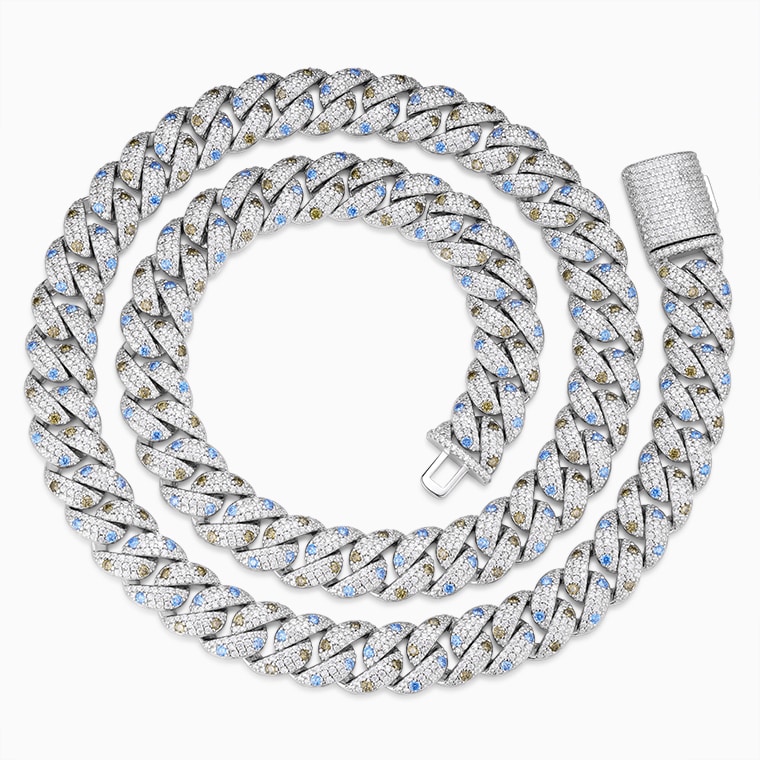
The connecting elements between settings determine how the chain articulates. Their geometry and clearance influence how easily the chain follows a curve and whether adjacent settings can twist. The appropriate balance depends on the component design, dimensions and intended drape; it should be assessed on the complete sample rather than inferred from a single detail image.Review the chain in several positions. Lay it in a relaxed curve on a clean surface, lift it carefully, and observe how the settings settle. Check whether the face remains presented as intended and whether any section resists movement. Record the location of a concern precisely—for example, “the section beside the clasp remains stiff”—so the design team can investigate a specific connection or transition.
Give the clasp and end links their own design review
The clasp is both a functional component and a visible interruption in the stone row. Review how it opens and closes, how it connects to the final settings, and whether the end links move consistently with the rest of the chain. If the clasp carries stones or a logo, compare its profile, finish and visual balance with neighboring components.Check the transition from clasp to chain on both sides. A sudden change in width, height or movement can be noticeable during wear. Confirm the clasp type and any safety feature in the product specification, and test the sample using normal operation rather than excessive force. If the chain is intended to coordinate with a pendant, also verify compatibility with the pendant’s bail.
Review metal, finish and comfort surfaces
Stone setting is only one part of the finished product. Confirm the base metal, plating color and finish for the order. Shining Star lists 925 sterling silver and brass among common materials; the suitable option depends on the design and should be written into the quotation. Product information describes multiple polishing stages, plating stages and a final e-coating step. Confirm which finishing process applies to the particular chain.Inspect the sides and underside as well as the face. These areas can reveal uneven finishing, rough edges or differences between repeated components. Since the chain rests against skin or clothing, comfort surfaces deserve a deliberate review. Compare the sample with the agreed reference under consistent lighting, and document any finish or construction issue with a close-up image and location.
Use a complete sample review, not a sparkle video alone
A short sparkle video can be useful for presentation, but it does not show every manufacturing detail. For a meaningful review, request a full face-up image, a relaxed curved view, side and underside views, clasp close-ups, and a short handling video that shows the chain bending and settling. Where the project scope allows, review the physical sample before approving a larger production order.- Confirm length, width, stone material, shape and agreed size range.
- Compare stone spacing, orientation and setting alignment across the chain.
- Check movement in a gentle curve and inspect the transition beside the clasp.
- Review the base metal, finish, logo details and contact surfaces.
- Record the approved sample version and any agreed inspection criteria.
Plan quantity and timing with the manufacturer
Shining Star can start a custom design order from one piece when the project’s model-fee terms are confirmed. The company FAQ states that a custom design without a model fee generally requires 50 pieces. Standard wholesale orders follow a separate usual MOQ of 30 pieces, while lower quantities may be possible at a higher unit price. Confirm whether a request is being quoted as a one-piece custom development order or a standard wholesale order.The current planning estimate for custom moissanite products is approximately 30–35 days for production, with shipping estimated separately at around 3–7 business days according to the project information. These are estimates rather than guaranteed arrival dates. The quotation should confirm when the production period begins, what approvals or payment milestones are required, and which shipping arrangement applies.
Develop a moissanite tennis chain with Shining Star
A successful tennis chain combines a consistent stone row with connections that move in the intended way. Shining Star Jewelry works with brands and wholesale buyers on custom moissanite hip-hop jewelry, from design review and sample development through manufacturing planning. Send the preferred length and width, stone shape and size, base metal, finish, clasp preference, target quantity and reference images to begin a project review.For broader material and ordering information, visit our moissanite options and custom development process. You may also read our guide to choosing a moissanite hip-hop jewelry manufacturer.