





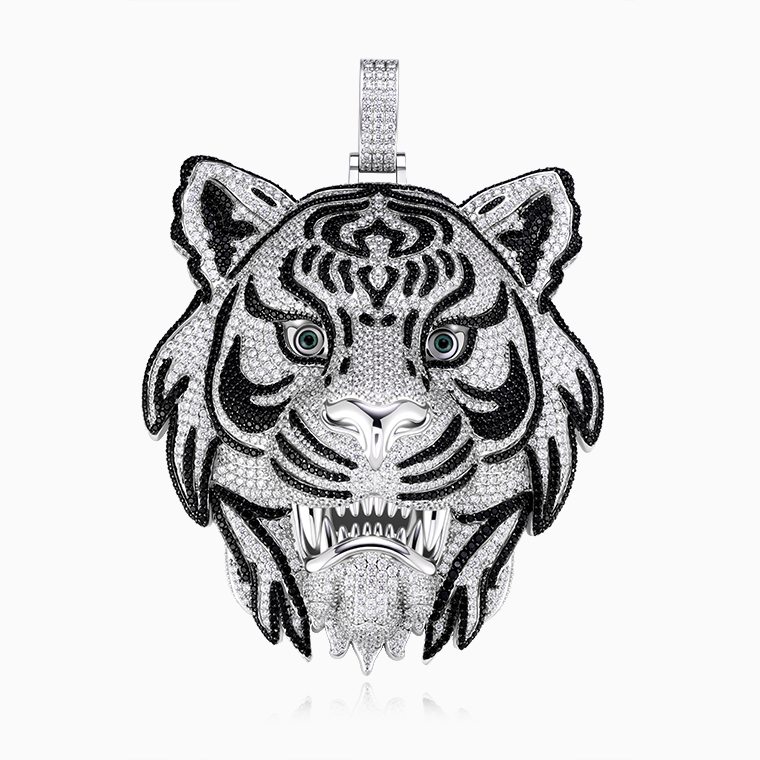

How large should the pendant be? Which chain will carry it? Should the body be made in 925 sterling silver or brass? Can the lettering accommodate the proposed stones without becoming too wide or losing its character?
Those questions connect design with manufacturing. They also explain why the choice of a hip hop jewelry wholesaler matters beyond the initial quotation.
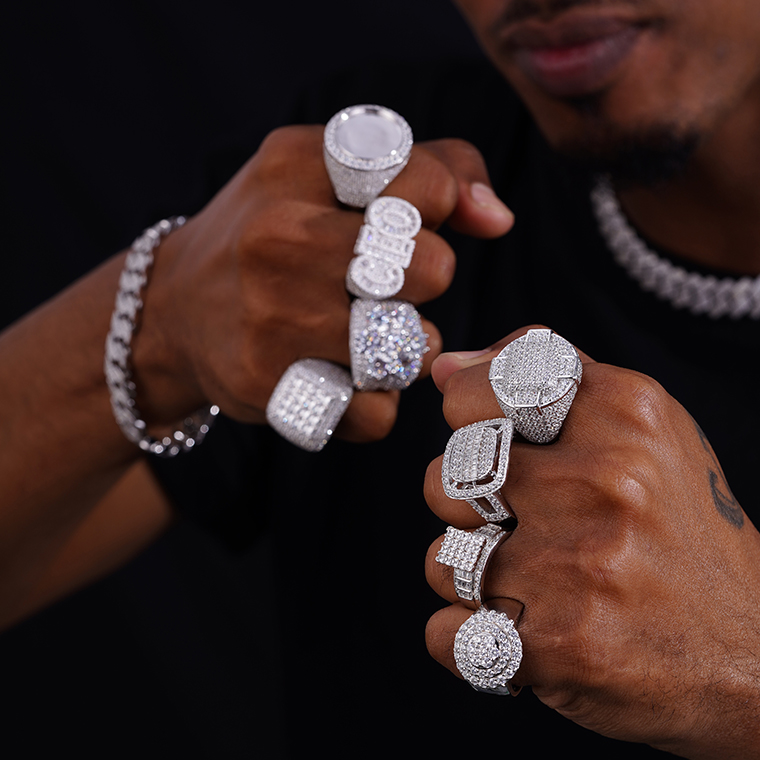
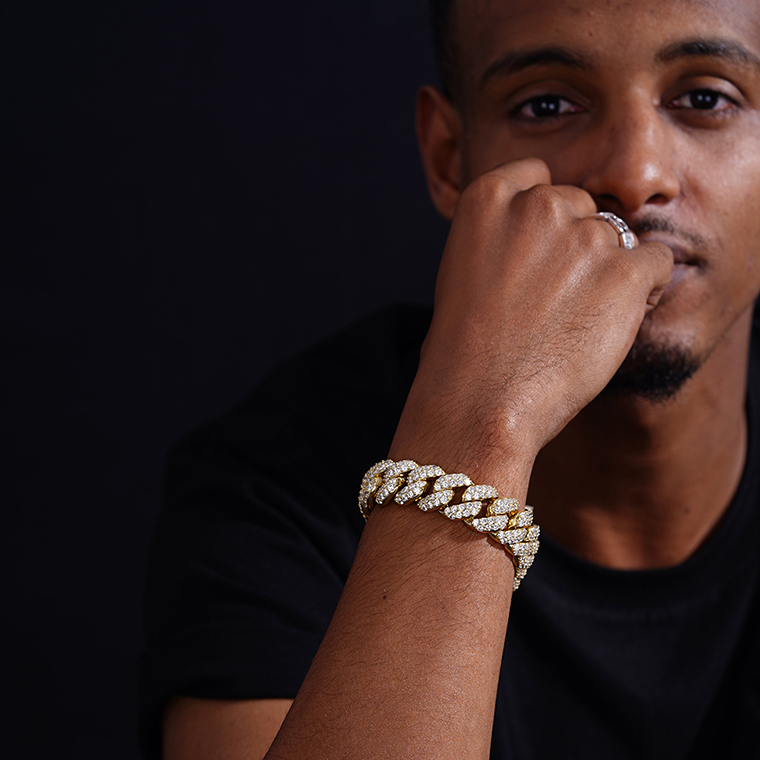
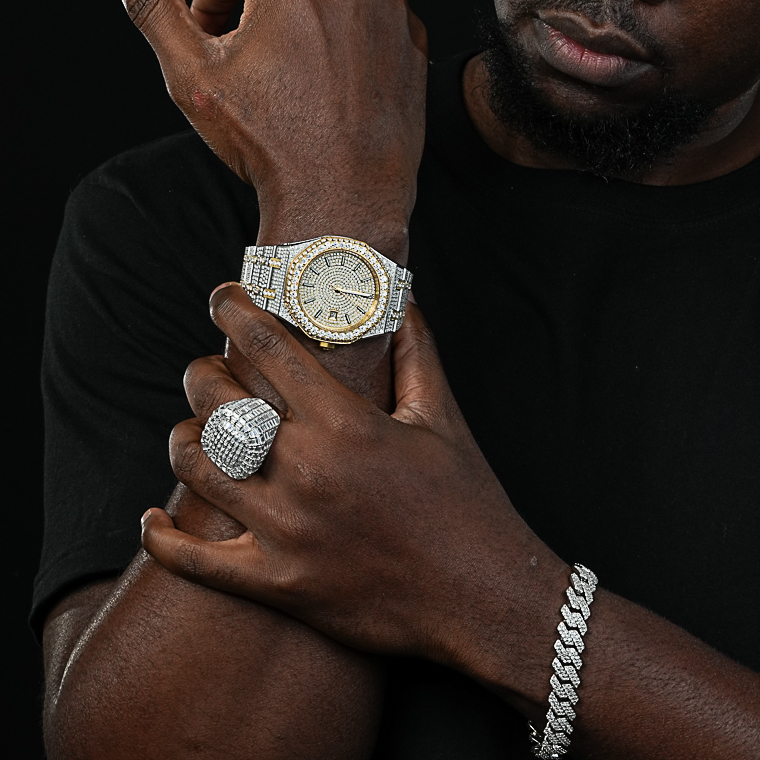
We combine our own factory with a trading operation and an in-house design team. Our main product range includes moissanite hip hop chains, bracelets, earrings, pendants, and rings, alongside women’s jewelry and personalized designs. Buyers can select from more than 5,000 designs or bring us an idea for custom development.
For an established retailer, that creates room to expand a collection without developing every item from the beginning. For a brand working on an original piece, it provides a starting point for discussing appearance, materials, and production together.
Our Own Factory Keeps Manufacturing in the Conversation
A design question can quickly become a production question.Consider a letter pendant with a narrow connection between two larger sections. On a flat drawing, the proportions may look right. Once the design includes thickness, stone seats, and an attachment for the chain, that narrow area needs closer attention.
With our own factory and design team, we can bring manufacturing considerations into the discussion while the design is still being developed. The buyer can review the proposed appearance alongside the choices that affect its construction.
This is a practical advantage of combining manufacturing and trading. The commercial brief—what the buyer wants to sell, at which price level, and in what style—can be discussed in relation to the product that needs to be made.
It also gives a clearer basis for comparing alternatives. If a requested change affects material use or construction, the conversation can focus on that specific change. A revised quotation should correspond to a revised product, rather than leaving the buyer to guess why the price moved.
Owning a factory does not make every design equally straightforward. Some requests need additional development. What matters is having a route for addressing those questions before they become problems in a finished order.
Custom Design Begins with the Piece You Intend to Sell
Our professional design team supports custom projects, including personalized jewelry.A useful brief does not need to be polished. A clear reference image with a few measurements can be more helpful than a long description full of general terms such as “luxury” or “premium.”
For a pendant, tell us the intended size and the chain it will accompany. For a bracelet, explain the width and wearing style you have in mind. If the piece belongs to an existing collection, share the details it needs to match.
The design discussion can then move toward questions with visible answers.
A customer may want the narrow lettering of a logo preserved exactly. Another may care more about full stone coverage. Those goals can create different layouts. Reviewing the drawing allows the buyer to see where a wider stroke, a smaller stone, or a plain border would change the result.
Our role in custom development is to help turn that preference into a design that can be reviewed as a piece of jewelry. The front view matters, but so do the attachment, thickness, and less visible surfaces.
An earring needs to be considered as something worn for a period of time. A broad ring needs space for the fingers around it. A pendant needs to work with its chain. These are ordinary design questions, but answering them early helps keep the project focused.
Preliminary CAD Outlines in as Little as Two Hours
Waiting for an initial drawing can slow down a project before the buyer has even decided whether to pursue it.For suitable projects with a clear brief, we can provide a preliminary CAD outline in as little as two hours. This offers an early opportunity to discuss proportions and direction.
The scope of that first drawing is important. An initial outline is not the same as a fully finalized production design. Complex structures, extensive stone layouts, incomplete measurements, or changes to the original brief can require more development.
The benefit of a fast first drawing is that it gives the discussion a visible reference.
Instead of exchanging messages about whether a pendant should be “slightly wider,” the buyer can point to the section that needs adjustment. Instead of assuming the bail will fit, its opening can be considered alongside the intended chain.
To make the initial review useful, provide the information already available:
- A reference image, sketch, or original artwork.
- Approximate dimensions.
- Preferred base metal and finish.
- Stone preferences, where decided.
- Details of a chain or other piece that needs to fit.
- A target sample date.
More Than 5,000 Designs Offer a Different Starting Point
Custom development is not necessary for every purchase.A retailer adding a new category may first want to compare established shapes and proportions. An online store may need pieces that fit the visual direction of an existing collection. A buyer planning a seasonal release may prefer to begin with a design that is already represented in our catalog.
Our range includes more than 5,000 designs. That gives buyers room to compare different approaches to chains, bracelets, earrings, pendants, rings, and women’s jewelry before choosing which direction to explore.
The value of a broad collection is not simply the number of products. It is the ability to make more specific comparisons.
A pendant buyer can compare a compact shape with a wider statement piece. A ring buyer can consider how a broad face relates to the band. A store building a coordinated selection can look at how different categories sit together.
The catalog can also help clarify a custom request. A buyer may like the proportions of one design and the general finish direction of another. Those references give the design team a clearer understanding of the intended result, while the final feasibility of any adaptation still needs review.
Current availability, material options, and possible modifications should be confirmed for the selected design.
Over 100 New Designs Each Month
We develop more than 100 new designs every month.For wholesale buyers, ongoing development provides additional options when refreshing an assortment. It can also support a gradual buying approach: review new designs, identify those that fit the store, and decide which deserve closer evaluation.
Not every new design will suit every customer base. A store known for large statement pendants may choose differently from a retailer focused on wearable everyday pieces. A women’s jewelry selection may need a different scale and balance from a collection built around broad hip hop chains.
A useful collection has a point of view. Our expanding design range gives buyers more material to work with, while leaving the selection aligned with their own audience.
New designs also give returning customers a reason to revisit the range. A buyer who began with pendants may later explore complementary earrings or bracelets rather than rebuilding the entire collection around unrelated styles.
The commercial value comes from selecting well, not simply adding more products.
Moissanite Hip Hop Jewelry Across the Main Categories
Our core product range includes moissanite hip hop jewelry in chains, bracelets, earrings, pendants, and rings.Each category brings different design priorities.
A chain needs to articulate naturally. On a closely set design, the relationship between neighboring links matters as much as the appearance of an individual link.
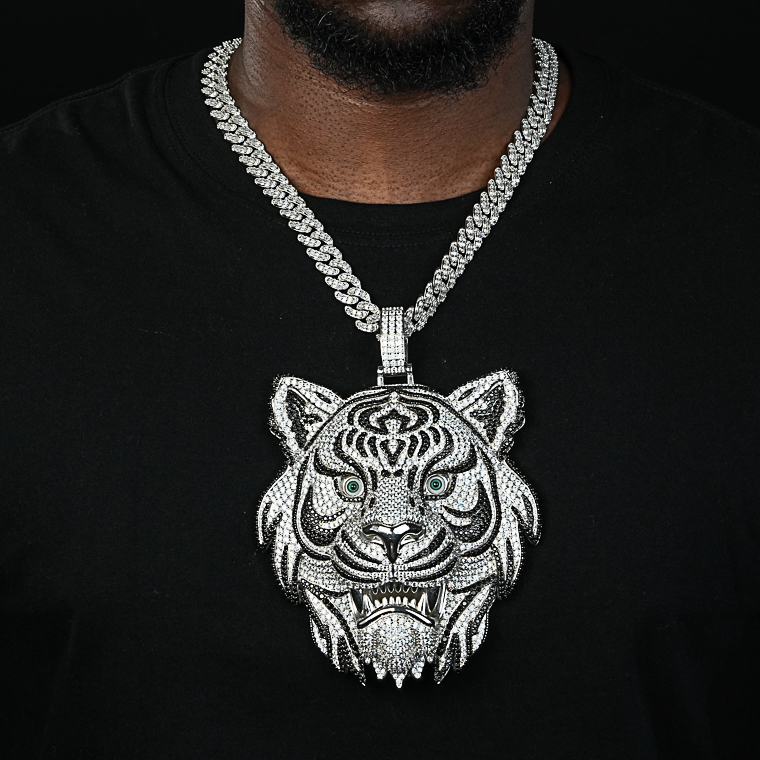
A pendant needs a suitable attachment and a balanced hanging position. A front-facing product image may show the lettering clearly while leaving the chain fit unresolved.
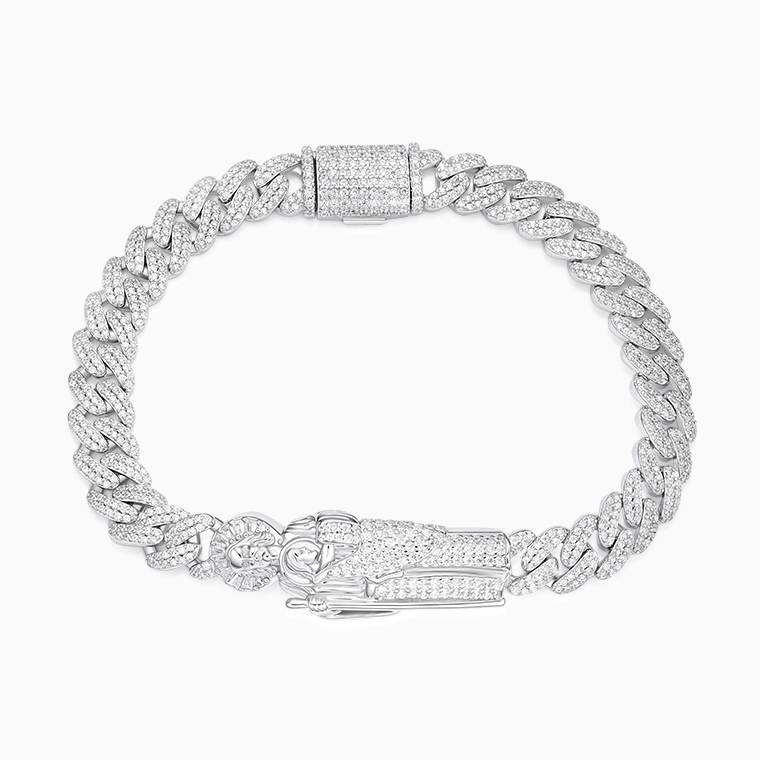
A bracelet combines movement with repeated contact during ordinary wear. Its closure and the transition into the end links deserve attention during sample review.
An earring needs proportions that make sense on the ear, including the relationship between its visible face and the fastening.
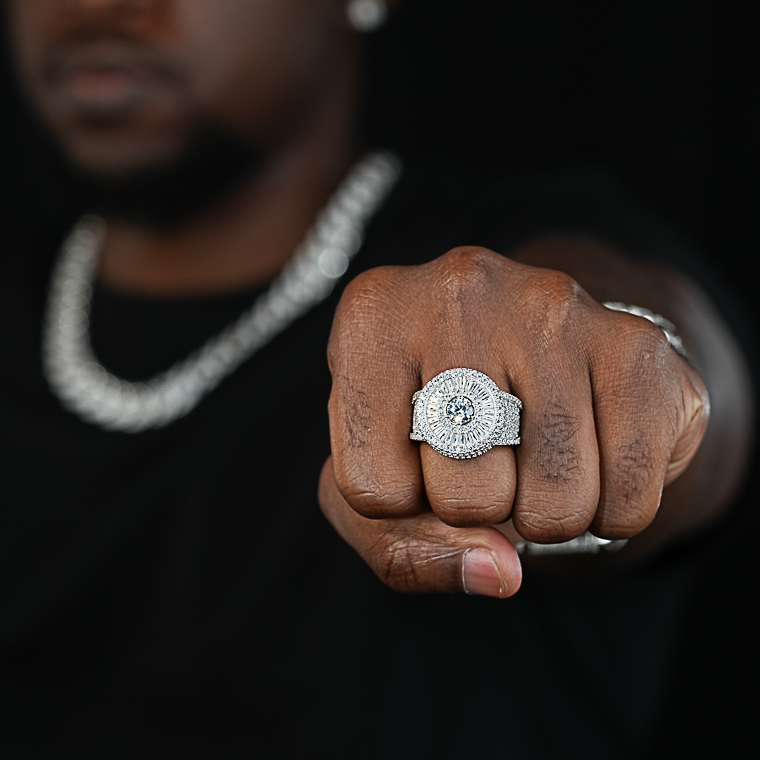
A ring has to accommodate the hand. A large stone-set face may create the intended appearance, but the underside and sides still affect comfort.
Working across these categories allows a buyer to develop a more connected assortment. The pieces do not have to be identical to belong together; they may share a finish, a recognizable shape, or a similar approach to stone coverage.
We also offer women’s jewelry and personalized custom services, giving buyers options beyond a single style of statement piece.
Choosing Between 925 Sterling Silver and Brass
Our usual base-metal options are 925 sterling silver and brass.The choice affects the product’s material identity, weight, and cost. It should be made with the intended collection and customer in mind.
Sterling silver is a precious-metal alloy and generally carries a higher material cost than brass. For comparable solid designs with the same dimensions, sterling silver will generally weigh more, although the actual finished weight depends on the construction and other components.
Brass provides another route for developing bold designs at a different material cost. A buyer exploring larger proportions may want to compare the options before deciding.
The comparison should use equivalent designs wherever possible. If one quotation refers to a hollow piece and another to a more substantial construction, the difference cannot be explained by the metal name alone.
Our material offering is described as lead- and nickel-free. Buyers with specific destination-market or retailer requirements should identify the required testing and supporting documentation when requesting a quotation. The applicable product and components need to be clear.
Material descriptions should also remain accurate on the final product page. If a piece has a brass body, it should not be described as sterling silver because its finish resembles a silver-based item.
The Base Metal and the Visible Finish Are Separate Choices
Silver has a naturally white appearance, while brass has a yellow tone. Those underlying colors are part of the material, but they do not by themselves determine which decorative finish can be used.A gold-colored finish is not limited to brass, and a white finish is not limited to silver. The appropriate plating system and preparation need to suit the chosen metal and design.
For buyers, the useful approach is to specify the base metal and the finish separately.
“925 sterling silver with a gold-colored finish” provides a different material description from “gold-colored brass jewelry,” even if the two samples look similar at first glance.
Likewise, terms such as “white gold color” describe an appearance unless a particular coating material is explicitly stated. The actual finish should be confirmed rather than inferred from the color name.
This matters when building a coordinated collection. Compare the selected samples together, under the same lighting, rather than assuming separate photographs show an exact color match.
The finish also affects care instructions. Advice for exposed silver should not automatically be used for every plated product. Clear specifications help the retailer describe and maintain the piece appropriately.
Samples in as Little as Seven Days
A drawing can settle the direction of a design. A physical sample answers questions that remain difficult to judge on screen.For suitable projects, sample production can be completed in as little as seven days. The timing depends on the design, required materials, production arrangements, and the point at which specifications are confirmed. Delivery time should be considered separately from production time.
A sample is particularly valuable when the piece has an unfamiliar scale or structure.
A wide pendant may feel larger than expected once it is placed on its chain. A ring may need a change to the proportions around the finger. A clasp that appears suitable in the drawing may deserve further discussion after it is handled.
These observations are useful before the buyer commits to the final specification.
When planning a launch, allow room for the possibility of revisions. The fastest sample schedule is an available starting point for eligible projects, rather than a universal promise that every custom design will be approved and ready on the same timetable.
Share the target date early so the sample scope and schedule can be discussed together.
A Sample Gives the Wholesale Order a Clear Reference
The approved sample should answer more than whether the product looks attractive.It provides a reference for the details that matter to the buyer: dimensions, materials, finish, stone arrangement, and the way the piece functions.
For a custom pendant, the record may include the chain used during fitting. For a bracelet, it may include a photograph of the closure and its connection to the links. For a ring, the approved size and relevant proportions should be clear.
If a change is requested after the first sample, it belongs in the final specification. A small adjustment discussed in a message can become important when the order is repeated later.
This is also a useful stage to settle which details will appear in the retail description. The buyer should have a clear basis for describing the product rather than relying entirely on a photograph.
When reviewing a project with us, use the sample discussion to raise unresolved questions. A decision made at this stage is easier to carry into the order than an assumption discovered after production.
Free Professional Product Photos and Videos
Receiving jewelry is only part of preparing it for sale.An online listing needs images. A product page may benefit from a video showing movement and scale. A retailer comparing new styles may also need visual material before deciding how to present the collection.
We provide professional product photos and videos free of charge. This can reduce the amount of initial content work a buyer needs to arrange separately.
The intended use should be discussed so the available material can be matched to the selected products. A listing image, a close-up of a setting, and a video of a chain moving all answer different questions.
Visual content works best when it accompanies accurate product information. A video can show sparkle, but it cannot replace the metal description or explain the scope of a gemstone report. A front image can show a pendant’s design, but dimensions are still needed to communicate its size.
Buyers should also confirm which materials they are authorized to publish. This is especially important when an order includes private designs or content prepared for a particular project.
Good imagery helps introduce the product. Clear specifications help the customer understand what they are ordering.
Confidentiality for Exclusive Custom Designs
A custom project may involve an unreleased logo, a personal symbol, or a design intended to distinguish a brand’s collection.We treat exclusive custom designs as confidential.
Before development begins, identify the material that belongs to the private brief. This can include supplied artwork, custom lettering, proposed product images, and design files created for the project.
It is also helpful to distinguish confidentiality from exclusivity. Keeping a customer’s design private and agreeing on exclusive production or sales rights are related conversations, but they are not identical. Any requested exclusivity should be defined and agreed in writing.
The same care applies to promotional content. Free photography and video support should not be taken as permission to publish a confidential custom design. Approval for public use needs to be clear.
For brands developing a recognizable product, those details are worth settling early. They allow design work and presentation planning to proceed with a shared understanding of how the material will be used.
Documentation for Supplier and Product Review
Buyers may need documentation for different reasons. One customer may be reviewing the factory as a supplier. Another may need material-related information for a selected product. A third may be asking about the stones in a particular piece.Our stated credentials and supporting records include SGS registration and documentation relating to Sedex, ISO 9001, BSCI, RoHS, GRA, and IGI.
These names should be reviewed through the actual documents rather than treated as a single blanket approval covering every product.
When documentation is part of your purchasing requirements, tell us what you need to establish. The relevant record should be checked for its issuing organization, named company or facility, scope, date, and connection to the product under discussion.
Where a gemstone report is supplied, confirm the stone or item it describes. A document connected to one item should not be assumed to cover an entire catalog.
The same principle applies to material-related records: the tested product or sample must be relevant to the order.
A clear documentation request at the quotation stage is more useful than a general request for “all certificates” after the product has already been selected.
A Wholesale Relationship That Can Start in More Than One Place
Some buyers arrive with a finished concept. Others begin with a product category and a budget. Our combination of an established range, an in-house design team, and our own factory provides different ways to begin the discussion.If the priority is assortment building, start with the catalog and identify the designs that fit your store.
If the priority is an original product, start with the artwork, intended dimensions, and the customer who will wear it.
If material cost is the main question, compare the proposed design in 925 sterling silver and brass, with the finish specified clearly.
If a launch date is approaching, begin with the sample requirements and schedule rather than leaving timing until the end.
The information needed will vary, but a specific brief gives the project a better starting point. It helps us understand what should remain fixed and where alternatives can be considered.
Bring Us the Idea and the Details You Already Know
You do not need to resolve every manufacturing question before making an inquiry.Send the sketch, logo, reference image, or catalog selections you are considering. Add the approximate dimensions, preferred material, desired finish, and target quantity if those have been decided. If the piece must fit an existing chain or coordinate with another product, include that information too.
From there, the discussion can move toward an initial design, a suitable sample plan, and a quotation tied to the proposed product.
Our own factory, professional design team, catalog of more than 5,000 designs, and development of over 100 new designs each month give buyers several routes into that process. Preliminary CAD outlines in as little as two hours and samples in as little as seven days are available for suitable projects, while free product photos and videos can support the work that follows.
Whether you are selecting your next wholesale assortment or developing a confidential custom piece, the aim is to make the product clear enough to review before it becomes an order.