






Brands without finished jewelry designs need more than a catalog. They need a development process that connects their customers, product positioning, and budget with decisions a manufacturer can execute.
An online store can know its customers well and still struggle to decide what jewelry to develop next.
The business may already understand its preferred visual style, strongest sales channel, and typical selling price. What it lacks is a resolved product: the dimensions, materials, construction, and details that turn a commercial direction into something customers can buy.
ODM hip hop jewelry development addresses that gap. The manufacturer contributes design resources and development work, while the buyer defines the market and approves the product direction.
At Shining Star Jewelry, the company’s published services include concept consultation, model revisions, material options, and decorative treatments such as enamel and engraving. For a buyer, those capabilities provide several ways to develop a collection, from adapting an existing design to discussing a new concept.
The Brief Should Explain the Customer
A folder of reference images shows taste. It does not necessarily explain what the collection needs to achieve.
A useful ODM brief identifies the intended buyer, the selling environment, and the role of the product. A retailer adding a statement pendant to an existing assortment has different requirements from a brand introducing its first jewelry collection.
The manufacturer needs to understand those differences before proposing details.
A business targeting everyday wear may favor a smaller profile and fewer product variations. A streetwear label may prioritize a recognizable symbol that works across clothing and accessories. A store selling through close-up product videos may place particular emphasis on the relationship between sculptural detail and stone coverage.
References become more useful when the buyer explains what each one contributes. One image might demonstrate the preferred outline, another the desired color treatment, and a third the intended scale. That gives the designer a direction without leaving them to guess which elements matter.

Existing Designs Can Provide a Starting Point
ODM work can involve adapting a manufacturer’s existing design resources.
The buyer might select a pendant form and request a different material, revised proportions, or a brand-specific detail. Another project may require substantial new modeling.
The distinction affects development time and cost.
Changing a finish on a suitable existing product can involve less design work than altering its geometry. Enlarging a pendant can require another review of weight, stones, reverse construction, and the bail. Turning a flat motif into a sculptural piece introduces a different set of modeling requirements.
The scope should therefore be described in the proposal. Buyers should know whether they are selecting a standard design, commissioning a modification, or requesting original development.
Any expectations concerning exclusive use should also be discussed explicitly. A customized detail does not establish the terms for the entire underlying design.
Budget Gives the Design Team a Decision Framework
A target price helps the manufacturer evaluate alternatives.
Without one, the designer may propose a product the buyer admires but cannot purchase at the intended quantity. Repeatedly reducing the specification afterward can leave the original concept less coherent.
The brief should distinguish the intended retail position from the manufacturing budget. The buyer must also leave room for packaging, shipping, selling expenses, and other business costs.
Within the development discussion, the manufacturer can evaluate how materials, size, metal weight, stone coverage, and construction contribute to the quotation.
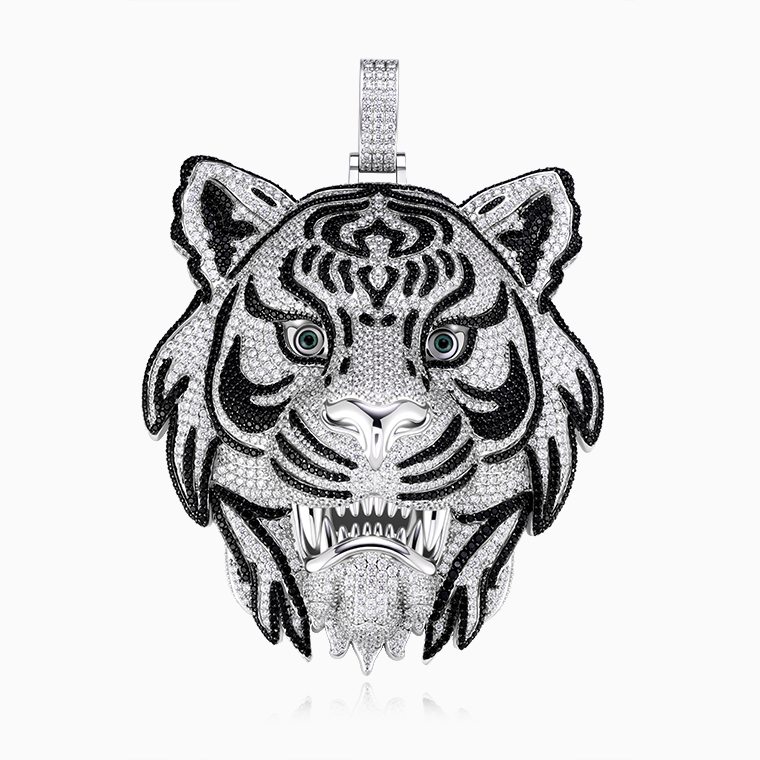
For an illustrative pendant concept, the most recognizable feature might be its outline. If cost needs to be reduced, preserving that outline while simplifying a secondary decorative area could be preferable to shrinking the entire piece.
This is where design support becomes commercially useful: the alternatives are judged against the reason the customer would want the product.
Ask Each Concept to Explain Its Trade-Offs
A product concept should give the buyer enough information to make a decision.
Alongside the rendering, the proposal should identify approximate dimensions, intended materials, stone treatment, and construction assumptions. The buyer should be able to understand what makes one option different from another.
Two concepts might share a motif while serving different purposes. A compact version may suit frequent wear. A larger version may create a stronger statement but require greater material use and a different chain pairing.
The review should focus on those differences.
Selecting several concepts without a clear reason can increase the number of samples and revisions without improving the range. A more focused approval gives the next stage a defined objective.
Develop a Collection Through Related Products
A recognizable collection needs consistent choices across its products.
The connection might come from a border, a repeated shape, a particular surface treatment, or a color accent. Each item still needs proportions suited to how it will be worn.
A pendant can carry a full motif. An earring may need a simpler interpretation. A ring might retain the outline while reducing the depth.
For a manufacturer supporting several jewelry categories, the development task is to adapt those features without losing the relationship between the pieces. Buyers should review the proposed items together before deciding how many belong in the first order.
A coordinated range can also combine available wholesale products with newly developed pieces. That arrangement requires separate confirmation of stock availability, development schedules, and whether the items will ship together.
Sampling Tests the Product Concept
The first finished sample gives the brand a chance to assess more than workmanship.
Does the item communicate the intended style? Is its scale appropriate for the customer? Does it photograph clearly? Can store staff or an online listing explain the difference between it and other products in the range?
Those questions sit alongside checks for dimensions, finish, stone arrangement, and functional details.
A sample may be manufactured as specified and still need a change because the concept does not suit the brand’s intended offer. Recording that reason helps keep the next revision focused.
For ecommerce sellers, the approved configuration should also guide product photography. Images and descriptions need to correspond to the material, dimensions, finish, and components that will actually be supplied.
Close the Development Stage with a Defined Product
The outcome of ODM development should be an agreed product that can be quoted, sampled, described, and ordered.
Keep the approved concept, latest design version, final specifications, and sample reference together. Confirm the scope of any exclusivity, the treatment of future modifications, and the information needed for reorders.
For buyers approaching Shining Star as an ODM hip hop jewelry manufacturer, a finished CAD file is not required to start the conversation. A clear explanation of the audience, visual direction, intended products, budget, and quantity gives the design team something useful to develop.
The first milestone is a concept the buyer can evaluate with confidence. Its value lies in showing how the brand’s commercial requirements will take physical form—and what remains to be confirmed before production.