




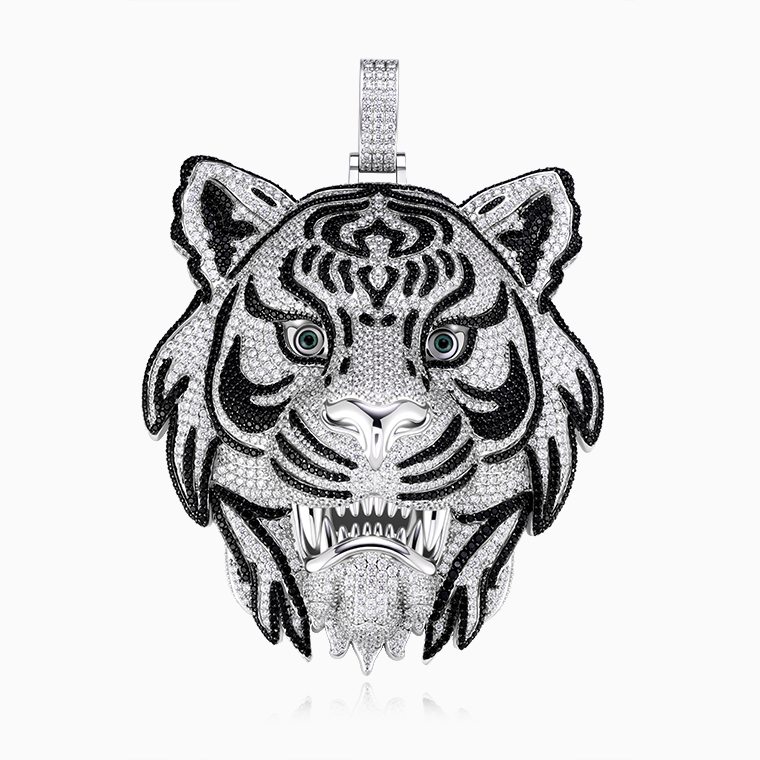

For brands developing a custom pendant, bail design should be discussed at the same time as the chain. Shining Star Jewelry reviews the bail as part of the complete product through CAD modeling, physical development, sampling, and manufacturing coordination.
Provide the Chain Details Early
Before sampling, send the manufacturer the chain width, end fitting, clasp dimensions, and intended wearing position.The bail must accommodate more than the chain body. It may also need to pass over a clasp or connector. A pendant can fit the chain links but still fail when the buyer tries to attach it to the finished necklace.
Also clarify whether the pendant should slide freely or remain close to the clasp. Different wearing preferences require different opening sizes and internal clearances.
Match the Bail to the Pendant’s Weight
A large, heavy pendant needs a bail that can support it without looking visually weak.The connection should have sufficient wall thickness and a strong base where it meets the pendant body. A narrow or delicate bail may become a visual and structural mismatch on an oversized iced-out design.
The center of gravity also matters. The bail should be placed at a point that allows the pendant to hang correctly. The visual center of a logo is not always the structural center of its weight.
Shining Star can evaluate the opening, outer dimensions, connection, and position in CAD from several angles before producing a physical sample.
Review the Shape and Proportions
A bail may be round, rectangular, oval, hidden, integrated into the pendant, or decorated with stones and engraving.Its shape should match the design language of the pendant. A formal lettering pendant may suit a clean integrated bail. A sculptural character may need a more substantial upper connection.
The outer dimensions should be large enough for function but controlled enough to preserve the focus on the pendant face. If the bail carries stones, those stones should not compete with the main design.
Test the Physical Sample with the Intended Chain
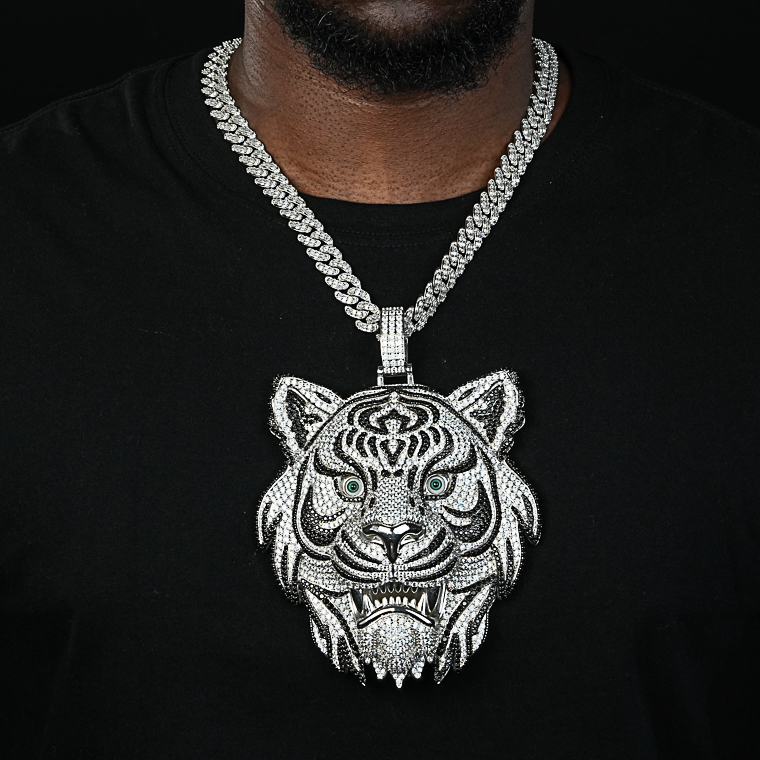
A rendering cannot show every wearing issue.Attach the finished pendant to the intended chain. Pass the end fitting through the bail, operate the clasp, and observe how the pendant hangs. Check whether it remains level, turns forward, or restricts movement.
Inspect the inside of the opening for sharp edges or rough finishing. Look at the connection from the front, side, and reverse.
If a problem appears, describe the behavior clearly. “The pendant turns forward when the chain is lifted” gives the design team a better starting point than “the bail is not right.”
Record the Approved Dimensions
The production specification should include the bail opening, outer dimensions, wall thickness, position, material, finish, chain compatibility, and any tolerance.This reference is valuable for reorders and for developing matching chains or pendants. It also prevents the same compatibility question from being solved again each time the product is purchased.
Shining Star Jewelry supports custom pendant development from artwork and reference images through CAD, wax printing, sampling, setting, polishing, plating, and wholesale production. Send your pendant design and chain measurements for a practical review.