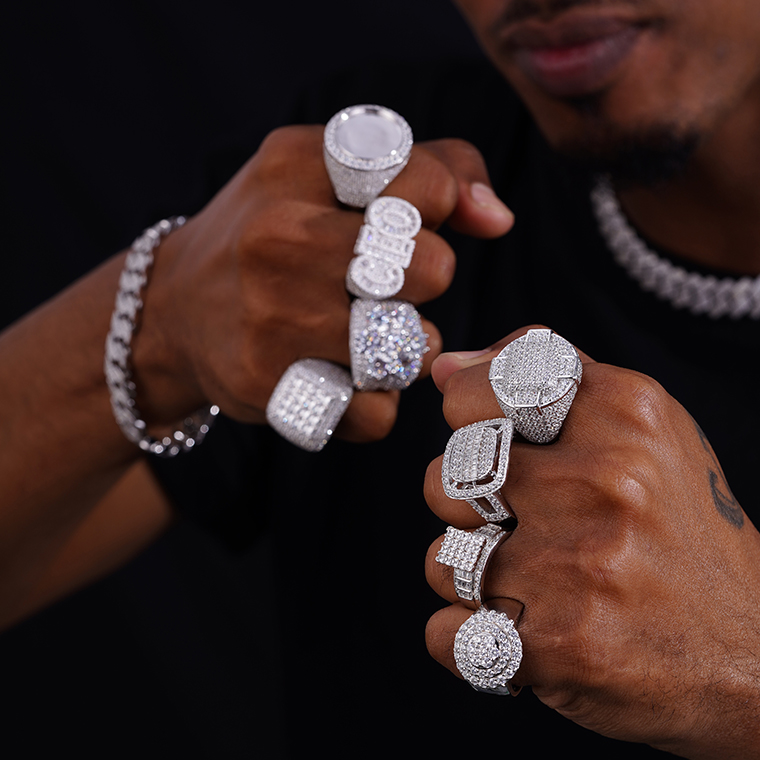






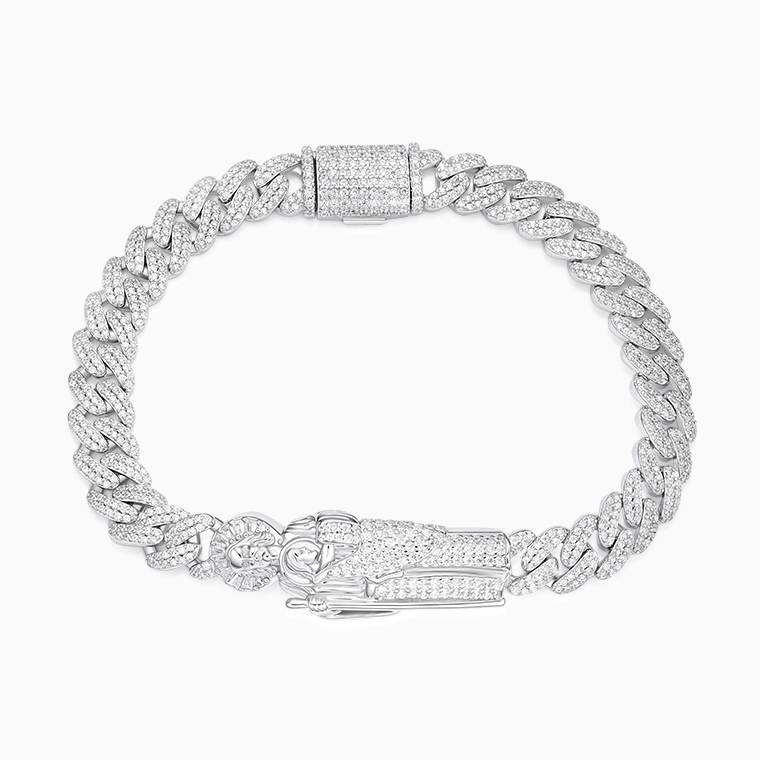
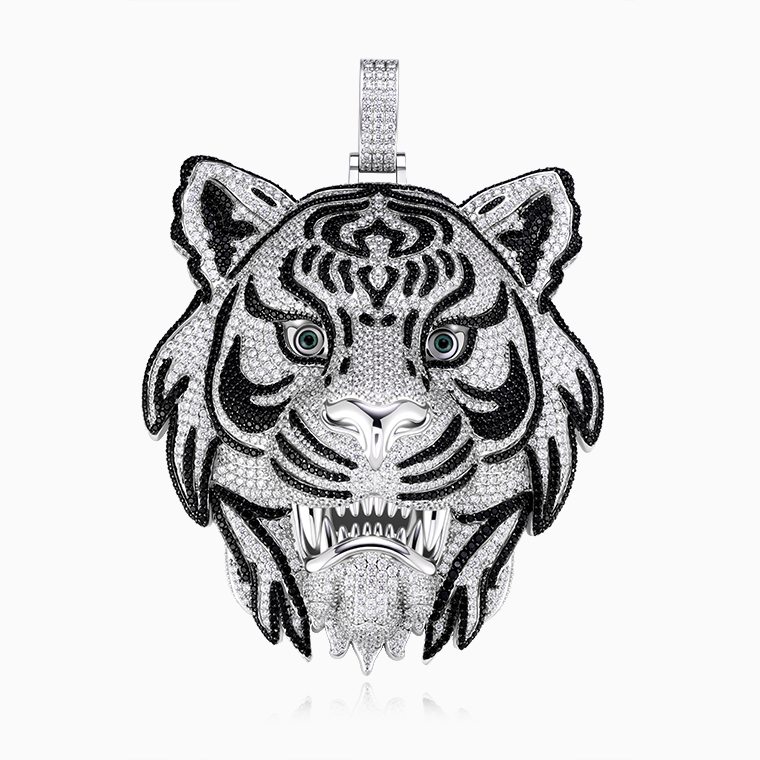

The market for men’s hip hop jewelry rewards visual impact, but wholesale buyers cannot evaluate a necklace by appearance alone.
A product photograph may show a bold Cuban-link profile, a fully iced-out surface or a prominent pendant. It does not reveal the quality of the base metal, the consistency of the plating, the security of the stone setting or the reliability of the clasp. Those details determine whether a necklace remains attractive after delivery and whether a supplier can reproduce the same result across a bulk order.
For buyers sourcing wholesale hip hop necklaces for men, the commercial challenge is straightforward: translate a visual concept into a product specification that a factory can manufacture, inspect and repeat.
That process begins with materials. It continues through design, casting, polishing, stone setting, plating and assembly. It ends only when the buyer and manufacturer agree on lead times, quality standards, packaging and reorder requirements.
Hip Hop Jewelry Is a Product Category, Not a Single Specification
“Hip hop necklace” describes a style direction rather than a fixed product.
The category includes Cuban chains, tennis chains, rope chains, Franco chains, personalized name necklaces and chains paired with large pendants. Some products rely on metal weight and link construction to create their visual presence. Others depend on stone coverage, surface finishing or oversized decorative elements.
Two necklaces can look similar in an online catalog while differing substantially in cost, weight and production difficulty.
A lightweight fashion chain may be appropriate for price-sensitive retail programs. A heavier sterling-silver Cuban chain may target customers who care about material value and construction. A brass necklace with carefully controlled plating may deliver a strong visual result at a different price point.
Before asking for a quotation, a buyer should decide which part of the market the product is intended to serve.
That decision affects nearly every detail that follows:
-
Base metal
-
Necklace dimensions
-
Target weight
-
Stone type and quantity
-
Plating specification
-
Clasp construction
-
Packaging
-
Inspection requirements
-
Order quantity
-
Acceptable delivery schedule
Without that context, a low quotation may simply reflect a different product from the one the buyer expected.
The Base Metal Sets the Commercial Foundation
The choice of base metal influences cost, weight, production method, finish and customer expectations.
Brass
Brass is widely used in fashion jewelry because it can support detailed shapes and substantial-looking products at an accessible cost. It is commonly considered for stone-set Cuban chains, pendants and other visually bold designs.
The buyer still needs to define the construction carefully. A brass product can vary in weight, thickness and finishing quality. A chain that appears heavy in a photograph may use thinner or partially hollow components, while another may use a denser construction.
Brass products also depend heavily on surface preparation and plating. Poor polishing before plating can leave visible scratches, uneven edges or casting marks beneath the finished color.
For buyers using brass, the quotation should identify the material, construction, plating requirements and any protective surface treatment included in the proposed specification.
Sterling Silver
Sterling silver is often chosen for jewelry positioned above entry-level fashion products. It gives buyers a recognized precious-metal specification and may support a higher retail price.
The material description should be clear. Buyers should confirm whether the product is intended to use 925 sterling silver and what material verification will be provided for the order.
Sterling silver does not eliminate the need for careful production control. Casting quality, soldering, polishing, stone setting and plating still affect the final result. A silver necklace with weak assembly or inconsistent finishing will not meet expectations simply because the base metal is more valuable.
According to its company information, Shining Star Jewelry conducts material checks before production and random checks after casting for sterling-silver products. Third-party finished-product testing can also be discussed when a buyer requires independent documentation.
The applicable testing method and reporting requirements should be agreed before production begins.
Stainless Steel and Other Materials
Stainless steel may suit designs that prioritize durability, a modern appearance and a different cost structure. It also creates different manufacturing and stone-setting considerations from brass or silver.
Not every design can be transferred from one material to another without adjustment. Link thickness, setting structure and finishing processes may need to change.
Buyers comparing quotations should therefore check whether suppliers are quoting the same material and construction. A price comparison has limited value when the underlying specifications differ.
Moissanite, Cubic Zirconia and the Meaning of “Iced Out”
Stone choice is another major cost and positioning decision.
Cubic zirconia is commonly used in fashion jewelry to create a high-coverage look at an accessible price. Moissanite may be selected for products that require a different optical effect and market position.
The stone name alone does not define the finished necklace. Buyers should also confirm:
-
Stone sizes
-
Stone shapes
-
Color requirements
-
Coverage area
-
Setting method
-
Arrangement around corners and curves
-
Whether the clasp is stone set
-
Whether the reverse includes decorative stones
-
Replacement-stone policy, if applicable
“Iced out” is a visual description, not an inspection standard. One factory may interpret it as dense coverage across every visible surface. Another may place stones only on the front-facing areas.
A clear specification should identify exactly where stones are required. CAD renderings, annotated photographs or approved samples can reduce disagreement.
Stone size also affects the design. Smaller stones may create a more continuous surface but require more setting work. Larger stones may increase visual contrast but need enough metal around them to support the setting.
The appropriate choice depends on the necklace dimensions and intended price point.
Link Construction Determines How a Necklace Feels
For Cuban chains and other connected designs, the individual link is only part of the product. The assembled chain must also move, bend and sit naturally.
A front-facing rendering can show proportions, but it cannot fully demonstrate flexibility. During development, the manufacturer should consider the spacing between neighboring links, their contact points and the way the chain behaves when curved.
Two necklaces with the same width and length may feel different because of:
-
Link thickness
-
Internal opening
-
Link depth
-
Spacing between links
-
Solid or weight-reduced construction
-
Surface profile
-
Connection method
-
Clasp dimensions
Target weight should be discussed early. If the buyer wants a substantial feel, the factory needs to know that before the structure is finalized. If the product needs to meet a lower retail price, the design team may need to manage weight while preserving the desired appearance.
This is one reason experienced buyers provide both a visual target and a commercial target. A reference photograph describes the look. The expected retail position, order quantity and weight range help define a product that can be manufactured economically.
CAD Is a Decision Tool, Not a Finished Product
Custom hip hop jewelry often begins with sketches, photographs, logos or existing samples.
A jewelry designer then converts those references into a model that can be reviewed for dimensions, proportions, stone placement and assembly. Programs such as Rhino and Matrix are commonly used for this work.
CAD allows buyers to inspect details before a physical sample is made. A buyer can review pendant thickness, letter spacing, bail dimensions, logo placement and stone layout. Changes at this stage are generally easier to manage than changes made after casting.
Still, a polished rendering should not be mistaken for proof that the physical product will perform as expected.
The sample must answer questions the screen cannot:
-
Does the chain bend smoothly?
-
Does the pendant hang at the correct angle?
-
Is the necklace comfortable against the skin?
-
Can the clasp be operated easily?
-
Do the end fittings pass through the pendant bail?
-
Does the actual weight match the intended product position?
-
Does the stone surface appear consistent under normal lighting?
Shining Star’s design resources include Rhino, Matrix and related jewelry-modeling tools, supported by in-house wax printing. In practical terms, this allows a proposed design to move from a digital file toward physical evaluation within a connected development process.
The buyer’s responsibility is to review each stage carefully and record any requested changes.
Casting Quality Is Only the Beginning
Once the design is approved for sampling, the product moves into manufacturing.
The exact process depends on the material and construction, but a custom stone-set necklace may involve wax preparation, casting, component cleaning, assembly, soldering, polishing, stone setting, plating and final inspection.
Each stage can affect the next.
Casting imperfections may remain visible after polishing. Inconsistent soldering can affect the movement of links. Poor surface preparation can become more visible after plating. An uneven setting surface can make aligned stones appear irregular.
A wholesale buyer does not need to manage every production operation. The buyer does need to establish what the approved product should look and feel like, and how the factory will determine whether bulk pieces match that standard.
An approved sample is the most useful reference when it is supported by written measurements and material specifications.
Polishing Has an Outsized Effect on Perceived Quality
Consumers often judge jewelry quality through surface details before they consider technical specifications.
Smooth edges, consistent curves and a clean reverse can make a necklace feel more refined. Visible casting marks, rough areas or poorly finished corners can weaken the perceived value even when the front looks attractive in a photograph.
Stone-set designs require particular attention. Areas between stones can be difficult to polish after setting, so surface preparation before the stones are installed matters.
During sample approval, buyers should inspect:
-
Front surfaces
-
Side walls
-
Reverse surfaces
-
Link connections
-
Soldered areas
-
Pendant edges
-
Bail interiors
-
Clasp contact points
The necklace should be examined under more than one lighting condition. Highly reflective metal can hide minor defects in a studio photograph that become obvious during handling.

Plating Requires More Than a Color Name
“Yellow gold,” “white gold” and “rose gold” are not complete plating specifications.
Color can vary between plating batches and suppliers. Photography, screen settings and lighting also affect how the finish appears.
For repeat orders, a physical reference sample is more dependable than a photograph. Buyers should also discuss the plating system, target appearance, measurement method and any relevant tolerance.
Plating thickness may be checked at selected locations, but the measurement points should be appropriate for the product. Different surfaces may not receive or retain plating in exactly the same way.
Shining Star’s stated inspection resources include plating-thickness measurement equipment that can be used at multiple locations. Buyers with specific reporting requirements should identify the inspection points and documentation needed for their order.
A plating measurement is useful quality information, but it should not be interpreted as a guaranteed wear period. Friction, perspiration, cosmetics, cleaning chemicals and storage conditions all affect the appearance of plated jewelry over time.
Product descriptions and care instructions should set realistic expectations.
The Clasp Deserves Its Own Review
The clasp is one of the smallest parts of a necklace and one of the most important.
It affects security, convenience and the overall appearance of the product. On a wide Cuban chain, a clasp that is too small may look out of proportion. A decorative box clasp may suit the design visually but still need to operate smoothly.
Buyers should confirm:
-
Clasp dimensions
-
Locking structure
-
Opening direction
-
Stone coverage
-
Logo placement
-
Connection to the first links
-
Safety features, if required
-
End-fitting dimensions
During sample review, the clasp should be opened and closed repeatedly. The buyer should check whether it catches cleanly, whether the moving parts feel consistent and whether the transition into the necklace creates rough areas.
Terms such as “strong clasp” or “high-quality lock” are too vague for bulk inspection. The buyer and manufacturer should agree on a practical inspection method.
Lead Time Should Be Quoted as a Production Calendar
Buyers often ask a factory one question: How many days will delivery take?
The more useful question is: What are the stages, and when does each stage begin?
A realistic schedule for custom hip hop necklaces may include:
-
Requirement review
-
Quotation and specification confirmation
-
CAD development
-
Buyer review and revision
-
Sample production
-
Sample shipment
-
Sample approval
-
Material preparation for bulk production
-
Casting and assembly
-
Stone setting and plating
-
Quality inspection
-
Packaging
-
Final shipment
The total lead time depends on design complexity, order size, material availability, stone quantity, revision rounds and production capacity.
A custom pendant with limited stone coverage may move through development differently from a wide, fully stone-set Cuban chain with a custom clasp. Several product variations in one order can also extend preparation and inspection time.
Buyers should separate three schedules:
Development Lead Time
This covers design review, CAD work, revisions and sample production.
The clock should not be considered fully under the factory’s control. If the buyer takes several days to review each drawing or changes the specification after sampling, the project calendar moves accordingly.
Bulk Production Lead Time
Bulk production should generally begin after the buyer approves the sample and confirms the final specification.
The production schedule may be affected by quantity, material preparation, stone setting workload, plating arrangements and the number of product variations.
Shipping Time
Shipping is separate from manufacturing. Buyers should confirm when the goods will be ready to leave the factory, which shipping method will be used and who is responsible for the related costs and documentation.
A supplier that provides a staged production calendar gives the buyer more useful information than one that offers a single optimistic delivery date without explaining the assumptions behind it.
MOQ Is Only One Part of the Wholesale Discussion
Minimum order quantity, or MOQ, matters because it affects unit cost and production planning. It should not be discussed in isolation.
Wholesale terms may vary according to:
-
Whether the design is existing or fully custom
-
Number of colors
-
Number of lengths or sizes
-
Choice of base metal
-
Stone type
-
Packaging requirements
-
Logo customization
-
Testing requirements
-
Reorder potential
An order of 100 identical necklaces is operationally different from an order of 100 necklaces divided among ten designs, several colors and multiple lengths.
The second order requires more setup, sorting and quality control, even if the total unit count is the same.
Buyers should ask whether the MOQ applies per design, per color, per size or per total order. They should also confirm whether sample fees, mold charges, CAD fees or packaging costs are included in the product quotation.
A clear quotation should allow the buyer to understand what changes when the quantity changes.
Unit Price Does Not Show the Full Cost
A low factory price can become expensive if the product requires repeated revisions, arrives late or produces a high rate of customer complaints.
Wholesale buyers should consider the total commercial cost:
-
Product price
-
Development and sampling fees
-
Custom tooling
-
Packaging
-
Testing
-
Shipping
-
Duties and taxes
-
Inspection
-
Replacement or repair arrangements
-
Inventory risk
The appropriate product is not always the cheapest one. It is the product whose cost, quality and delivery terms fit the buyer’s market.
A retailer selling limited-edition silver pieces may accept a higher unit cost and a more involved development process. A high-volume fashion program may prioritize price, repeatability and efficient packaging.
The manufacturer needs to understand that context before recommending materials or construction.
Bulk Quality Begins With the Approved Sample
The approved sample should become the standard for bulk production, but a sample alone may not capture every relevant detail.
The buyer and factory should record:
-
Product dimensions
-
Weight range
-
Base metal
-
Stone specification
-
Plating requirement
-
Clasp version
-
Logo position
-
Packaging
-
Approved color reference
-
Measurement tolerance
-
Inspection method
If the order includes several lengths or widths, each version should have a clear product code. Reorders should refer to the approved specification and code rather than an old photograph or informal message.
This documentation becomes increasingly important as a product line grows. A single successful necklace may later expand into matching bracelets, pendants or multiple chain widths. Good records make that expansion easier to manage.
Quality Control Should Match the Product Risk
Not every necklace requires the same inspection plan.
A simple metal chain and a fully stone-set custom piece face different risks. The inspection method should reflect the product construction, order size and buyer requirements.
Relevant checks may include:
-
Dimensions and weight
-
Visual appearance
-
Link movement
-
Clasp operation
-
Stone alignment
-
Stone-setting security
-
Surface finish
-
Plating consistency
-
Logo position
-
Packaging accuracy
-
Quantity and assortment
Shining Star’s company information describes inspection resources that include tensile testing and stone-setting security testing equipment. Buyers should still agree on the specific method, sample selection and acceptance requirements for their order. Equipment availability alone does not confirm which tests have been performed on every piece.
Third-party inspection can also be considered when the order value, destination market or company policy justifies the additional step.
Packaging Is Part of Wholesale Execution
Packaging is often treated as a final detail, but it affects presentation, shipping efficiency and product protection.
A heavy chain may require different support from a lightweight pendant necklace. Stone-set surfaces should be protected from unnecessary contact during transportation. Individual products also need clear identification when the order includes multiple designs or sizes.
Buyers should confirm:
-
Individual packaging format
-
Logo or labeling requirements
-
Barcode placement
-
Product code
-
Size identification
-
Protective materials
-
Outer-carton requirements
-
Quantity per carton
Custom packaging may have its own production schedule and minimum quantity. It should be discussed early enough to avoid delaying a completed jewelry order.
What to Send When Requesting a Wholesale Quotation
A factory can prepare a more meaningful quotation when the inquiry includes more than a product photograph.
Buyers sourcing wholesale hip hop necklaces for men should provide as much of the following information as possible:
-
Reference images or drawings
-
Necklace type
-
Target width and length
-
Base metal
-
Target weight or product position
-
Stone type and coverage
-
Plating color
-
Clasp preference
-
Logo requirements
-
Packaging needs
-
Order quantity
-
Number of designs and variations
-
Required delivery date
-
Destination country
-
Testing or documentation requirements
If some details remain undecided, the buyer should explain the target customer and expected price range. The manufacturer can then identify which specifications need to be confirmed before quoting or sampling.
A Reliable Supplier Makes Trade-Offs Visible
The strongest manufacturing relationship is not built around a factory saying yes to every request.
A useful supplier explains the consequences of each decision. A heavier construction affects cost. Dense stone coverage adds setting work. Multiple colors increase production complexity. A customized clasp may require additional development. A short deadline may limit the number of revisions available.
These trade-offs are normal. Buyers make better decisions when they can see them before approving the order.
Shining Star Jewelry works with custom hip hop jewelry designs through a process that connects digital modeling, wax printing, production and inspection. For buyers, the practical benefit is the ability to discuss the necklace as a defined product rather than as a photograph that must somehow be reproduced.
A productive first conversation does not need to contain every technical answer. It should provide enough information for the factory to identify the remaining decisions.
The Wholesale Decision Comes Down to Repeatability
The first sample attracts attention. Repeatable production builds a business.
A men’s hip hop necklace must deliver the intended appearance, but wholesale buyers also need stable materials, controlled dimensions, consistent stone setting, workable lead times and clear reorder records.
The purchasing decision should therefore go beyond the catalog image. Buyers should examine how the supplier defines specifications, manages revisions, inspects production and communicates scheduling risks.
When those systems are in place, the necklace becomes easier to price, market and reorder. The factory knows what it is expected to produce. The buyer knows what it has approved. Both sides have a reference when questions arise.
Brands, wholesalers and retailers preparing a men’s hip hop jewelry collection can send their reference designs, target specifications and order requirements through the Shining Star Jewelry website for a development review and wholesale quotation.