




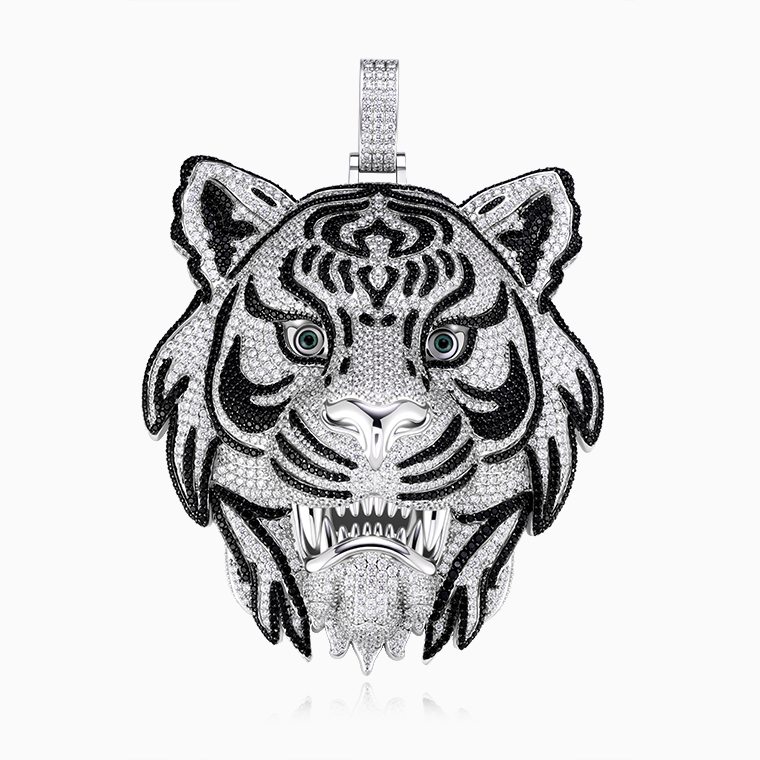

Customers still want the impact of an iced-out Cuban chain or an oversized pendant. But many now ask what lies beneath the shine. They want information about base metals, plating, stones, clasps and long-term wear. Retailers, meanwhile, must control inventory while keeping pace with trends that can appear and disappear within weeks.
The result is a wholesale market in which supply-chain discipline matters almost as much as appearance.
A necklace can look effortless under studio lighting. Producing it consistently is another matter. Link dimensions must remain uniform. Clasps must support the weight of the piece. Hundreds of stones may need to be set without visible gaps or uneven rows. A plating color that looks convincing on one sample can create complaints if it varies across a larger order.
For buyers, choosing a supplier has therefore become a commercial decision rather than a simple price comparison.
The Wholesale Buyer Has Changed
Traditional jewelry wholesalers bought broad assortments, held inventory and waited for stores to reorder. Today’s buyer may be an independent streetwear label, an online retailer, a social-commerce seller or an entrepreneur launching a first collection.These businesses often begin cautiously. Instead of purchasing hundreds of units in one style, they may test several chains, pendants, rings and earrings before investing in the products that attract attention. Some want ready-made designs that can be listed immediately. Others need private-label packaging, alternative stone colors, logo engraving or a pendant based on original artwork.
This change has put pressure on manufacturers to support both standard production and customization. A factory organized only for large, repetitive orders may not suit a young brand. A workshop focused on individual pieces may struggle when a successful design suddenly requires volume.
The useful question is no longer simply, “What is the lowest unit price?” Buyers also need to know what happens after a sample is approved.
The Details Behind the Price
Two chains can look nearly identical in a photograph while carrying very different costs and production risks. Base material, product weight, plating, stone type, setting method and clasp construction all affect the result.A low quotation may exclude packaging, branding or design changes. It may also reflect a lighter product, a different metal or a less labor-intensive setting technique. Those differences are not always obvious on a product page.
Clear specifications help buyers compare offers more accurately. Dimensions, weight ranges, materials, colors, logo placement and packaging should be confirmed before production begins. For custom pieces, technical drawings and physical samples can expose structural problems before they are repeated across an entire order.
Product descriptions deserve the same attention. Words such as “gold,” “diamond” and “VVS” carry specific expectations. Retailers should use them only when the materials and available documentation support the claim. Precise descriptions reduce disputes and protect customer trust.
Customization Becomes a Competitive Tool
Hip hop jewelry has always drawn its energy from personal identity. Initial pendants, portraits, symbols and unusual stone combinations allow customers to turn an accessory into a signature.Wholesale buyers are using that quality to escape direct price competition. A store selling exactly the same catalog items as dozens of competitors has little room to stand apart. Even modest changes—a different clasp, a proprietary pendant, a distinctive plating combination or branded packaging—can make a collection easier to recognize.
Customization also brings additional work. Complicated designs require clearer approvals, more development time and closer communication. A practical collection may combine dependable standard products with a smaller number of exclusive pieces. Standard items provide sales data and steady turnover. Custom designs give the brand an identity customers can remember.
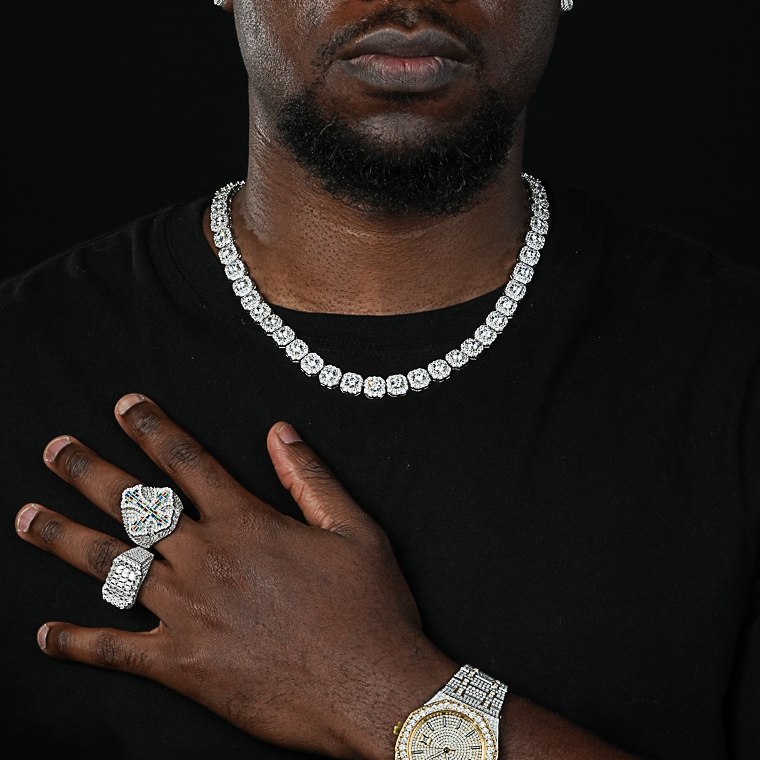
Product Photography Shortens the Route to Market
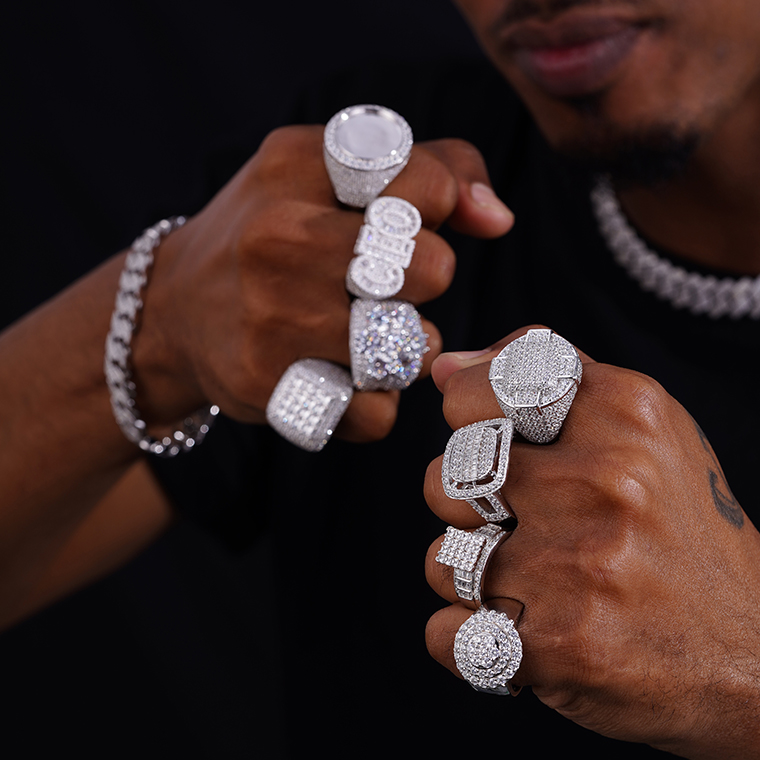
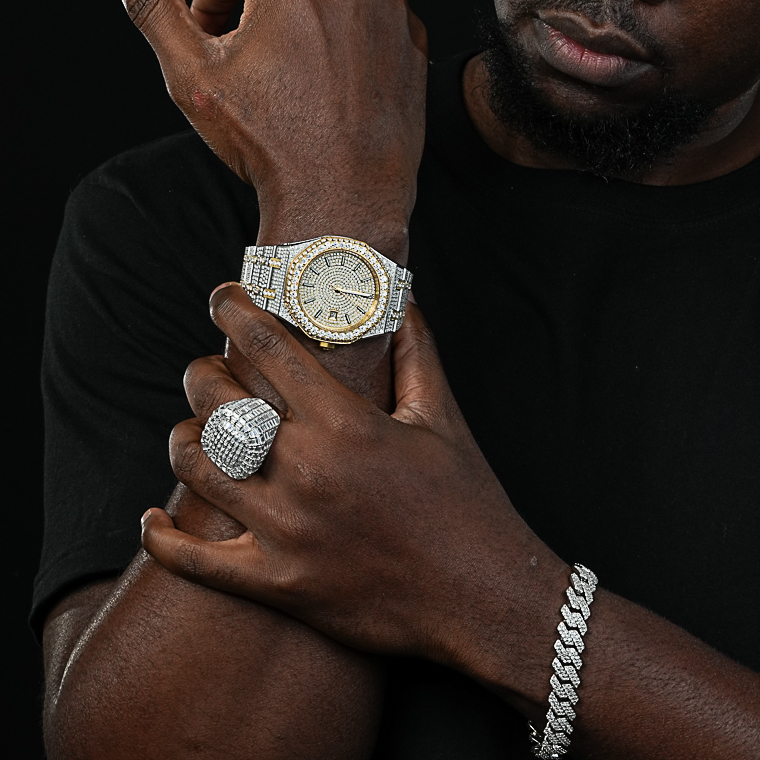
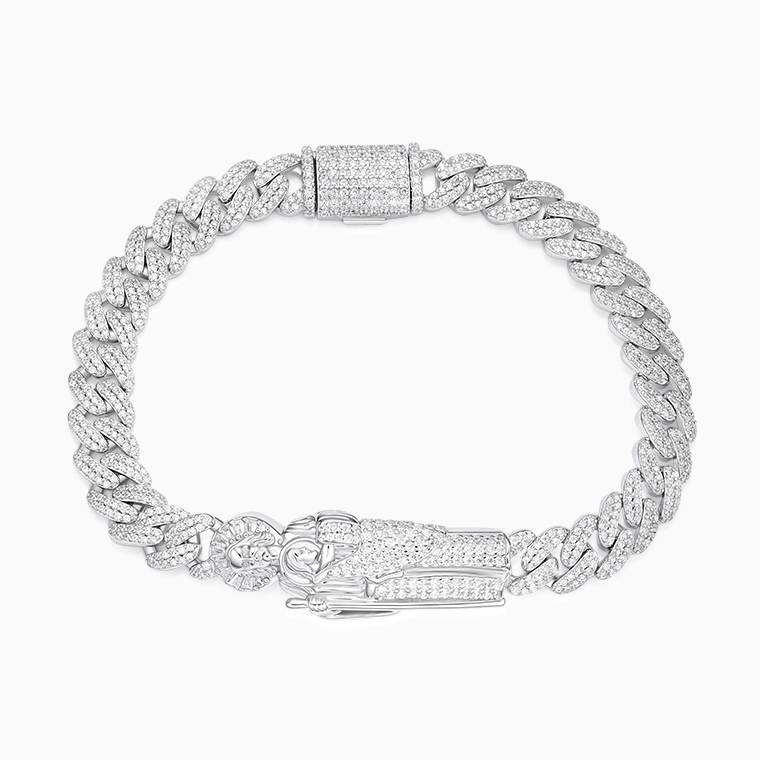
Manufacturing is only one part of launching a jewelry collection online. Retailers also need clear product images, detail shots and photographs showing how each piece looks when worn. Producing those assets independently can require photographers, models, lighting equipment, styling and post-production.Shining Star Jewelry addresses this issue by providing product photography for its customers. Its professional photography team can produce standalone product images as well as model photographs. Wholesale clients can use the completed visual materials to create online listings and begin selling without organizing a separate photo shoot.
This service can be particularly useful for small wholesalers, new e-commerce businesses and retailers testing unfamiliar product categories. It reduces the number of outside vendors involved in a launch and helps a buyer move from product selection to market presentation more efficiently.
Professional photographs also give online customers information that written specifications cannot provide on their own. Close-up images reveal stone settings and surface details. Model photographs offer a clearer sense of scale, proportion and styling. For a visually driven category such as hip hop jewelry, those images are part of the sales infrastructure rather than a decorative extra.
Retailers should still review the available image rights, file formats and editing terms before publication. They may also choose to add their own branding or produce original campaign images later. But having usable photography at the wholesale stage provides a faster starting point.
Shining Star Jewelry’s Place in the Supply Chain
Shining Star Jewelry serves wholesale and custom jewelry projects, covering design, production and sales. Its range includes hip hop necklaces, pendants, rings, earrings, bracelets and other stone-set pieces.For buyers, the value of working with an integrated manufacturer lies in coordination. Design revisions, sampling, production, inspection and product photography can move through a connected operating chain. This structure can reduce the communication gaps that appear when manufacturing and visual-content production are handled by unrelated suppliers.
It does not eliminate the need for careful purchasing. Buyers should inspect samples, confirm specifications and agree on commercial terms before placing a bulk order. They should know how the manufacturer handles revisions, defects, packaging, photography and repeat production.
A successful first order matters, but consistent reorders are what support a lasting wholesale relationship.
The Business Behind the Sparkle
The hip hop jewelry wholesale market is not abandoning spectacle. Large silhouettes, bright stones and assertive designs remain central to its appeal. What is changing is the business structure behind them.Retailers need products that match their descriptions, arrive with consistent finishes and can be reordered when demand rises. They also need sales materials that help those products reach the market quickly. Manufacturers must respond with clear communication, flexible development, dependable production and stronger support after the jewelry leaves the workshop.
The pieces may still be loud. The most capable businesses behind them are becoming more disciplined.